Key points about the systems approach
- The Systems Approach is a method used to understand and design electronic systems by breaking them down into three main stages: input, process, and output.
- This approach helps in identifying how different components work together to achieve a specific function, making it easier to analyse and troubleshoot electronic control systems.
What is the systems approach method
Inputs, outputs and processes in systems used by designers
[Narrator] You might find reading a bit easier with some light.
UPBEAT MUSIC
ALARM WAILS
Oh, wrong one!
UPBEAT MUSIC
Interesting but I don't think that's what you had in mind. I have a feeling none of these are right.
UPBEAT MUSIC
Definitely not.
ELECTRONIC MUSIC
We could be here for a while.
This is Zoe. Zoe knows that systems are made of inputs, processes and outputs and how they work.
So, an input device is something that takes a real-world signal like light, sound or movement and turns it into an electronic signal like current or voltage.
For example, at a train station when you put your contactless payment card onto the reader at a ticket barrier that's an electronic input.
Or when a train attempts to pass a signal that it shouldn't a train stop on the ground makes contact with something on the train called a trip arm, that's connected to the braking system. That's a mechanical input.
Processes receive the signal from the input stage of the system and change it in some way. They add functionality and intelligence to the system.
So when you've touched your contactless payment card, a micro-controller determines whether your ticket is valid and sends a signal to open the barrier. The micro-controller is an example of an electronic process.
Or when the trip arm has been activated it removes air from the braking system, effectively sending a signal to the train's brakes. That's a mechanical process.
Output devices take a signal, usually provided by the process, and turn it back into a real-world result. For example, bulbs produce light and speakers produce sound.
In the case of a ticket barrier the output device is the motor, producing movement of the barrier itself and an LED producing green light to tell you to walk through.
A mechanical output would be like when the brakes receive the air signal, telling the brakes to apply force to the wheels bringing the train to a stop.
[Narrator] So it's essentially your inputs, processes, and outputs are precisely organised so the system works.
Yes, you need to understand how all the parts of the system work together and keep them organised to get the result you want.
[Narrator] Hmm, that looks like hard work.
Components
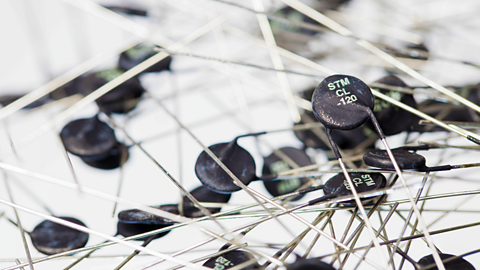
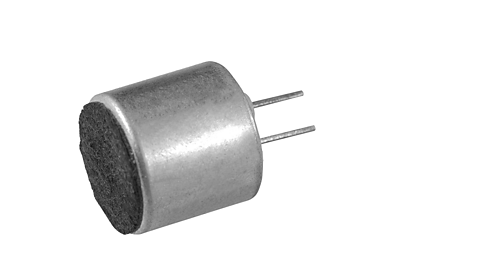
Input components: sensors and switches
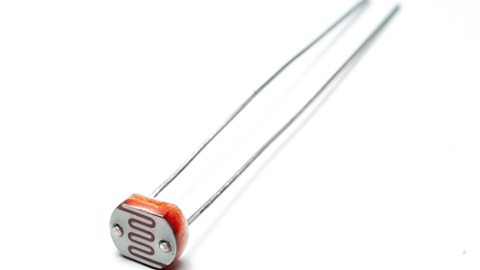
Image caption, Light dependent resistor (LDR): detects light levels
1 of 3
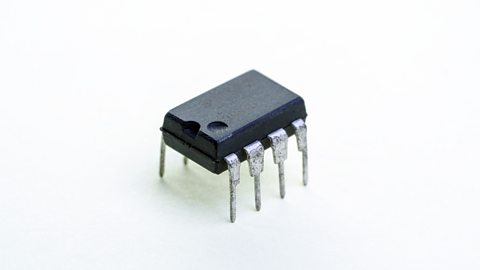
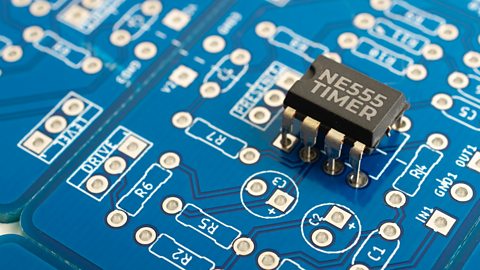
Process components: microcontrollers, amplifiers, and timers
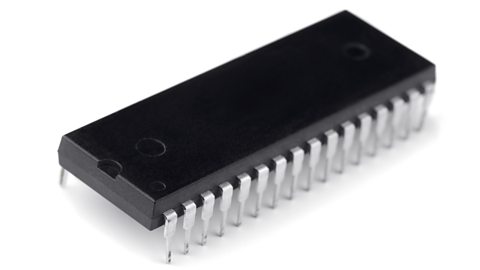
Image caption, Microcontroller: processes signals from sensors and makes decisions
1 of 3
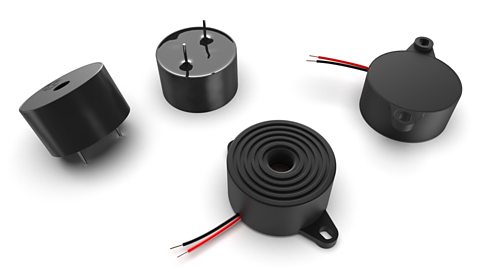
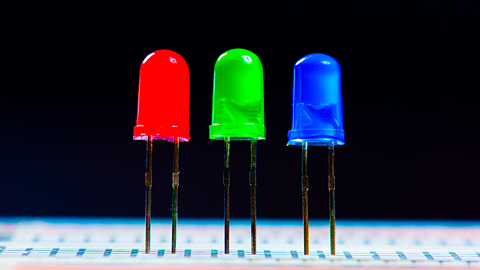
Output components: actuators and indicators
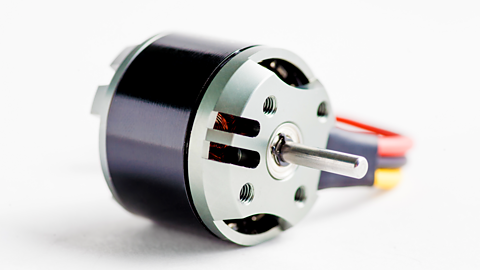
Image caption, Motor: provides rotary movement
1 of 3
Example: automatic street lighting system
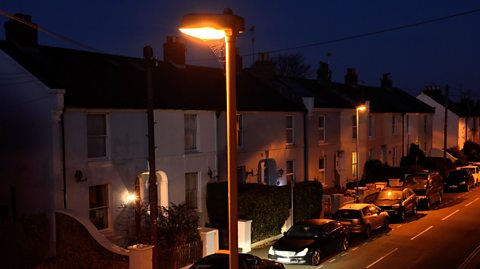
- Input: an LDR detects when it gets dark.
- Process: a microcontroller processes the signal from the LDR.
- Output: the system turns on the street light LEDs.
More on Electronic control systems
Find out more by working through a topic
- count5 of 8
- count6 of 8