Key points
Overview
The poem is about a woman looking back on her life when she is old. The speaker asks her to remember how many people loved her beauty, but only one person truly loved her soul. It’s a gentle but sad message about missed chances and regret.
Main themes
The poem explores unreturned love, regret, ageing and memory, and the difference between true love and shallow admiration. It shows how beauty fades but emotional truth lasts, highlighting the speaker’s belief that only he loved her inner self.
Tone and voice
The tone starts soft and romantic, then becomes more regretful and emotional. The speaker addresses the woman directly, creating an intimate voice. He does not use “I”, which makes the address personal but one-sided.
Context
Yeats wrote this poem in 1893. He was in love with Maud Gonne, who didn’t return his feelings. He proposed to her several times, but she always said no. This poem is based on a French poem with a similar message about love and regret.
Form and structure
The poem has three stanzas of four lines (quatrains). It uses an ABBA rhyme scheme. It’s written in iambic pentameter, giving it a steady, flowing rhythm. There is a turning point (volta) in line seven, where the tone becomes more sad and emotional.
Poetic devices to spot
- Apostrophe – the speaker talks directly to the woman, making it personal.
- Imperatives – words like “take down this book” tell her what to do, guiding her thoughts.
- Metaphor – “pilgrim soul” means her true, inner self; “shadows deep” may suggest ageing or secrets.
- Personification – “Love fled” makes love seem like a person who leaves, showing sadness.
- Polysyndeton – repeating “and” creates a slow, dreamy pace that matches the quiet mood.
When You Are Old
by WB Yeats
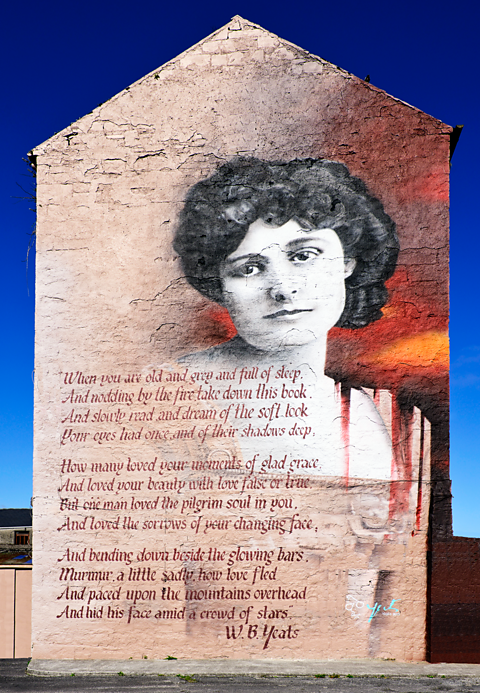
When you are old and grey and full of sleep,And nodding by the fire, take down this book,And slowly read, and dream of the soft lookYour eyes had once, and of their shadows deep;
How many loved your moments of glad grace,And loved your beauty with love false or true,But one man loved the pilgrim soul in you,And loved the sorrows of your changing face.
And bending down beside the glowing barsMurmur, a little sadly, how Love fledAnd paced upon the mountains overheadAnd hid his face amid a crowd of stars.
The text of this poem is available in the CCEA Poetry Anthology, which can be downloaded from the CCEA website.
The BBC is not responsible for the contents of any other sites listed.
Summary
A bittersweet poem inviting the addressee to look back in her old age and consider how she rejected the true love offered by the poet. Written when Yeats was around 26 and published in 1893.
- Title: Uses direct address and projects addressee (and reader) to a future time. It is modelled on When You Are Very Old (Check your connection, refresh the page and try again.), a French poem by Pierre de Ronsard.
- Themes: Unrequited love, regret, memory, old age.
- Tone: Initially soft and romantic, moving to regret or even bitterness.
- Speaker: There is no use of the first person “I”; instead direct address is used, directed to “you”.
Applicable context
- William Butler Yeats came from a Protestant Anglo-Irish family; he had a long-standing interest in Irish mythology, which he believed should transcend political and religious division in Ireland. He played a prominent role in the Irish literary revival and was awarded the 1923 Nobel Prize in Literature.
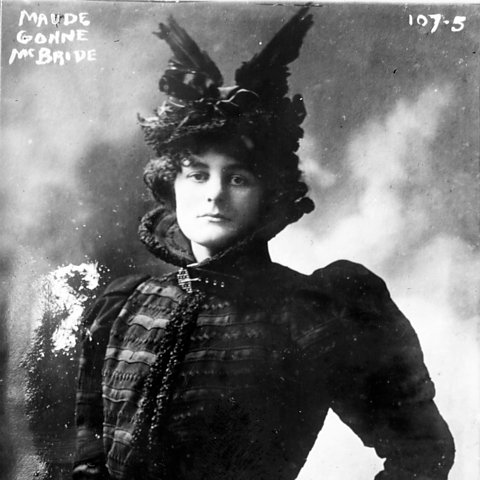
- In 1889 Yeats met Maud Gonne, an actress and activist who was passionate about Irish nationalism. Yeats was infatuated with her but, while she admired him, she did not return his love. He proposed to her four times but was consistently turned down; many of his poems were inspired by her, and it is strongly implied that she is the figure he addresses in When You Are Old.
- In 1587, the French poet Pierre De Ronsard wrote Quand Vous Serez Bien Vieille (When You Are Very Old) to address a young woman in whom he was interested but who did not care for him. De Ronsard’s sonnet turned out to be influential on many other writers, and Yeats uses it as a sort of literary prototype here. The central idea and his treatment of it is very similar to De Ronsard’s – both poems invite a woman to imagine her future old age as lonely and sad because she refused the love of the poet. She will never find a better love than his. Both poems also suggest the poet’s work will be famous and outlive the woman.
Only a little context is needed for each poem; where used, it should be applied to the point you're making.
Form and structure
- When You Are Old is divided into three four-line A grouped set of lines within a poem., or A type of stanza - or a complete poem - consisting of four lines that have a rhyming scheme., each of which uses an ABBA rhyme scheme. It’s a deceptively straightforward and simple form, which Yeats uses to partially disguise his strong emotions in the beginning of the poem.
- Like the poem on which Yeats based it, When You Are Old is written in One ‘iamb’ is a two-beat combination: an unstressed syllable followed by a stressed (emphasised) syllable, making a ‘da-DUM’ pattern, like a heartbeat. Pentameter means five of these two-beat units per line, making ten syllables altogether, a poetic The pattern of stresses in a line of poetry, which make up the rhythm of the line.commonly used in love poetry and characteristic of A fourteen-line poem, usually with ten syllables in each line. in particular. One ‘iamb’ is a two-beat combination: an unstressed syllable followed by a stressed (emphasised) syllable, making a ‘da-DUM’ pattern, like a heartbeat. Pentameter means five of these two-beat units per line, making 10 syllables altogether:
|When you| are old | and grey | and full | of sleep |
| da-DUM | da-DUM | da-DUM | da-DUM | da-DUM |
- While When You Are Old is only 12 lines in length, its similarities to the sonnet on which it was based are not only limited to the content of the poem. Halfway through the poem, Yeats writes “But one man loved the pilgrim soul in you”, and in this sentiment there is some sense of the A change in focus within a poem, perhaps revealing a ‘twist’ with further information, new detail or emotion that may make us feel differently about the first part. - that would have been a part of a classic sonnet. This reveal of the speaker’s own love for the person he addresses marks the beginning of a more regretful and sad section of the poem.
Language and poetic methods
- Apostrophe: When You Are Old uses Not the punctuation mark, but a figure of speech where the poet addresses someone who cannot answer back because they are absent, or an inanimate object. – the poet is addressing a woman (presumably Maud Gonne) who has spurned his advances. He invites her to look to the future where she is old and alone, regretting her decision to refuse his love, which was the only love that was true. The direct address makes it highly personal, even when the speaker does not identify himself or use first person. He may be issuing the poem as a present warning to her not to refuse him unless she wants a lonely future, or he may be saying it is already too late for her to have his love. This is the future she has now chosen.
- Imperative: Yeats uses Verbs that give commands, instructions, or requests directly to the reader or a specific character in the first A grouped set of lines within a poem., instructing the addressee to “take down this book, / And slowly read, and dream”. He is setting the scene for an imagined future time when the currently young addressee will be old, and taking control of the scene he imagines by telling her what she should do. The “book” to which he refers is one which contains this poem, and he tells her to read it as a way of remembering him, his love and her rejection of it. The tone is gentle here because of the imagery of a peaceful fireside and the sleepy pace, but he is ultimately instructing her to engage in an activity that he hopes will make her feel regret.
- Metaphor: There are several A metaphor is a word or a phrase used for dramatic effect, to describe something as if it were something else. employed in the poem. Yeats refers to “shadows deep” around her eyes – this may be a metaphor for secrecy or deception, implying that he feels she wasn’t honest with him; it could equally be a reference to the effect of ageing on her formerly “soft look”. “The pilgrim soul” is a metaphor implying that she had a restless energy or perhaps a kind of rebelliousness in seeking fulfilment, which fits with Gonne’s passionate activism. Yeats is saying that, among all who admired her, only he loved her true nature and spirit.
This imagery of restlessness is echoed later with the line “paced upon the mountains overhead”, since pacing seems an impatient or agitated activity. Heavenly imagery (in the form of the “crowd of stars” in which "Love" hides) is used to emphasise the eternal unattainability of that love, as it is metaphorically in a place that will be impossible to reach.
But one man loved the pilgrim soul in you,
And loved the sorrows of your changing face.
- A writing technique where a lot of conjunctions like 'and', 'or', or 'but' are used close together. It slows down the rhythm and can make ideas feel more dramatic or emotional.: The repetition of the conjunction “and” in stanza one helps to achieve a gentle, lulling pace that fits with the seemingly cosy image of someone reading by the fire, or indeed someone “full of sleep”. The lethargy of old age is partly evoked by the specific Check your connection, refresh the page and try again. in the first line. The repetition of “and” throughout the poem slowly gives a growing sense of the intense emotion behind Yeats’ address to Gonne, as if the poem is one long sentence, starting slowly but building in detail and tone to a passionate declaration.
When you are old and grey and full of sleep,
- Personification: Yeats uses no ‘I’ in the poem as a counterpart to the “you” he addresses; instead he refers to himself once in the third person – “But one man loved the pilgrim soul in you” – and later in the poem uses personification for Love itself: “Love fled / And paced”. As he is imagining her future self to be ‘recalling’ “how Love fled” at some point in her past, we can’t be sure if he is writing this poem to encourage her to change her mind in the present. He wants her to avoid this lonely future. Or whether he has already decided to withhold his love from her forever at this point.
His use of personification, however, clearly turns ‘I’ into a proper noun rather than a concept, and closely aligns it with the “one man”, pacing restlessly and hiding his face as though he can no longer look at her. It becomes personal and human, perhaps to draw sympathy from the reader at how frustrated “Love” is by not being accepted and returned. The personified “Love” becomes symbolic of Yeats himself. The idea that the only true love the addressee will ever be offered has finally “fled” from her for good is a bleak one; he means her to regret not choosing him.
This is not a list of every method or notable use of language and structure in When You Are Old.
Look at the poem again. Can you find any of the following?
The repetition of similar consonant sounds in nearby words.
The repeated ‘I’ and ‘d’ sounds in the first stanza enrich the image of the old woman sitting sleepily by the fire; the liquid ‘I’ sounds are lulling and gentle, while the soft thud of the repeated ‘d’ sounds evokes the “nodding” quality mentioned, where a person hovers between dozing and being awake. These help Yeats to set the scene, encouraging the reader to imagine it more fully.
A break in poetic rhythm in the middle of the line, a momentary pause.
Yeats uses caesurae in the form of commas in the first and last stanzas when imagining the future old self of the addressee, to slow the pace of the poem, mirroring the tired and elderly state of the woman. It also encourages the reader to take time and linger over the scene, reflecting on the past; in the final stanza it marks out the words “a little sadly”, to underscore the regret he hopes she feels.
Repetition
Most notably repeated in the poem is the word “loved” in the second stanza, where it is contained on every line. Yeats uses the past tense as he is imagining the future old self of the addressee looking back on her past. Its first two uses refer to the superficial love of others, who enjoy her “glad grace” and “beauty”; the next two refer to him, who loves her soul and personality, not just her beauty which he knows will fade – “the sorrows of your changing face”. The repetition emphasises the contrast, and also that this is the past, implying that perhaps he does not love her any longer.
If you have found these methods, consider what you know about the poem and the poet already.
What effects do these methods create? Why has he used them?
What other poems could I compare with When You Are Old?
- To His Coy Mistress – another poem influenced by the A Latin phrase meaning seize the day. It’s used in poetry to encourage people to enjoy life now and not wait for the future. message of de Ronsard’s When You Are Very Old, encouraging the addressee to accept the love of the speaker.
- Clearances 7 – an insight into a married relationship in old age, as the poet details the last interaction of his mother and father in the moments before she died.
- Symptoms of Love – Yeats’ real-life obsession with Gonne and his sometimes bitter tone in this poem could be compared with Graves’ view of love as illness and suffering.
Practice questions
Use these questions to hone your knowledge of When You are Old, and to practise using your notes and analysis in organised paragraphs that focus on how particular themes or ideas are shown in the poem. There is an example answer in the following section to demonstrate how you can do this.
- What poetic methods does Yeats use to show his feelings about the addressee in When You Are Old?
- What does When You Are Old suggest about Yeats’ attitude to love?
- How does Yeats show the sense that youth does not last in When You Are Old?
- How does Yeats create a sense of regret in When You Are Old?
Example answer
Below is a demonstration of how to use the material in this section to answer an example essay question. The answer below is not a full essay, but only an extract of a longer answer showing some of the points that could be made.
Q: What poetic methods does Yeats use to show his feelings about the addressee in When You Are Old?
A: The addressee in When You Are Old is clearly someone Yeats cares for as he dedicates the poem to her; it is widely accepted that Maud Gonne, an actress and activist who was Yeats’ muse and obsession for many years, is the subject of the poem. Gonne, however, did not return Yeats love and this is reflected in the poem, with its theme of regret, its use of apostrophe to address the subject directly and personally, and its sometimes bitter tone. Yeats sets the poem in the future when its subject is old, but then invites her to look back at the past. This means it is difficult to tell whether he is writing this poem to encourage her to change her mind in the present, wanting her to avoid this lonely future. Or, whether he has already decided to withhold his love from her forever at this point. Because of this, it is fair to say some of his feelings about the addressee are complicated.
When You Are Old is heavily based on the 16th century poem When You Are Very Old by Pierre de Ronsard – both poems invite a woman to imagine her future old age as lonely and sad because she refused the love of the poet. She will never find a better love than his. Both poems also suggest the poet’s work will be famous and outlive the woman. It also retains a few aspects of the sonnet form of the original piece: use of quatrains with an ABBArhyme scheme, a heartbeat rhythm formed by iambic pentameter, and most notably its semblance of a volta in line seven, when the moods shifts from peaceful and reflective to more sad and regretful. The traces of the sonnet form, a classic form for love poetry, suggest this too could be a love poem, but Yeats has shortened and reworked the form, perhaps showing changed feelings. His repetition of the past tense “loved” in the second stanza, and his suggestion that “Love fled”, in a passage which personifies “Love” and makes it a symbol of Yeats himself further imply that Yeats may be conveying. He will be withholding his love from the addressee from now on. She will never attain it again.
This essay could go on to make the following points, backed up by evidence from the poem and detailed analysis of that evidence:
- Yeats uses metaphor and imagery to convey his love for her as being uniquely true and based on her soul, not just her looks, contrasting his love with the superficial love of others
- Yeats uses caesurae, polysyndeton and consonance to emphasise the effects of old age in the future, suggesting that a life without his love will be difficult – he may either feel resentment towards the addressee or may still hope to persuade her to accept him
- Yeats uses imagery of restlessness to convey his frustration at his love not being returned, showing its intensity, and uses imagery of stars to suggest he will withhold his love from now on, and she will never be able to reach it again.
Test your knowledge of When You Are Old
More WB Yeats
The Essay - WB Yeats at 150. audio
The first of five audio essays on WB Yeats.
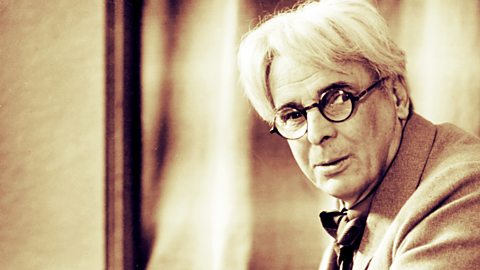
Rebel with a cause: WB Yeats read by the stars
Extended readings from WB Yeats featuring Bill Nighy, Sting, Dominic West, Damian Lewis and Richard E Grant.
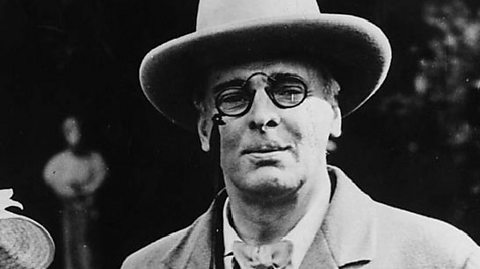
WB Yeats turns 150: The 20th Century’s greatest poet? interactive
His influence on today’s writers may be as great as Shakespeare’s. A century and a half after his birth, WB Yeats still shapes the English language.

More on Anthology Two: Relationships
Find out more by working through a topic
- count11 of 12

- count12 of 12

- count1 of 12

- count2 of 12