What we get wrong about dopamine

 Serenity Strull
Sometimes dubbed the 'pleasure chemical', dopamine is often wildly misunderstood. Nikolay Kukushkin delves into what the much-discussed neurotransmitter really does to our brains.
Our brains are amazingly useful things. But it seems that something's broken in our relationship with them.
As humans, we often feel that we are at war with ourselves. We want what we cannot have and need what we don't want. We get addicted to bad things and lose interest in good things. We ruminate, we obsess, we snap, we regret. It is as if we are always trying to get to some fuller, better, more complete, more natural version of our lives and never quite get there.
Why are we so misaligned with our own brains? It turns out a lot of it has to do with a special but often misunderstood neurotransmitter called dopamine. It is dopamine that is the main tool our bodies use to drive us to look for more.
The temptation is to assume that our lives as modern humans are unnatural, preventing us from realising some primeval happiness that our ancestors presumably all shared. The cavemen had no French fries, so they didn't have to worry about obesity or force themselves to go to the gym. They spent their days blissfully walking in the woods gathering nuts and berries with plenty of fibre. They had no money or jobs or marriage or religion or drugs, so there was no inequality or violence or jealousy or hierarchy or addiction. It is only when we abandoned this hunter-gatherer paradise for the temptations of agriculture and civilisation that our lives became so discordant with our biological needs.
Of course, this vision of a carefree past is not actually true. We don't know much about the psychology of our hunter-gatherer forebears, but there's one thing we can be sure about: they were just as grumpy and restless as we are. Our frustration with life is nothing new. In fact, it is there by design – a design that runs much deeper than civilisation, deeper even than the human species.
It is this design that keeps us perpetually aggravated, teasing us, prodding us, like a voice from an ancient, animalistic past that whispers into our ear: there's more to life than what you have.
We are not meant to feel satisfied by what we have. We are meant to look for more.
To understand why, we need to look at how two parts of our brain – the cerebral cortex and the reward system, including dopamine – drive us in different directions.
The brain without dopamine
The cerebral cortex is our brain's universal machine of understanding. It builds a model of reality for us and then tries to align it with the outside world – or vice versa, to align the outside world with the model. What it wants is not accurate analysis, but maximum alignment of reality with expectation, by whatever means necessary.
There's an apparent problem with this driving force toward maximum alignment, sometimes termed "the dark room problem". If all that the cortex wants is internal coherence, you would think that the easiest way to achieve that would be to find a dark corner in a dark room: cut off all sensory input and nothing needs explanation or modification.
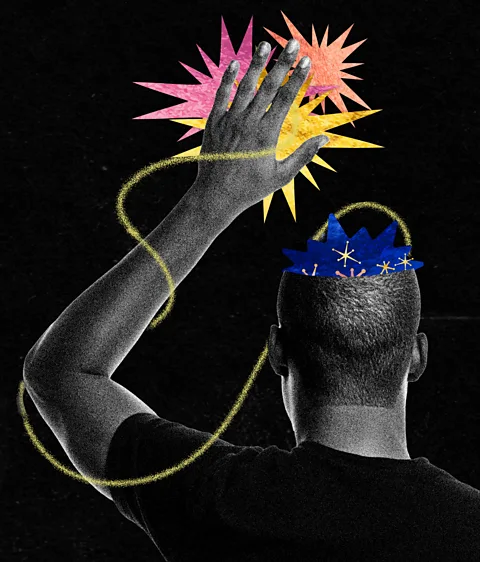
Clearly, the mechanism is incomplete: there must be something that pushes the cortex out of the dark room of nonexperience and into the world of novelty, surprises, goals, and achievements. And there is indeed another module of the brain whose entire essence is to orchestrate precisely such a push. It is called the reward system, and dopamine is the main tool it uses to guide our decisions and motivations, a tool both wonderfully clever and frightfully diabolical. Dopamine is what keeps us moving forward.
 Serenity Strull
To understand what that means, it's helpful to look at what happens when you have no dopamine. A mysterious disease called encephalitis lethargica, which swept across the world from 1915 to 1926, presents a terrifying case study. It was most likely a complication of a common throat infection, which in a small fraction of patients, caused their own immune system to attack the brain, putting them in a state of lethargy, or torpor – not quite a coma, but what seemed more like unresponsive wakefulness.
Some patients would occasionally utter a word or two; some would catch a ball if it was thrown at them; they would chew food if it was placed in their mouth – but never reached out for the food on their own. Today we understand that this condition specifically affected the brain region called substantia nigra – one of the few places in the brain that produces dopamine.
One of the patients was a young, wealthy New York socialite, later known by the pseudonym Rose R, who, in 1926, went to sleep and had a nightmare of being locked in an impregnable castle. The nightmare went on, uninterrupted, for 43 years.
Oliver Sacks, then a young New York neurologist, was put in charge of about 80 encephalitis lethargica patients including Rose R at the Mt Carmel Hospital in the Bronx in 1969. He noticed that some of their symptoms resembled an extreme version of another disease, Parkinson's, and decided to try them on a drug called L-DOPA, a promising new treatment. Within days of starting the treatment, patients including Rose R awoke, rose to their feet, and began walking around, striking up conversations with stupefied hospital staff.
To Sacks's shock, the awakening was short-lived. For Rose, it lasted about a month. Some patients held out longer, but eventually their condition inevitably deteriorated. It was not until 1979, another 10 years, that Rose choked on a piece of food, and her nightmare ended.
L-DOPA, the drug that Sacks used to temporarily bring Rose R back to life, is a precursor of dopamine. And while Sacks did not understand the mechanism at the time, later research on encephalitis lethargica helps us to infer what was likely happening to Rose R. Although most of her substantia nigra, the dopamine-producing brain region, was dead, it still had a few neurons surviving. These remaining neurons were able to convert the L-DOPA into actual dopamine, and Rose's brain, deprived of it for decades and hypersensitive to its smallest trickle, responded with a dramatic burst of activity – the fleeting awakening. But then the brain recalibrated and that small trickle of dopamine turned out to be insufficient for normal life.
Basically, encephalitis lethargica shows what happens when the brain runs out of dopamine: it stalls. Removing dopamine from the brain doesn't simply paralyse it. Instead, it puts it in the dark room – a state of nonaction and nonexperience in which it does not feel compelled to do anything at all. Anything we do on top of basic reflexes, such as chewing food when it is placed in our mouth, is motivated by dopamine. We would all be in the dark room were it not for the constant infusions of this chemical into our brains. Instead, we cannot wait to spend every waking moment of our lives in constant action. This is all because of dopamine.
So it must be dopamine's fault, then, that we spend every day battling with ourselves and always want to do the wrong things. If it's there to motivate us, why is it doing such a bad job?
To answer this, we need to look at what precisely dopamine actually does.
Not a 'pleasure chemical'
The most basic way to understand dopamine is as a "pleasure chemical". That explanation is helpful as a first pass, but it is wrong.
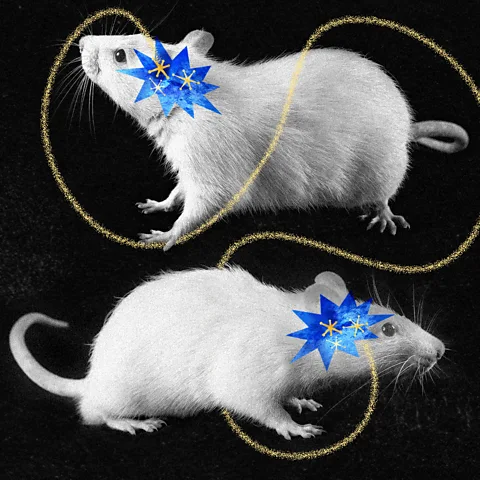
The problem is that dopamine doesn't actually cause pleasure. If you have a friend who takes Adderall (a drug used to treat ADHD that acts by squeezing out available dopamine from dopamine-producing neurons), they might tell you that the pills make them more focused, more productive, and put them "in the zone", but they don't produce euphoria. Studies of rats show the same thing: an injection of amphetamine (the same type of drug as Adderall) makes them work harder for rewards but doesn't increase their enjoyment, based on facial expressions and paw motions associated with positive and negative reactions.
 Serenity Strull
A similar but slightly more sophisticated take is that dopamine is a "do more of that" chemical. It's not about pleasure – it's about memory. It helps the brain remember which actions led to the successes.
Wherever dopamine is released, memories are stored better, as if dopamine is telling the brain: "in the future, do more of what you just did". The clearest example of this is in skill formation, which occurs in a brain region called the basal ganglia. When someone is learning how to dance, for example, dopamine selects successful dance motions and preserves them as a set, a unified combination that can be triggered all at once, directly from the basal ganglia, without the cortex having to think about every move.A skilled dancer then needs only to initiate this combination by thinking about the context – a particular moment in the song – and the sequence then "unpacks" itself, without conscious control. We call this "muscle memory" – in fact, it is basal ganglia memory, stored using dopamine signals that gradually optimise successful combinations of movements
The "do more of that" logic extends to other brain areas that receive dopamine, including the cerebral cortex. Dopamine is released after something successful has been achieved; it strengthens the neurons and the connections between them that led to the success; we return to those neurons and those connections again and again.
In the cortex, this might mean returning not just to neurons that execute an action, but to neurons that think about it – and so "do more of that" applies to thoughts, too, if we find them successful. If you have an insight that suddenly illuminated a problem, for example, you will get a jolt of dopamine, and the neurons that were involved in that insight will solidify their connections. Next time, the insight will come more naturally. If a line in a song strikes an emotional chord, you will get a jolt of dopamine and wake up the next morning to an earworm.
Based on this explanation, dopamine helps us select the best actions and thoughts for achieving particular goals – do more of that, it tells the rest of the brain when a goal is achieved.
Except there is a twist: success doesn't always result in dopamine. Actually, what causes a burst of dopamine is not just any success, but unexpected success.
Experiments in monkeys and rats show that dopamine release most closely aligns not with the actual reward delivery, but with the surprise: the more unexpected the success, the more dopamine. This changes the "do more of that" logic quite a bit: it implies dopamine is more like a "better than expected" chemical, while its depletion means "worse than expected".
This is a more nuanced explanation for what dopamine does than simply "do more of that" or "pleasure chemical". But it takes us back to the dark room problem.
Who decides what is expected and whether what is actually happening right now is better or worse than that? The cerebral cortex does. No other brain region has enough information to piece together, for example, what money is – and money is a reliable source of dopamine in the human brain. So it is the cortex that must tell the reward system about an unexpected success and in response receive dopamine.
But wasn't the only goal of the cortex to align reality with expectation, and be content as long as nothing is misaligned? What, then, motivates the cortex to stimulate itself with these dopamine infusions? It's the dark room problem all over again. Once you deny dopamine its essential "pleasurability" it becomes unclear why we seem to be driven toward things that produce it, or why we are driven to anything at all.
'Figure this out'
This is still an active area of research, and in my opinion, the precise relationship between the cerebral cortex and dopamine is one of the greatest unresolved questions in all of neuroscience.
Here's how I think of it, though I might be proven wrong in the future.
 Serenity Strull
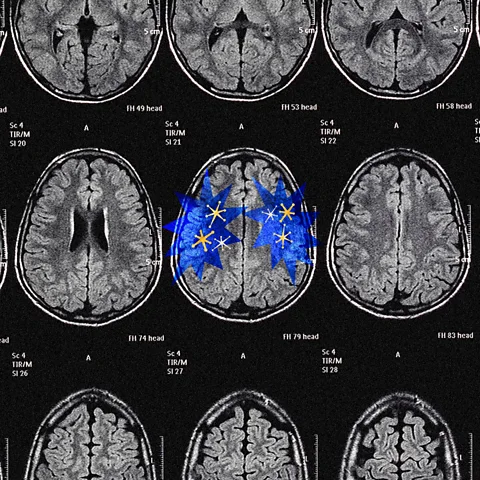
Actually, what the cortex wants is to minimise dopamine, just as it wants to minimise all of its activity. But, ironically, it gets dopamine any time it identifies a situation it deems unexpectedly successful – that's just how things are wired together!
Rather than thinking of this dopamine jolt into the cortex as a positive, pleasurable signal, I think it makes more sense to think of it as an imperative signal: figure this out. For the cortex, "figuring out" means aligning reality and expectation, and you can do that by either changing reality or changing expectations. I would guess that dopamine must shift the balance of forces toward changing reality, compelling us to act rather than accept the state of things as they stand. As of writing this, however, I don't know of any research that definitively shows that it does that.
Thinking of dopamine as a "figure this out" chemical explains the effects of both amphetamines on humans and dopamine depletion on rodents. It explains why Adderall can create "tunnel vision" in human patients. It explains why people with low levels of dopamine experience lack of motivation.
It also explains our fascinating obsession with uncertainty.
This is not unique to humans. Studies on the subject were done on pigeons but have since been replicated with other animals, too. You give these pigeons a button to peck and a reward as a result. Then you start changing the number of pecks required per reward. The more pecks required – say, 50 or a 100 pecks per reward – the more fatigued the pigeons seem after completing the task and the more reluctant they are to resume pecking.
More like this:
• How your hormones might be controlling your mind
• Nine science-backed ways to help you feel better in 2026
• How to help your body detox itself
But make the number unpredictable, and the pigeons don't stop. They continue pecking and pecking and pecking obsessively, regardless of how many times they get the reward. What motivates them is not the reward per se, but rather, a pattern yet to crack.
It gets even better. Say you once again take some pigeons, put them in a cage, and install a button, but this time you simply deliver the reward at random times regardless of any pecking. Soon, a few of the pigeons start pecking the button. Eventually, all of them do. They all dig in, trying to figure out a pattern when there's no pattern to figure out – and so they make it up, gradually becoming convinced that they are causing the reward.
All of this may sound almost painfully familiar. This is precisely why gambling and social media are so addictive: not just the monetary or social rewards, but their unpredictability. You never know which of your photos on Instagram will get a lot of likes or which of your TikToks will go viral. Casinos and social media networks amplify this unpredictability by delivering the rewards at random times – they are certainly well aware of these experiments on pigeons. Imagine how it would feel if all your "likes" arrived together, once a week, at a designated time. You would probably come to dread the day – it would hardly ever feel better than expected and mostly worse than expected.
Viewed in this way, it starts to become clear why we seem so misaligned with our motivations no matter what we do. Dopamine does not mark up the world into "good" and "bad." That would be easy: just do the "good" things, avoid "bad" things, and always stay motivated. Instead, dopamine marks an unexpected success – whatever we decide that means – and tells us "figure this out so you always have this success and are no longer surprised by it".
That might sound depressing. If that's what dopamine really says to our brain, then no matter what we do, in the long run we will always end up bored and dissatisfied, and that's the point. But there's a better way to look at it. The dread of boredom, the spectre of dissatisfaction is what makes us do new things. And new things are a way to find
unexpected surprises – those rare, unpredictable morsels of joy that make our lives worth living.
It is also a brilliant system, as far as its evolutionary value is concerned. Imagine two animals, one of whom is perfectly content with what it has and the other who easily gets bored and constantly looks for more. Which animal is more likely to survive in the long run? Dopamine is a bet on inevitable future change. Evolution favours the restless, the unsatisfied, the novelty cravers tormented by visions of more, because that keeps them from settling into place and, in the end, ensures their greater success.
As for peace of mind – well, you can live without that.
* This article is based on an extract from Nikolay Kukushkin's book, One Hand Clapping, first published in English in October 2025.
--
For trusted insights on health and wellbeing, sign up to the Health Fix newsletter by senior health correspondent Melissa Hogenboom who also writes the Live Well For Longer and Six Steps to Calm courses.
For more science, technology, environment and health stories from the BBC, follow us on Facebook and Instagram.