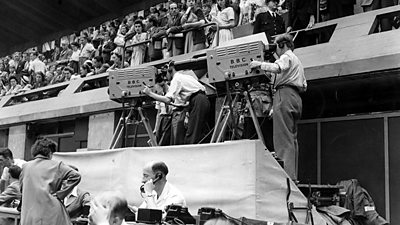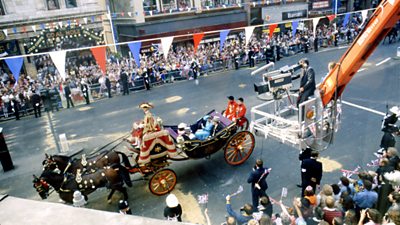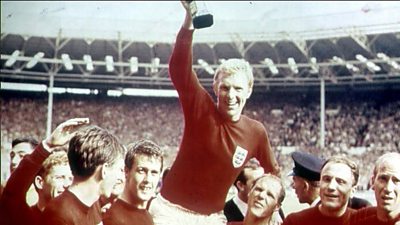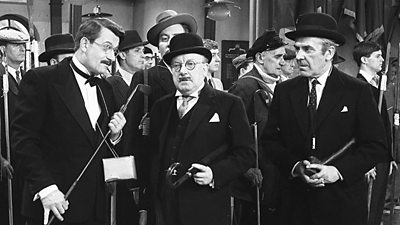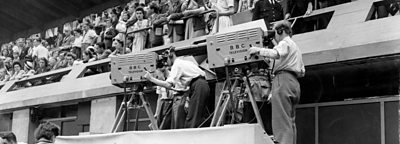
Image: The C.P.S (Cathode Potential Stabilisation) Emitron cameras televising events at the Empire Pool, Wembley on 2nd August, during the 1948 Olympic Games.
The 1948 Olympic Games were held in Wembley and the BBC televised them for the first time. An unprecedented outside broadcasting operation took place, starting with the opening ceremony on 29 July. The BBC provided facilities for the broadcasters of the 61 competing nations, so they could be seen and heard around the world. The first Olympics since the end of the War proved a great success, with athletes such as Fanny Blankers-Koen and Emil Zatopek capturing the public imagination.
The BBC screened over 50 hours of television during the two weeks of the Games. Writing in the Radio Times, OB Manager Ian Orr-Ewing expressed a wish that viewers would break the habit of watching everything that was on:
It is hoped that this habit will not persist during the period of the Olympic Games or viewers will be easily recognised in the streets of London by their pallid appearance!
The 1948 Olympics was a triumph for the BBC OB Department. Action scenes were much clearer with the use of advanced Emitron cameras. Although there were only about 100,000 televisions in the country - mostly in London - it showed the potential of television to bring sporting events to large audiences. When the Olympics returned to London in 2012, the BBC covered all the events and 51.9 million people - 90% of the population – tuned in.
The BBC and the 1948 Olympic Games

The Birth of TV: London 1948 Olympics
The '100 Voices that Made the BBC' project unearth unique oral histories from the team who made the biggest outside broadcast ever attempted.


Broadcasting the 1948 Games
How the coverage looked, sounded and how it was promoted by the BBC in 1948.
Staging the 1948 Olympic Games
Senior television engineer Norman Green recalls the preparation for the biggest outside broadcast yet attempted