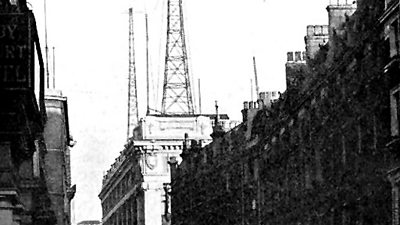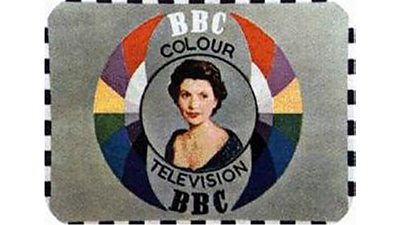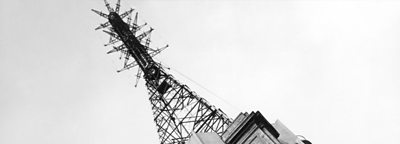
At 3pm on 2 November 1936 the BBC began the world's first regular hi-definition television service, from specially constructed studios at Alexandra Palace in North London.
As part of this, two different technical systems were being tested on alternate weeks for six months: John Logie Baird's mechanical system producing pictures of 240 lines, and the EMI-Marconi electronic system, which produced images of 405 lines. On the toss of a coin, Baird's system inaugurated the service, followed by EMI-Marconi's. The latter was to prove the winning system.
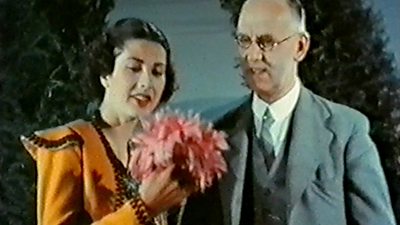
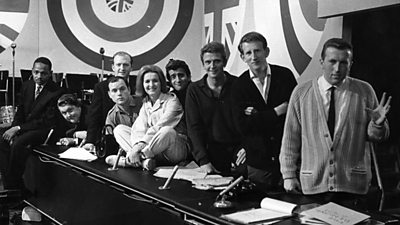
The formal opening ceremony was followed by a Movietone newsreel and then a variety show, featuring Adele Dixon and the BBC Television Orchestra. A short documentary, Television Comes to London, revealed the preparations leading up to the launch. In all, the service was on the air for two hours on its first day.
BBC Director General John Reith did not like the new medium, and in later life said he never watched television. However, he was in a minority as television became the dominant medium of the twentieth century. The term hi-definition as used in 1936 was defined as a minimum of 240 lines, and was applied in contrast to Baird's earlier system which used only 30. Today, standard definition at 625 lines is being replaced by digital hi-definition, which offers picture resolution of 1080 lines.
Find out more
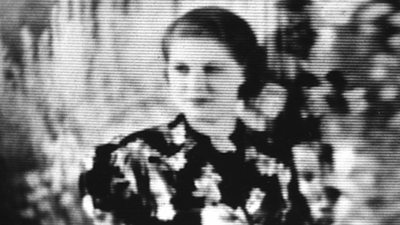
The story of BBC Television
Series of articles about the early days of television, from its battle for invention to the great televisual moment of the 1953 Coronation.

The Birth of TV: 100 Voices that made the BBC
The people who brought TV to you as recorded by the BBC Oral History ProjectNovember anniversaries
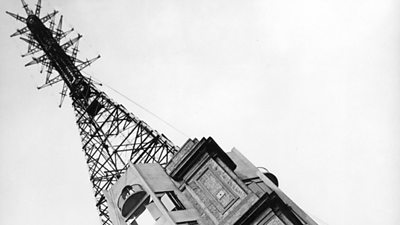
First regular hi-definition television service
2 November 1936
Hancock's Half-Hour
2 November 1954