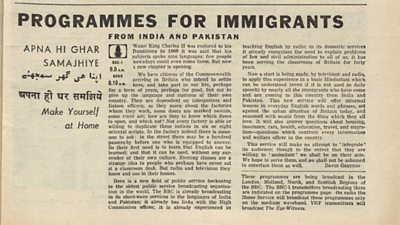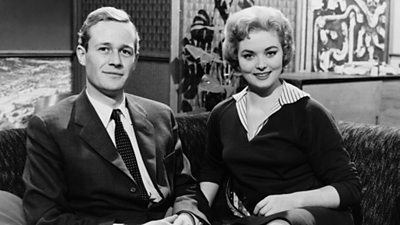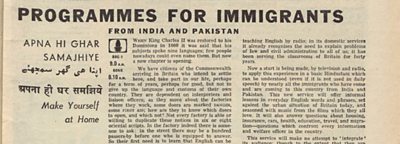
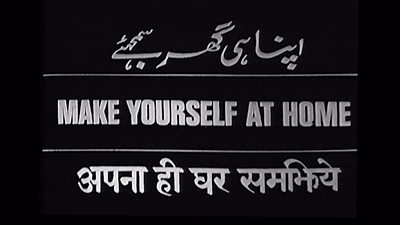
Apna Hi Ghar Samajhiye, or Make Yourself at Home, was broadcast for the first time on television and radio on the morning of 10 October 1965. The programme was aimed at recent immigrants from India and Pakistan.
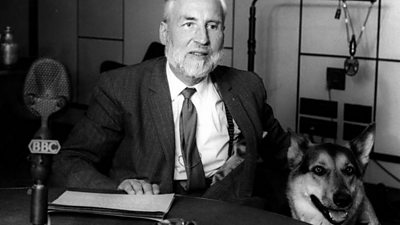
Contributors spoke a combination of Hindi, Urdu and English, providing informal language lessons based around everyday situations encountered in the UK. Entertainment was provided by a range of Indian classical or Bollywood music. It was introduced in the Radio Times by producer David Gretton, who heralded "a new field of public service broadcasting".
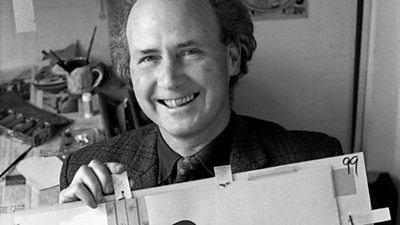
The service was established by BBC Director General Hugh Greene, following long talks with interested parties and a nudge from the Postmaster General Tony Benn. It was estimated that the target audience numbered about 250,000. Gretton particularly wanted to reach the women and schoolchildren who had only recently arrived. The programmes were made in Birmingham, where a large part of the audience was based.
Gretton died unexpectedly in 1966, but Make Yourself at Home ran on the radio until 1982. On television its place was taken by Nai Zindagi Naya Jeevan and, later, Gharbar. Several language books were published to accompany the series. Fifty years after the first programmes for Asians on the BBC, there is now a dedicated BBC Asian Network.
Further reading
People, Nation, Empire
In June 1948, Britain began the process of becoming multi-cultural and post-Imperial. How did the BBC respond?
October anniversaries
Winston Churchill's first wartime broadcast
1 October 1939
Songs of Praise
1 October 1961
Live and Kicking
2 October 1993