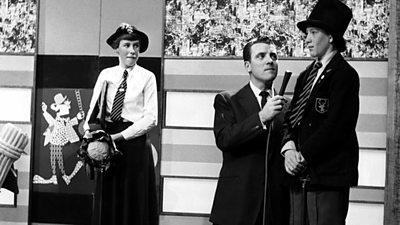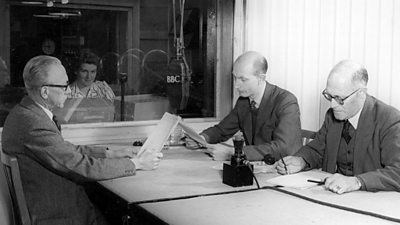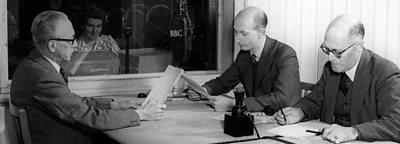
Image: the senior French announcer L.A.P de Valence (left) and J.G. Weightman, newsreader, with A.J Fransella May 1947.
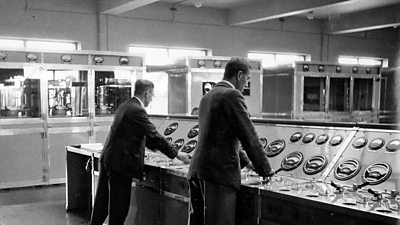
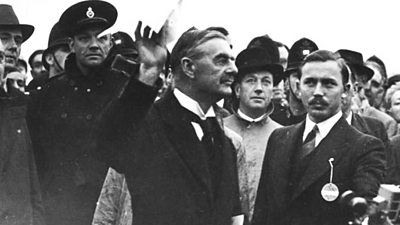
On 27 September 1938, the BBC broadcast across Europe its first news bulletins in French, German and Italian. Although the BBC Empire service had begun in 1932, the new service was a response to the Munich Crisis, beginning with a translation of Chamberlain's speech to the British population. Over the course of the next year, the European output increased by nine thousand hours and a composite service with music, shows and news formed.
Yet the greatest development was brought about by the Second World War. Despite German attempts to block the European service with heavy jamming systems, the output of these three languages increased sevenfold. It was through the BBC that Charles de Gaulle broadcast his famous Appeal of 18 June speech to inspire the French resistance, while it was Belgium broadcaster Victor de Laveleye who began the V for victory campaign. For this service the BBC received over four thousand letters of gratitude from France alone in the first month of peace.
The BBC emerged from the war as the largest international station in the world, a title which it still holds seventy five years later. The present day BBC World Service broadcasts in 28 languages, including English, and reaches massive audiences of two hundred million.
September anniversaries
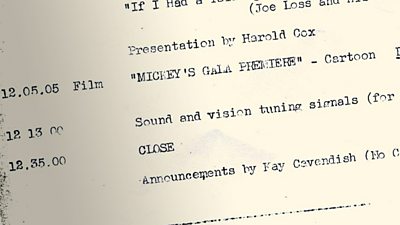
Close down of Television service for the duration of the War
1 September 1939
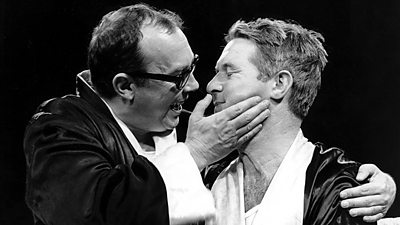
The Morecambe and Wise Show
2 September 1968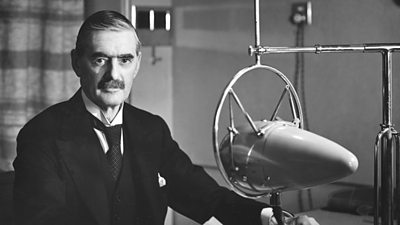
Chamberlain announces Britain is at war with Germany
3 September 1939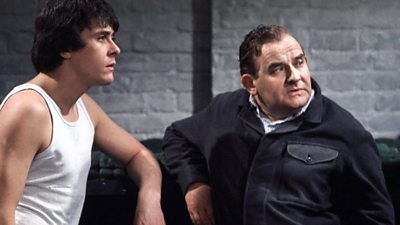
Start of first series of Porridge
5 September 1974