Untreatable migraine cases 'may drop to 2%'

 NHS Humber Health Partnership
A leading neurologist believes migraines will never be "cured in my lifetime", but the number of untreatable patients in the UK could drop to about 2% of those with the condition.
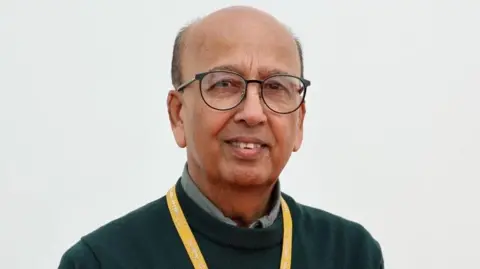
Prof Fayyaz Ahmed, 65, has spent nearly 30 years advancing headache and migraine research and treatment. He set up a pioneering UK clinic using Botox injections to treat migraines on the NHS and has treated 5,000 patients since it opened in Hull in 2012.
The consultant, who has published a book about his career, thinks the next generation of drugs may reduce the proportion of migraine sufferers who have not responded well to current medications.
According to the NHS, migraines affect six million people in the UK.
Migraines are more severe than headaches and are often accompanied by other symptoms, such as dizziness, sensitivity to light, visual disturbances, nausea and vomiting, and difficulty speaking.
The pain may be throbbing in one side of the head and can last several days.
The Migraine Trust, for which Ahmed is an ambassador, says the condition is two to three times more common in women than men.
According to Ahmed, treatments such as Botox and other drugs, which target a chemical in the brain called calcitonin gene-related peptide (CGRP) in order to block pain in the lead-up to a migraine attack, have so far helped about 95% of patients with the condition.
"In my lifetime I cannot see any cure coming out because we still don't know what causes migraines," he says.
 Hull University Teaching Hospitals NHS Trust
Current drugs control symptoms and triggers, which means sufferers get far fewer migraine days and can continue with daily life.
While no research is close to finding the root cause, oestrogen is a major trigger of migraines and family genetics is also a factor, Ahmed explains.
He says a new generation of drugs being developed in Denmark means the number of untreatable migraine cases could "come down to about 2 to 3%".
Ahmed, who is now partially retired, is also an honorary advisor with the British Association for the Study of Headache.
He says he faced some scepticism when he suggested establishing the UK's first dedicated NHS clinic to treat patients with Botox.
"I wanted to be the first one to set up a clinic for the benefit of the patients and I managed to do that and that is, I feel, quite a big achievement for me."
Now, 14 years on, Ahmed says he has turned his attention to "training the next generation of doctors".
He is also raising money via the proceeds from the sale of his new book to fund research by PhD students.
The book, titled Beneath the Dust, recounts his childhood in Pakistan and journey from medical school to the UK, as well as his work and research in the field. Proceeds will go to the Migraine Trust.
Ahmed says reading positive comments from patients on social media makes him "feel very happy that I have been a part of people's life changing experience", knowing he has made a difference to their wellbeing.
Listen to highlights fromHull and East Yorkshire on BBC Sounds, watch the latest episode of Look North.
Download the BBC News app from the App Storefor iPhone and iPad orGoogle Play for Android devices