Met awaits annual grant for Grenfell crime probe

 PA
PAThe Metropolitan Police says it is waiting to learn whether it will receive further government funding to assist its criminal investigation into the Grenfell Tower fire.
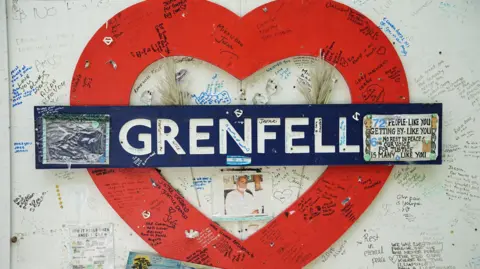
Operation Northleigh began after the blaze that killed 72 people in North Kensington in June 2017. It is one of the largest investigations ever undertaken by Scotland Yard.
The team has grown in numbers over the years and now involves more than 220 investigators - costing £127m to date.
Since the inquiry began, the Home Office has awarded the Met a special grant annually to help fund the work – but the force "awaits certainty" on these specific grants this year.
In a report to the London Policing Board, Met Commissioner Sir Mark Rowley said the force had not yet received confirmation that this support would continue.
In his report, Sir Mark wrote: "The Home Office announced the final Police Settlement on 29 January.
"The settlement was lower than we had anticipated, and the MPS and City Hall are in ongoing discussions with the Home Office about [the] 2026-27 and 2027-28 budget years."
Sir Mark added that the force "also awaits certainty on specific grants". This includes Operation Northleigh and Beaconport, which reviews closed investigations into group-based child sexual abuse and exploitation.
A Home Office spokesperson said the Met Police would receive up to £4bn next year, an increase of up to £180.6m compared to 2025-26 which is equal to a 4.7% boost in funding.
They added: "This is part of our record £18.4bn investment next year, to get more neighbourhood police on the beat, cut crime and catch criminals."
 Rex Features
Asked whether the Met had concerns about continued funding for the Grenfell investigation, a spokesperson told BBC London: "As in previous years the Met has applied to the Home Office for a special grant and we await the outcome."
According to the Home Office, each bid is assessed individually, and the department does not comment on applications while they are being considered.
The Police Special Grant is a discretionary fund used to help forces manage unexpected or exceptional costs that could put their finances at risk.
The Met said the criminal inquiry into Grenfell was examining a range of "very serious criminal offences" including corporate manslaughter, gross negligence manslaughter, fraud and breaches of health and safety law.
Investigators are assessing the actions of 20 companies and more than 50 individuals.
The force remains on track to submit case files to the Crown Prosecution Service for charging decisions this autumn.
Previously, Grenfell United, the bereaved families and survivors group, said they needed to see justice, describing the wait as "unbearable".
Speaking in the Commons in February, Housing Secretary Steve Reed said: "For the bereaved and survivors and the wider Grenfell community, the need for justice is deeply felt, including decisions on criminal charges."
The minister said the Metropolitan Police investigation was one of the most complex it had ever conducted, adding: "I know the slow progress is painful for those who have already waited too long for the justice they deserve."
Since 2017, the Home Office has provided more than £30m in special grant funding to support Operation Northleigh.
Sources have told BBC London that the commissioner's frustration may simply be down to timing, and that they expect the Home Office to approve the additional funding the Met has requested.
Grenfell disaster aftermath
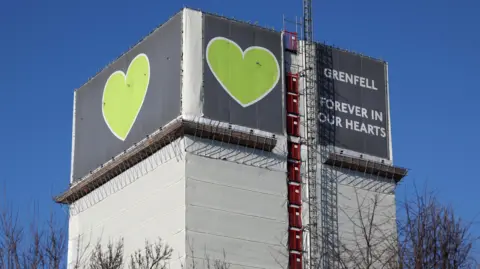
Work to dismantle Grenfell Tower began in September and is expected to take two years.
The government has also published a Construction Products Reform White Paper outlining plans for a single construction regulator and updated rules for building products.
Housing minister Steve Reed said the Building Safety Regulator would evolve into the body recommended by the Grenfell Inquiry, and confirmed that a consultation on the reforms had begun.
He also announced that new rules requiring emergency evacuation plans for high‑rise buildings would come into force on 6 April, ensuring vulnerable residents have a means of escape in an emergency.
On cladding, Reed told MPs that unsafe ACM cladding - the same type used on Grenfell - had been removed from 91% of high‑rise residential and public buildings, with work under way at most remaining sites.
Listen to the best of BBC Radio London on Sounds and follow BBC London on Facebook, X and Instagram. Send your story ideas to hello.bbclondon@bbc.co.uk