Almost a decade after Grenfell, my flat still isn't safe

 BBC
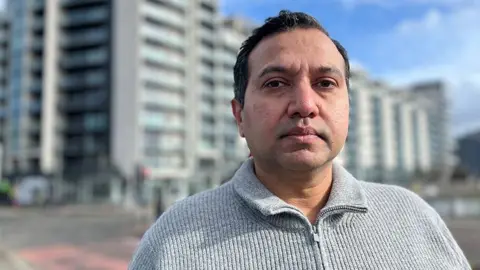
BBCWhen Abhijeet Kadwe bought a flat on the banks of the River Clyde in 2018, he thought he had found the ideal home for his family - as well as making a sound financial investment.
But after flammable cladding was found at Lancefield Quay in Glasgow, the father-of-two says he became a "mortgage prisoner".
As MSPs vote on proposals to fund repairs to high-rise buildings with unsafe cladding, Abhijeet says he finally sees light at the end of the tunnel.
Yet housebuilders - who will be taxed to fund repairs - argue the move could stymie construction during a housing emergency.
Kadwe bought the Lancefield Quay flat for about £210,000 in 2018, moving in with his wife and two sons.
That value nosedived, however, when inspectors confirmed the presence of aluminium composite material - the same cladding that caused the 2017 Grenfell Tower fire to spread rapidly, leading to the deaths of 72 people.
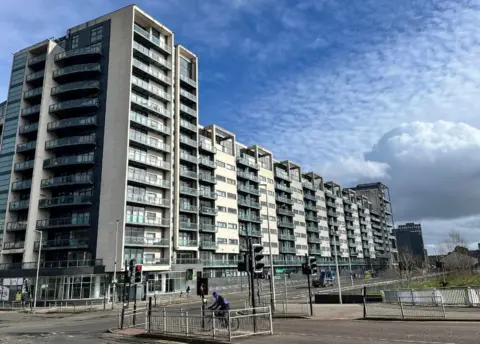
Faced with a spike in insurance costs and unable to sell his flat, Kadwe said he became a "mortgage prisoner" while fearing about the safety of his home.
"I've lost lots of sleep over it, if something happened we would have nowhere to run," he told BBC Scotland News.
"Nobody should be allowed to live in those conditions."
The business analyst was able to move his family to another property in the city's West End in 2022, though he said he accumulated "huge debts" while unable to sell the Lancefield Quay flat.
Others in the high-rise building had to stay put, with extra safety measures such as fire wardens put in place.
"I really feel bad for them," Kadwe said. "They are having to live in this unsafe condition and they can't move out.
"They're kind of stuck there, trapped in that building."
But with remediation work scheduled to begin at Lancefield Quay this year, Kadwe sees reason for optimism.
"Until the last piece of cladding is removed it's still unsafe," he said. "But it's on the right path."
A spokesperson for Miller Homes and Cala Homes, the firms that built the Lancefield Quay high-rise, said safety was their priority.
They added: "We are actively engaged with residents and are poised to progress remediation works as soon as possible, in line with our commitments."
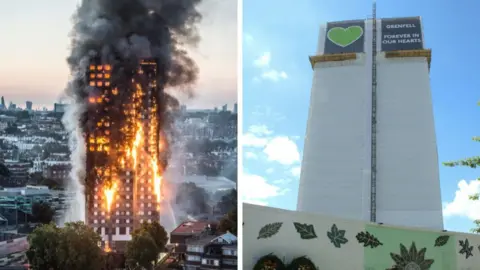
The charred shell of the Grenfell tower block in London has stood as a monument to building safety failings for almost nine years.
Long hidden from view under a clean white covering, it is now being torn down.
Cladding regulations in Scotland were already stricter than in other parts of the UK - due to lessons learned from a fatal tower block fire in Irvine, North Ayrshire, in 1999.
But assessments ordered after Grenfell revealed that high-rises north of the border were potentially unsafe.
The Scottish government has estimated that as many as 1,450 buildings may have flammable cladding. It is thought the repairs could cost up to £3.1bn over 15 years, though both the number of buildings affected and the remedial costs are disputed.
Cladding Remediation Programme
Developers are expected to pay for assessment and remediation work on buildings that they constructed. However, the government is offering funding to eligible social landlords, homeowners and factors via the Cladding Remediation Programme.
To fund its future work they have proposed a tax on housebuilding which MSPs are expected to pass on Tuesday.
The building safety levy is to be be introduced from April 2028, a year later than originally planned.
Ministers hope the tax, which mirrors legislation south of the border, will raise £30m a year.
The levy would apply to new homes built by developers for sale, student flats, build-to-rent properties and buildings being redeveloped for residential accommodation.
The precise tax rate is not included in the bill and is to be decided by MSPs at a later date.
Unusually, Holyrood's finance committee did not recommend support for the government bill, warning it carried a "significant risk" to the housing market.
Developers and opposition MSPs say the levy will curtail housebuilding at a time when new homes are desperately needed.
Several housebuilders warned MSPs that the tax was unfair to firms have not installed unsafe cladding, while parts of the supply chain that were responsible will not have to pay the levy.
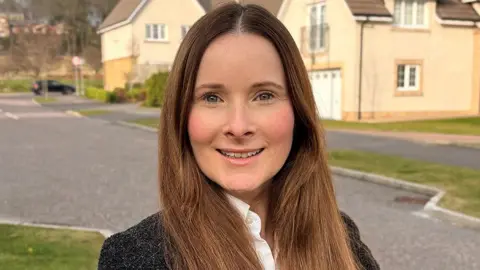
Aberdeenshire-based Bancon Homes, which has sites in South Lanarkshire and West Lothian as well as the north east, estimates that the tax could add between £3,000 and £4,500 to the cost of building every new home.
Land and planning manager Natasha Douglas said that would squeeze profit margins to the point where some sites earmarked for development may be no longer viable.
"It feels totally unfair," she told BBC Scotland News.
The Scottish government declared a national housing emergency in 2024 and pledged last year to invest up to £4.9bn in affordable homes over the next four years.
Yet Douglas says the levy would hamper efforts to increase supply.
"It seems as if the right hand doesn't know what the left hand is doing," she said.
"This will make it much harder to deliver housing."
Developers also told MSPs that many were already paying the Residential Property Developer Tax, a UK-wide corporation levy designed to raise funds for repairs.
Douglas added that the Scottish legislation would be a "double whammy" for large firms who are already paying to remove unsafe cladding from their buildings.
'I turn off the light and think is my flat safe?'
Chris Ashurst, founder of the High Rise Scotland Action Group, described living in a home with flammable cladding as "horrific", adding: "I turn the light off at night and think is my flat going to be safe?"
Ashurst told BBC Scotland News that he sympathised with smaller housebuilders but said the problem ultimately stems from developers failing to regulate themselves properly.
He noted that the situation is "horrendously complicated" in Scotland, with permission required from each individual flat owner before remedial work can start on a building.
Asked if he backed the levy, he campaigner responded: "What alternative is there? There ain't none.
"The scale of the difficulties are such there is simply aren't resources out there to do it."
Ahead of the stage three vote, ministers agreed to look at measures to ensure the building safety levy would not have a disproportionate impact on first-time buyers. The government has also included exemptions for social and affordable housing, as well as island developments.
Ministers also proposed a 50% relief for developments on brownfield sites and an increase in the number of homes a developer can build levy-free from 19 to 29.
A government spokesperson said developers would be asked to make a "fair contribution" to repair unsafe cladding "just as they are being asked to do under equivalent legislation in England".
They added: "In the absence of this measure, the funding would have to be found from elsewhere in the Scottish Budget, meaning less money to spend on hospitals, schools and roads."
The Scottish government has been given about about £97m from Westminster as a result of remedial work south of the border, with a further £194m expected within the next 10 years.
So far, the Scottish government has only spent about £16m on the programme. As of December, work had only been completed at two sites identified as part of the scheme.
And with the building levy not set to kick in until 2028, many Scots face lengthy waits to get peace of mind about the safety of their home.
Kadwe said he was lucky to be in a property where work is scheduled to start soon, but he recognises others are not as fortunate.
He added: "For all those developments which are not going to be remediated in the next few years, what message are they sending?
"They are saying that your lives don't matter to us."