Emergency sickle cell help extended after campaign

 Getty Images
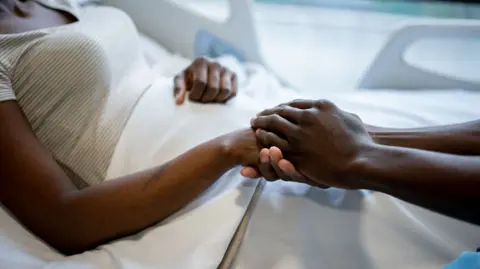
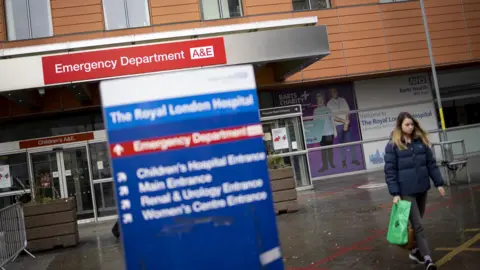
A specialised sickle cell emergency service at the Royal London Hospital in Whitechapel will continue following a campaign, it has been announced.
A trial run between September and January established a same‑day unit that provided an alternative to A&E admissions.
Barts Health NHS Trust says that, with an additional £1m investment, it aims to continue this service, but as yet it is not known if this will be in the format of a same-day unit, as before.
Dr Raj Thuraisingham, the hospital's divisional director for medicine, said: "Improving services for people living with this lifelong condition is one of our priorities and we worked hard to improve our community outreach provision."
 EPA
EPA'Debilitating and dangerous'
In a statement on the trust's website, Barts Health NHS said: "It's debilitating, dangerous, and a disease that disproportionately affects people from Black and Caribbean backgrounds.
"Those living with sickle cell disease need more than the very best medical treatment to manage this lifelong condition," it added.
The trust said one in seven of all those in the UK with sickle cell conditions lived in north-east London and Essex, and its hospitals had about 900 patients on their books.
It said this was why £2m had been invested in boosting emergency services for sickle cell patients in September "in order to improve patient outcomes, reduce health inequalities, and prevent hospital admissions".
It has now also confirmed another £1m for 2026-7 to extend these services into local communities, around a network of consultant-led one-stop clinics.
It said it hoped an additional £1m funding, yet to be confirmed, would help extend its emergency sickle cell provision into 2027.
'Positive outcomes'
The Sickle Cell Society welcomed the news and said that although "some aspects of the model may be refined, and the service may operate under a different name, the focus remains the same: ensuring people experiencing sickle cell crisis can access timely, specialist care".
John James, its chief executive, told the BBC: "The evaluation of the pilot demonstrated clear positive outcomes for both patients and clinical teams, reinforcing the importance of specialist crisis pathways.
"We would like to thank the patients and families who used the service and consistently highlighted its value. Their experiences have been central to our discussions with commissioners."
Listen to the best of BBC Radio London on Sounds and follow BBC London on Facebook, X and Instagram. Send your story ideas to hello.bbclondon@bbc.co.uk