Scottish Hospitals Inquiry: What is being investigated?

 PA Media
A long-running £31m public inquiry into safety and wellbeing issues at two Scottish hospitals is entering its final phase.
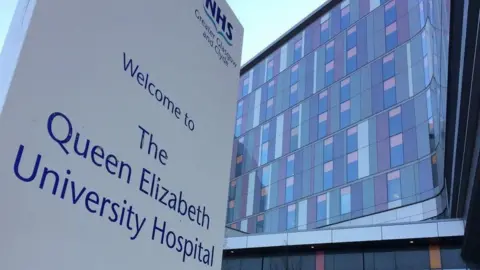
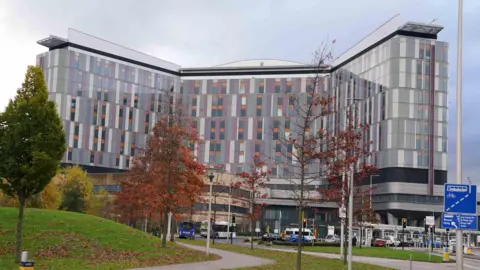
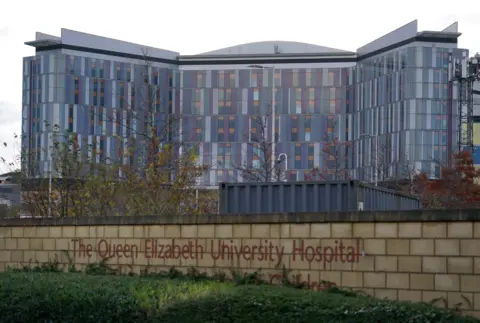
The inquiry will hear closing submissions relating to the risk of infection to both adult and child patients from the water and ventilation systems at Glasgow's Queen Elizabeth University Hospital (QEUH) and Royal Hospital for Children (RHC).
Much of the focus in this phase is likely to be on the shift in the position of NHS Greater Glasgow and Clyde on infection risks.
After years of denying bacteria in the water at the facility was responsible for causing some infections which led to the deaths of patients, the health board has now said "on the balance of probabilities" that there was a "causal connection" between some infections and the hospital environment.
Why is the inquiry being held and what is it covering?
The inquiry is being chaired by Lord Brodie KC and is examining issues at both the QEUH campus in Glasgow, and the Royal Hospital for Children and Young People (RHCYP) and Department of Clinical Neurosciences in Edinburgh.
The RHCYP in Edinburgh was due to open in July 2019 but was delayed after last-minute inspections found safety concerns over its ventilation systems.
The Scottish government then stepped in to prevent the hospital from opening just days before it was due to accept patients and there was then a 20-month delay until its full opening while improvements were made.
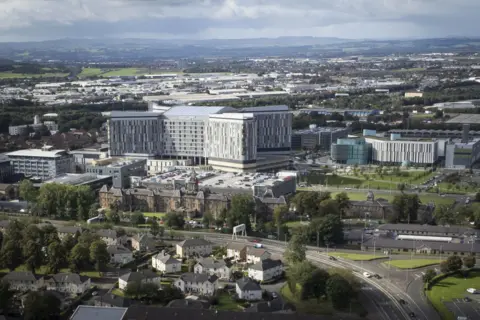
The £840m QEUH campus in Glasgow, which includes the Royal Hospital for Children, was hailed as a world leading facility when it opened in 2015.
But a series of infection outbreaks and concerns around the water and ventilation systems began to emerge three years later - and a number of patients died including 10-year-old Milly Main.
An independent review into the hospital's design published its findings in June 2020.
The report found a "series of problems" with the design and build of the hospital, but no clear evidence to link those failures to any "avoidable deaths".
However, that investigation did not consider child cancer patients.
 PA Media
What is the format of the inquiry?
The statutory public inquiry is being led by Lord Brodie, a High Court judge, and held under the Inquiries Act 2005.
The independent inquiry describes its "overarching aim" as considering the "planning, design, construction, commissioning and, where appropriate, maintenance" of both the hospitals.
It will determine how ventilation and water contamination issues affected patient safety and care - and whether these issues could have been prevented.
The inquiry will also recommend how "past mistakes" in both projects can be avoided in future NHS projects.
Last year, the inquiry published its report on Edinburgh's Sick Kids hospital, concluding that it was delayed after NHS Lothian failed to give clear ventilation requirements for the building.
NHS Lothian apologised for the failures in its design brief highlighted in the report.
A final report and recommendations for the Glasgow hospitals is due to be released later this year.
Why did the Scottish government order the inquiry?
Former health secretary Jeane Freeman ordered the public inquiry in September, 2019 and in June the following year she set out its terms of reference.
Ms Freeman said it had been ordered to protect the "safety and well-being of all patients and their families" which she said should be a "primary consideration" in all NHS construction projects.
The announcement followed an intense period of scrutiny over the delays to the RHCYP in Edinburgh and a series of infection outbreaks - and at least four deaths - at the QEUH.
A BBC Scotland investigation in June 2020 also spoke to senior doctors at the QEUH campus who said their attempts to raise concerns about risks to patient safety were not taken seriously.
They told BBC Scotland's Disclosure they were branded as troublemakers for raising the alarm.
What evidence has the inquiry heard so far?
During the first Glasgow hearing in 2021, Lord Brodie heard evidence about the physical, emotional, and other impacts on patients and families.
The inquiry also heard how a doctor told a mum her son would be safer at home getting cancer treatment than at the QEUH campus.
Other evidence included a mother, whose son was being treated for cancer on a children's ward, likening the hospital environment to "a third world country".
The second of the Glasgow public hearings last year heard from oncologists in the child cancer wards and those directly involved with patients.
One expert said she had never experienced a "more seriously toxic atmosphere" than the one she found among infection prevention and control staff at the QEUH.
A former infection control nurse also told the inquiry that staff at the children's hospital felt "extreme anxiety" that child cancer patients were unsafe.
And a senior doctor gave evidence that she was "appalled" at the state of child cancer wards when the new £870m hospital opened in 2015.
But a senior medical director said there was no direct evidence that unusual infections in child cancer patients were linked to a Glasgow hospital building.
In September last year, much of the focus of the hearings was on a new report which NHS GGC won a court battle to get considered by the inquiry.
The 218-page assessment, commissioned by NHS GGC, concluded the available data "does not support the opinion" that the water system at the QEUH had widespread contamination, or that its ventilation system was in an unsafe condition.
When the report authors appeared at the inquiry it was revealed that the infection cases linked to the hospital environment in the 2021 case note review - which concluded two deaths were at least in part the result of infections linked to the QEUH environment - were not included in the data handed to them to consider.
 PA Media
Who will we hear from in the latest phase of the inquiry?
This final section of the inquiry has set aside four days to hear oral submissions from the inquiry's main lawyer and the legal representatives of the other main participants.
This will include the health board, the Scottish government, NHS whistleblowers and the families of patients and families.
All parties have already submitted written submissions, which is how the change in NHS GGC's position was revealed.
The lawyers for the families are likely to reflect some of the reaction to this shift in the health board's stance.
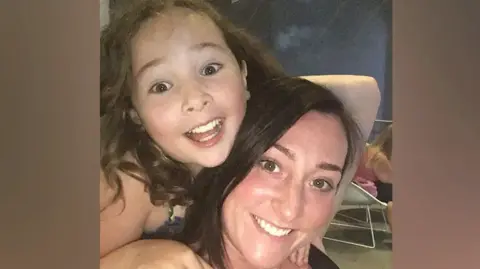
Molly Cuddihy, who died in August aged 23, became seriously ill in 2018 with an infection potentially acquired at the QEUH while receiving treatment for cancer.
Molly's father, John, told BBC Scotland News the NHS GGC statement was "overdue recognition".
He added: "The sad thing is Molly is in her grave and she never got to read the words or hear what they had to say."
 Scottish Hospitals Inquiry
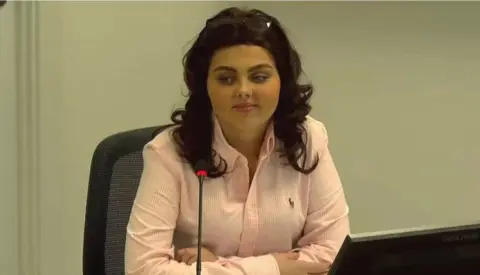
Milly Main had a successful stem cell transplant in July 2017 while in remission from leukaemia.
Her Hickman line, a catheter used to administer drugs, later became infected.
Milly's condition deteriorated and she went into toxic shock. She died on 31 August 2017.
Her mum Kimberly Darroch welcomed the admission from NHS GGC, adding: "This acknowledgement is a significant milestone for our family, but it also highlights how hard families have had to fight just to have the truth recognised".
What happens next?
The final report into the QEUH is expected later this year but that will not be the end of the issue.
The Crown Office and Procurator Fiscal Service (COPFS) is currently overseeing a corporate homicide investigation into the deaths of Milly, two other children and 73-year-old Gail Armstrong.
In addition, last year prosecutors opened an investigation into Molly's death after it was reported by a NHS consultant.
There also remains the possibility that fatal accident inquiries into some of the hospital deaths will be announced by COPFS.
And civil legal action by some of the families against NHS GGC is also likely.