My dog's treatment cost £1,600 - vet bills are shocking

 BBC
BBCWhen Helene Svinos had to urgently admit her dog for treatment last year it cost her £1,600.
She ended up having to take out a loan to cover subsequent treatment which was higher than her insurance policy covered.
It's one case illustrating why veterinary practices may now be forced to publish prices of common treatments so pet owners can shop around and choose the best value option.
They will also need to have an official operating licence to help drive up standards, under proposals from the Department for Environment, Food & Rural Affairs (Defra) - the first reforms in 60 years.
Helene, from Manchester, got in touch with BBC Your Voice earlier this month about her experience when her dog Rowan had an emergency admission while away in Suffolk last summer.
It was the second treatment the dog had had that year, which pushed Helene over her insurance limit. She says she was unhappy with the procedure but her complaint hadn't been investigated.
When Rowan was subsequently diagnosed with cancer in October 2025, Helene took out a £10,000 loan to cover the costs of treatment "because I didn't want him to go without anything". Rowan died last month.
She told the BBC: "As a doctor it's shocking because we have a very good complaints procedure.
"Our pets are family, my life revolves around my pets, and to have awful treatment, and also not be able to complain and then the vet bill on top of that, it's just appalling - it feels like a real kick in the teeth actually."
There is "no protection of your consumer rights at all when you take your dog to a vet", she added.
More than half of all UK households are thought to own a pet.
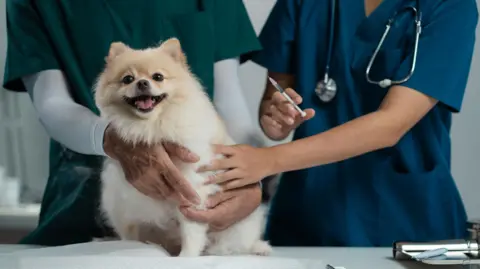
Common treatments might include annual vaccinations, first vaccinations for puppies or kittens, microchipping and neutering or spaying a dog or cat.
 Getty Images
The Competition and Markets Authority (CMA) watchdog has found that vet prices have risen at nearly twice the rate of inflation. It has welcomed the consultation.
The British Veterinary Association, which represents 19,000 members, said it broadly supported the proposals, but these were "very unlikely to dramatically alter the cost of veterinary care".
Under the plans, vet practices would also need to be transparent around pet owners' options and any changes to treatment.
It said 60% of vet practices are owned by non-vets. Practices would be required to disclose who owns them.
This knowledge plus price transparency would help owners decide which practice to use which "increases competition and brings down cost".
Animal Welfare Minister Baroness Hayman said: "We're focused on making vet services work better for families by improving transparency, increasing choice and helping people make informed decisions, while continuing to support the professionals who care for our animals."
Among its other proposals are:
- Every vet practice to have an official operating licence – similar to GP surgeries and care homes - helping customers have "greater confidence in care"
- An "easier and more effective" complaints route
- Legal recognition for veterinary nurses to "strengthen professional identity, helping improve job satisfaction and boosting retention rates"
It is launching an eight-week public consultation, closing on 25 March.
'Unlikely to lower cost'
A File on 4 investigation in April last year found vets bills had skyrocketed. Hundreds of pet owners got in touch with the BBC with concerns.
Vets and animal charities have said pet owners were increasingly having their sick animals put down or are delaying taking them for treatment to avoid spiralling vet bills.
Mounting concerns over whether pet owners are receiving a fair deal prompted the CMA to launch a formal investigation near the end of last year. It has estimated problems in the veterinary market could be costing households up to £1bn over five years.
There are no standardised prices for treatments, and the CMA found 84% of vet practice websites had no pricing information at all.
Dr Rob Williams, president of the British Veterinary Association, said it was too simplistic to think that legislative reform would "somehow massively reduce the cost of veterinary care".
"There's far too many factors at play," he said. "The cost of living is something that affects vet practices. It is very expensive to deliver the care.
"As a profession we can do an awful lot more today than we could do even 10 years ago. We have a much better understanding of diagnostics and treatment options… and quite rightly in my view the animal-owning public have a much higher expectation of my profession and what we can deliver in terms of the care we provide for their animals."
He added the reforms would increase transparency and "may go a long way" to increasing competition, but "of themselves they are very unlikely to dramatically alter the cost of veterinary care".
 Getty Images
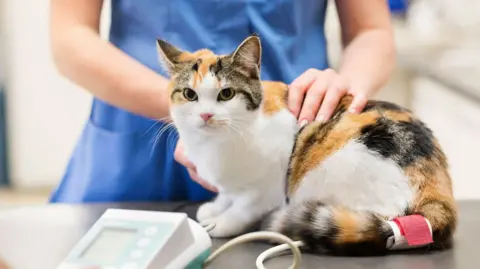
Dr Christine Middlemiss, UK Chief Veterinary Officer, told the BBC the reforms would broaden the availability of services.
She said veterinary nurses would come under regulation, meaning they would be able to undertake certain standard procedures, whereas currently "they have to do everything under the supervision of a veterinary surgeon".
The vet charity PDSA, which provides funded care for eligible pet owners, said there was no benefit in charities publishing prices when treatment was already being provided at no or low cost.
Chief Veterinary Advisor Steve Howard said it would "cause confusion and increase demand from people who are ineligible for our support.
"This proposed move will add significant, unnecessary pressure to charity providers with no benefit to our clients."
Additional reporting by Kris Bramwell


Get our flagship newsletter with all the headlines you need to start the day. Sign up here.