Deputy FM briefed on situation for people from NI in Middle East

 BBC
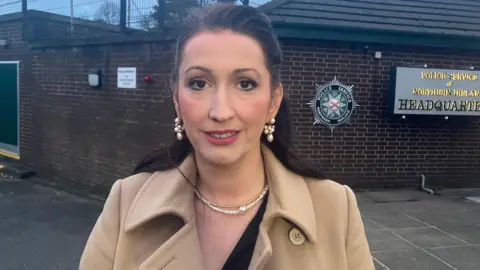
BBCThe deputy first minister has said a registration scheme is likely to be launched for people from Northern Ireland living in the Middle East.
Emma Little-Pengelly virtually attended a briefing with senior UK government security advisers about the situation in the Middle East, alongside the first ministers of Scotland and Wales.
The United States and Israel launched a large-scale attack on Iran on Saturday morning, followed by retaliatory strikes by Iran on Israel and other locations - including in Bahrain, where the US has a naval base.
Little-Pengelly said First Minister Michelle O'Neill, of Sinn Féin, was invited to the briefing but did not attend and she did not know why.
A spokesperson for the Executive Office, which is headed by the first minister and deputy first minister, said both women were offered a meeting by the Cabinet Office.
They said the deputy first minister attended "on behalf of the Executive Office."
BBC News NI has contacted Sinn Féin for comment.
O'Neill posted on X on Saturday night to say the UN charter had been violated by the attacks on Iran and that they should end immediately.
She said her thoughts were with people affected and that anyone living in the Middle East who needed help - or their families - should contact the Irish or British embassy in their country.
Little-Pengelly said there were many people from across Northern Ireland who would be apprehensive about their loved ones who lived in the Middle East.
"It's estimated there are around 100,000 UK citizens living and working and visiting in the wider region as well," the Democratic Unionist Party assembly member said.
"There's a lot of families, a lot of ones here at home that will be very worried about them."
"We want to do everything that we can to make sure our citizens in the Middle East region are safe.
"At the moment the advice very clearly is to shelter, to stay inside and to make sure that you're keeping up to date with that advice from the UK government."
She said she had raised with the UK government that people from Northern Ireland may have British passports, Irish passports or both.
"We want to make sure that everyone from Northern Ireland who's out there in the region can get that advice and can get that support if and when they need it," Little-Pengelly said.
She added that the Iranian regime was "an appalling one" that had created instability.
What have other politicians said?
Social Democratic and Labour Party leader, Claire Hanna, said she was "deeply alarmed by the escalating military confrontation".
"I am also concerned by reports that UK military aircraft are in the skies over or near Iran," the Belfast South and Mid Down MP said.
"The UK must urgently push for de-escalation, press for an immediate ceasefire, and work with international partners to prevent a wider war.
"Diplomacy, not further military action, must be the focus."
Taoiseach (Irish Prime Minister) Micheál Martin said he was deeply concerned about the risk of wider conflict in the Middle East.
"I strongly urge all parties to exercise restraint and to work to avoid that outcome," he said.
What have Iranians in Northern Ireland said?
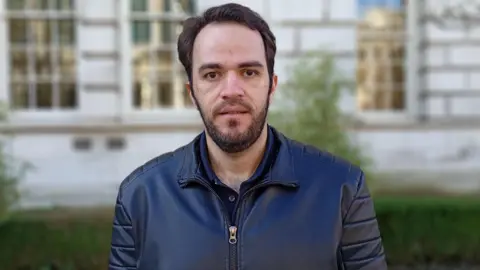
Iman Talebian, a PhD student who has been in Northern Ireland for three months, said he would have no prospects of finding a job with a good salary if he lived in Iran.
"I think the vast majority of people are happy about the military intervention because they have no other choice - and they embrace the intervention," the 33-year-old said.
He added that people in Iran "were in lots of pain economically and the freedom is terrible".
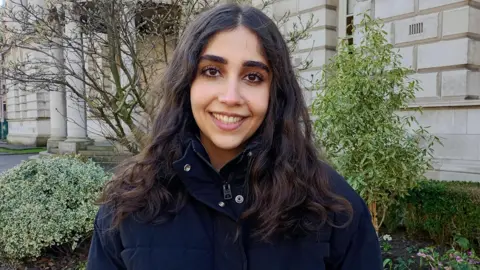
Fatemeh Sadat Mosavi, who has grandparents and other family members in Iran, said Iranian people loved their country.
"They hope Iran will be free as soon as possible and they can come back to their country and live like others," the 23-year-old said.