Council to urge government to scrap pipeline plan

 BBC
BBCA council leader is writing to Energy Secretary Ed Miliband to urge him to scrap controversial plans for a carbon capture pipeline scheme.
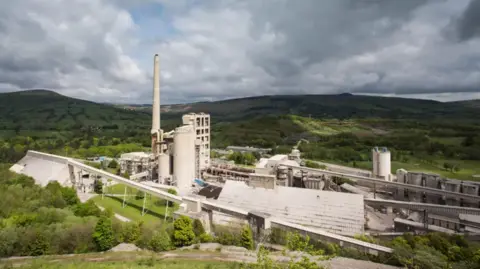
The £60m Peak Cluster project will capture carbon dioxide (CO2) produced at cement and lime plants in the Peak District and transport it via a pipeline in Wirral to be stored under the sea.
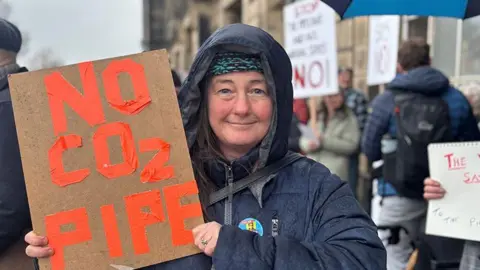
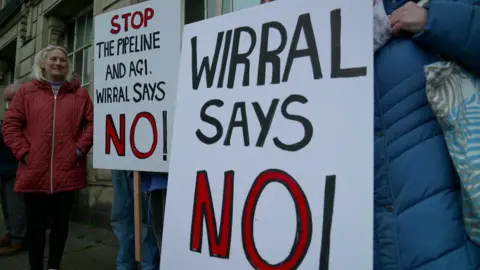
Hundreds of protesters turned out ahead of Wirral Council's extraordinary general meeting, where it was agreed that council leader Paula Basnett would set out cross-party objections to the government.
The government has previously said it had no plans to pause the scheme and independent safety, environmental and legal assessments were carried out for each storage site.
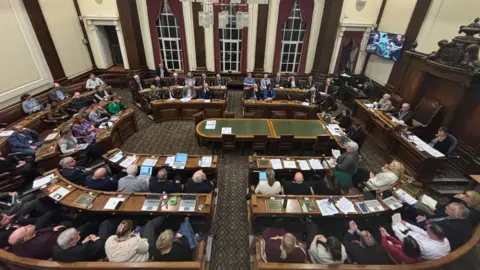
Councillors from all parties on the Labour-led authority said that this project risked damaging Wirral's beauty spots and coastline.
Liberal Democrat Councillor Chris Carubia said he did not want to see Wirral become "the exhaust pipe of the North West", to applause from a packed public gallery.
The government has described it as as the world's largest cement decarbonisation project and said it would generate and secure thousands of jobs.
Peak Cluster is designed to capture CO2 from the cement industry in Derbyshire and Staffordshire and transport it 200km (124 miles) to the Wirral coast before injecting it into depleted gas wells in the Irish Sea.
The pipeline will be underground and built in sections.
But residents who live along its route have been critical of the plans with almost 17,000 people signing a petition opposing the scheme.
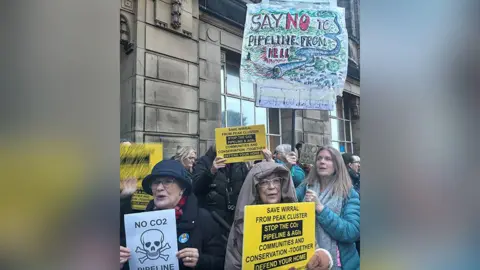
While Peak Cluster said it would work with the local community and listen to concerns around noise, visual impact and lighting, residents are extremely concerned about the impact this could have on its coastline.
Many said they were also worried about the safety of the pipe.
Jackie Copley from the Campaign for the Protection of Rural England (CPRE) told BBC North West Tonight: "When [the government] are weighing the balance between the benefits and the harm (of projects like this) make sure those landscape harms are fully weighed in the balance because at the moment it feels like development is almost automatic as if it doesn't matter what's happening to the landscape.
"The CPRE thinks that's the wrong way to go."
David Parkin, chairman of the Peak Cluster project, said: "We acknowledge a 200km pipeline is a very significant infrastructure project and will have a level of construction disruption.
"The main process we are going to do is called trenched construction so essentially, we dig a large trench in a field, we weld up the pipe, drop it in, put the soil back and then the farmer can re-use the field as it was before."
Parkin said the project would use "tried and tested technology" and it was safe.
 Peak Cluster
'Low risk of damage'
Responding to the petition, the government said there were no plans to pause the development of UK Offshore CO2 storage projects.
"Government works with regulators and the public to ensure CO2 storage regulations support the safe deployment of CCUS," a spokesperson said.
They said independent technical analysis it had commissioned showed very high long-term containment confidence, with a typical project expected to retain over 99.9% of injected CO2₂ over a 125-year period.
"Minor leak rates have a low probability of occurring whereas major leak rates have a very low probability of occurring," the spokesperson said.
"Therefore, the likelihood of damage to the marine ecosystem is considered to be very low."
Listen to the best of BBC Radio Merseyside on Sounds and follow BBC Merseyside on Facebook, X, and Instagram. You can also send story ideas via Whatsapp to 0808 100 2230.