UK CO2 plant to reopen in Iran war contingency plan

 Ensus
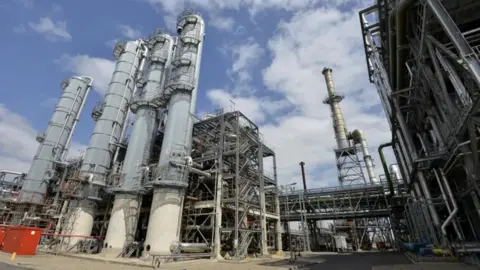
EnsusThe UK government has agreed to invest £100m to reopen a carbon dioxide (CO2) plant in a contingency plan against supply disruption caused by the war in Iran.
The site in Teesside, operated by Ensus, will restart operations after it was mothballed in September.
CO2 is a key part of food and drink production and is used to stun livestock during slaughter as well as in packaging to keep food fresh, and in fizzy drinks.
The plant, which manufactures bioethanol which produces CO2, was shut after the government struck a trade deal with the US which removed a tariff on American ethanol imports into the UK.
The decision, first reported by the Financial Times, is believed to have been partly driven by concerns about the rising cost of energy on fertilizer companies in Europe, which also produce CO2 as a byproduct.
Business Secretary Peter Kyle said the move would "boost the resilience of our supply chains and protect critical UK sectors like food production, water and healthcare, as well as the jobs and communities that depend on these industries."
Grant Pearson, chairman of Ensus UK, said it was excellent news for its employees and those in our extensive supply chain.
"It strengthens the broader Teesside manufacturing economy and the UK's resilience in relation to biogenic CO2 supplies. These are vital to food and drinks companies, as well as being important to hospitals, abattoirs and the nuclear industry."
The business at Wilton International industrial site employs about 100 people and supports a UK supply chain of about 3,000 jobs.
Oil and gas prices have risen sharply since the US and Israel launched military action against Iran on 28 February.
Tehran has effectively closed the Strait of Hormuz, which is a vital shipping route for a fifth of global oil and gas supplies.
In 2021, the UK food and drink industry faced a CO2 crisis after the price of wholesale gas surged and fertilizer producers struggled with higher manufacturing costs. Supply problems and higher costs returned the following year.
Last May, the government struck a trade deal with the US which removed a 19% tariff on ethanol imports up to a quota of 1.4bn litres, approximately equivalent to the size of the UK market at the time.
Vivergo Fuels, which was owned by Associated British Foods and produced bioethanol, closed and Ensus's plant was mothballed.