Multiple concerns were raised before man's suicide

 Family
Multiple concerns, including by an MP, were raised about a man with mental health issues days before he took his own life, an inquest has heard.
Tyran Jones, 30, died at his home in Northfield, Birmingham, on the morning of 30 March last year.
The city's coroner's court was told referrals were made by an ambulance service, a housing association, a charity and Birmingham Edgbaston MP Preet Gill in the days leading up to his death.
His mother, Tina Jones, told the hearing her son was the most "loving, caring, helpful, gentle, non-judgemental person you could ever meet".
"He used to feed the homeless," she said. "He wanted to help people but he couldn't get help himself."
Tina Jones alleged mental health professionals ignored concerns that were raised.
"I have no doubt if Tyran had the right help, he would be here today," she said.
"I feel his death certificate should record death by suicide due to lack of safeguarding."
- If you have been affected by any of the issues raised in this story, information and support can be found at the BBC's Action Line.
In his conclusion, assistant coroner Ian Dreelan said he "very sadly" came to a verdict of death by suicide and he would not be providing a narrative verdict or a prevention of future deaths report.
The inquest heard Tyran Jones, who was autistic, had been on the radar of mental health services for at least 10 years and he was being supported by specialist community teams at the time of his death.
 Family
Dr Ellis Hamilton, a GP at Ley Hill Surgery in Northfield, said there were past issues of suicidal ideation and overdose and Tyran Jones also had concerns about his hormone levels, testosterone and his fertility.
Hamilton's last appointment with Tyran Jones was on 24 March last year, when he had recently broken up with his girlfriend and said he had taken an overdose the previous weekend.
"Mr Jones informed me he did not want to live due to ongoing problems in his life," Hamilton said.
But the doctor said that while he made sure Tyran Jones had crisis numbers, he had concluded he was not at immediate risk of suicide because he had a medical procedure scheduled for the next day which went ahead.
Joanne Lowe, an assistant director at Birmingham City Council, confirmed Tyran Jones had been known to adult social care since 2015 and spent two separate periods detained at Queen Elizabeth Hospital in 2024 under the Mental Health Act.
She said it was "unusual" that he was in a general hospital and not taken to a psychiatric hospital and agreed this was "sub-optimal".
"I would have expected that he would have been moved to a psychiatric hospital as soon as [a] bed was identified as being available for him," the assistant director said.
 Family
January 2025 was the start of Tyran Jones' most recent contact with council-run adult social care services, Lowe continued.
It was that month Autism West Midlands got in touch with the council's social care services and Tyran Jones was placed on a waiting list for support from the authority.
On 20 March, a further referral came from West Midlands Ambulance Service, which raised concerns that Jones had been discharged from hospital the previous day after telling hospital staff he did not feel safe at home.
Then, on 28 March, two days before his death, further referrals were received by a triage team from Autism West Midlands, Clarion Housing Group and Gill.
Lowe explained the MP's letter was not opened until Monday, the day after Jones had taken his own life, because of the way it was routed through the system and the time it arrived on a Friday evening.
Dr Ilemobayo Fapohunda, a consultant in the home treatment team for Birmingham and Solihull Mental Health NHS Foundation Trust, told the inquest he saw Tyran Jones on 27 March but felt he was in a better place as the medical procedure had gone well.
"It was felt he could be passed back to his community mental health team and he would be OK with the crisis numbers," the consultant said.
"This was the best I had actually seen him in my contact with him. It was positive [and] it was bright."
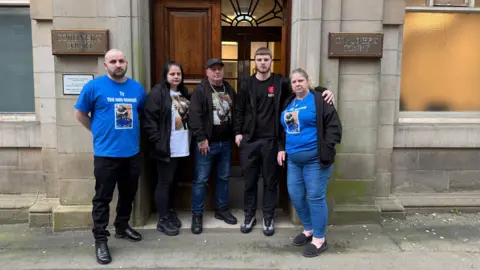
Samantha Munbodh, head of patient safety at the trust, said a detailed report had looked at the systems of how staff worked.
She said some staff, despite having mandatory training, had asked for more guidance in dealing with patients with autism.
When asked whether Tyran Jones had presented "masking behaviours" and whether this was captured in risk assessments, she responded: "There was evidence of it yes within the clinical record, but I can't remember if it was in the risk assessment."
The family had pressed for a narrative conclusion due to the number of referrals made over several days before Tyran Jones' death, which they said were not actioned.
But the assistant coroner said he was satisified that the learnings undertaken by the hospital were not linked to the death and Dreelan stated action had been taken to improve the way clinicians interacted with people identified as neurodivergent.
Follow BBC Birmingham on BBC Sounds, Facebook, X and Instagram.