Childhood cancer rates 'no higher' in toxic town
 BBC/NEWSNIGHT
Childhood cancer rates are not higher than average in a town at the centre of the UK's most high profile toxic waste scandal, according to two sets of findings published by the local council.
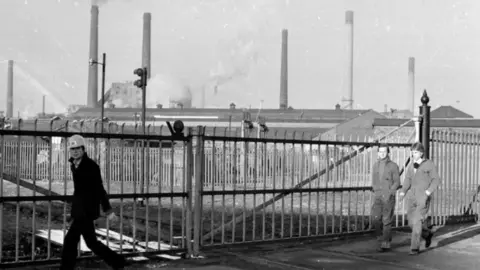
Dust from work to dismantle the former steelworks in Corby, Northamptonshire, is believed to have caused birth defects and many families suspect pollution is behind childhood cancers.
North Northamptonshire Council said two independent analyses found childhood cancer rates in Corby were no higher than elsewhere in England.
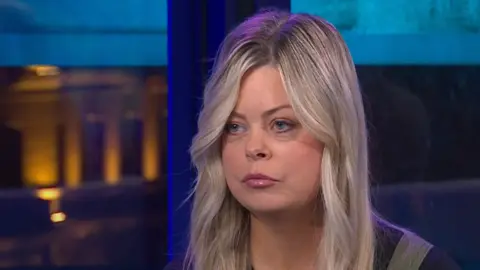
Parents Alison Gaffney and Andy Hinde, from Great Oakley in Corby, said the report "looks like it has been manipulated to usefully undermine the community's concerns".
 Getty Images
The council agreed to look at local childhood cancer rates after families raised concerns that more young people were being diagnosed than would be expected.
The steelworks closed in 1980 and millions of tonnes of contaminated waste was taken to Deene Quarry on the outskirts of the town.
The council said two studies of different data sources "do not provide evidence to suggest that rates of childhood cancer in Corby are higher overall, or that there are areas within Corby that have higher than expected rates".
Alison and Andy, whose son Fraser, nine, was diagnosed with cancer aged 17 months, have been asking the council to look into the cancer rates.
The couple described the council's investigation as a "small-scale look around Deene Quarry".
"[This] is not going to identify widespread problems, that we know exist," said the parents, in a statement.
"Our own efforts have uncovered several other at risk areas which have not been examined by the council, according to this report.
"Have the children and people of Corby not suffered enough? We've been patient and given the local authority plenty of time to come clean - but they have chosen not to do so. It is so disrespectful.
"Without seeing the full data sets, that the council has point blankly refused to share, this summary report is not worth the paper it is written on."
The council said while it was publishing the full reports, raw data could not legally be published because of "strict and important data protection rules".
 Sam Read/BBC
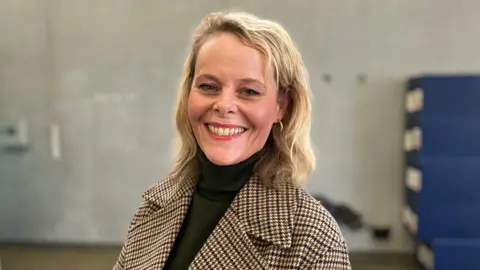
Jane Bethea, director of public health for North Northamptonshire, said: "We approached this analysis with seriousness and sensitivity, ensuring the most robust methods were used and that the work was independently reviewed.
"The findings provide reassurance that childhood cancer rates in Corby are not higher than expected.
"However, we recognise the courage it takes for families affected by cancer to share their experiences, and we remain committed to listening, learning and acting on future concerns that may fall within the remit of the council."
 Netflix/PA Media
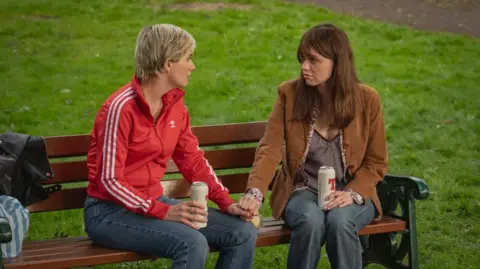
The Netflix drama, Toxic Town, was released last year showing the struggles of families in Corby whose children were born with defects.
It featured a 2009 High Court case where Justice Akenhead ruled in favour of 18 families and that Corby Borough Council was negligent in managing the waste from the former steelworks site.
The borough council was abolished in 2021 and, along with other authorities, was replaced with NNC.
 Kate Bradbrook/BBC
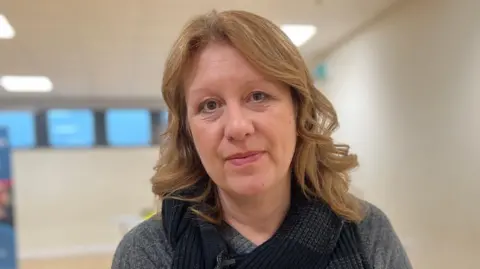
Campaigner Tracey Taylor was one of those depicted in the programme.
Her daughter Shelby Anne died at four days old. She said the new reports needed to be "looked at and examined fully".
"The fight still goes on for a public inquiry," she said.
"Childcare cancer is just part of it.
"We still have 40 angel babies and 40 or 50 people with limb differences who have come forward since the campaign. It still warrants a full public inquiry."
Des Collins, the solicitor representing local families, said: "Sadly, the council's analysis is fatally flawed. Put simply, if you choose to look in the wrong direction you won't find the real answers.
"The strong and determined Corby community won't be taken for fools. They know there's a damaging health issue across the town... and recognise it is now likely to require a public inquiry to expose it.
"Frankly, the council's obstinacy is a shocking dereliction of duty and cruelly dismissive of the valid concerns of people it is supposed to serve."
The authority said one analysis had been carried out by its own staff using official data based on where people aged 0-19 lived when they received hospital care between 2015 and 2025.
A second study by the National Disease Registration Service used data based on where someone lived when the cancer was first reported between 2013 and 2022, and this was thought to be the most "complete and accurate" data source, the authority said.
Martin Griffiths, the Reform UK leader of the authority, said: "These findings will be reassuring for many, and they reflect a great deal of care, professionalism and collaboration between the council, the NHS and national agencies.
"We will continue to be open with our residents and responsive to their concerns."
Last year, local families and the charity Earthwatch Europe took freshwater samples to test for industrial pollutants but the Environment Agency said "initial data" indicated there was no "significant impact" on the freshwater ecology.
Follow Northamptonshire news on BBC Sounds, Facebook, Instagram and X.