Birdsong project uses AI to spot rare species

 BBC
BBCA university audio survey has used artificial intelligence and wireless monitoring to identify rare birds.
The Green Box project, carried out by Harper Adams University, Shropshire Council, and the River Severn Partnership, found that unusual visitors, including the firecrest and the pink-footed goose, have flocked to Shropshire.
These two species are particularly rare and are not often seen in the county.
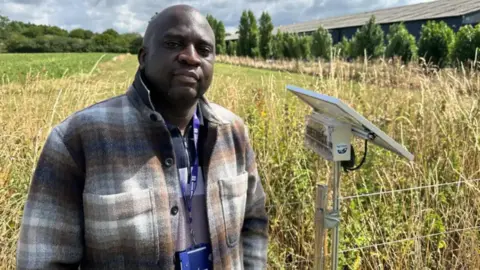
Dr Joseph Mhango, a senior lecturer in data science at Harper Adams, said the survey "has real potential to support conservation planning and help us track species of concern more effectively".
The project uses tiny acoustic sensors created by the university to listen out for birdsong in a range of Shropshire habitats, including farms.
The researchers then use artificial intelligence to pick out different bird calls.
It is one of a number of projects supported by the River Severn Partnership Advanced Wireless Innovation Region's £4.4m funding, which is provided by the government.
"[What] this work shows is that wireless technology can give us a much richer, longer‑term understanding of bird activity across different habitats," Dr Mhango said.
'Protect vulnerable species'
The birdsong data is captured continuously, in real time.
It is hoped that the wireless monitoring will help build a better picture of how red- and amber-listed birds are using various environments to inform future conservation decisions.
Pink-footed geese, for example, are on the amber list, meaning their conservation is a concern.
The species tends to nest in Greenland and Iceland and can be found in Scotland and northern and eastern parts of England during the winter months.
Councillor Rob Wilson, who oversees digital on Shropshire Council's cabinet, said the project "shows how digital innovation can be applied in a very practical way".
He added that the findings will "improve the evidence we use to make decisions" as well as support biodiversity planning and can "help protect vulnerable species across Shropshire and the wider Severn catchment".
Follow BBC Shropshire on BBC Sounds, Facebook, X and Instagram.