Drugs awareness warning after sons' deaths

 BBC
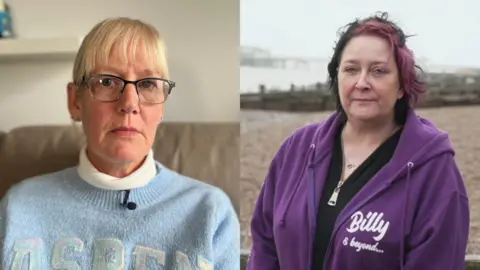
BBCTwo mothers who each lost a son from taking drugs are calling for greater awareness of the danger of illegal substances to children.
Nicci Parish, from Worthing, West Sussex, and Michelle Fraser, from Deal, Kent, have spoken out to prevent other families losing loved ones.
The number of under-18s in treatment for substance misuse rose 13% in a year, according to the latest official figures.
The government recently launched a campaign to alert young people to the dangers of taking drugs.
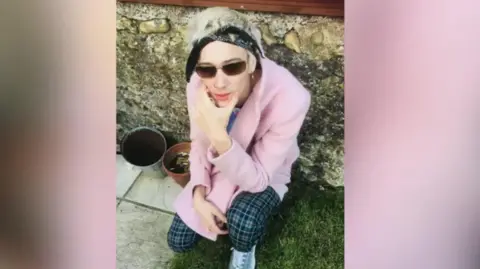
Parish said the impact of losing her son, Billy, was still being felt after he took MDMA, also known as ecstasy, on his 24th birthday and died.
"This year would have been his 30th birthday, so you're missing all of those milestones, him getting married and becoming a dad," she said.
"It just leaves such a gaping hole on all of our lives."
She set up the organisation Billy and Beyond and has spent the last 12 months delivering the anti-drugs message through workshops to hundreds of students in East Sussex, West Sussex and Surrey.
'Make safer choices'
The talks at schools and colleges feature an animation about Billy's death to warn others about experimenting with illegal drugs.
"It's really important for those young people to hear that message, for them to go on and hopefully make safer choices, when it comes to recreational drugs," she said.
She told BBC South East that children discuss cannabis, THC vapes, MDMA and ketamine in the talks, and added that it was worrying that children saw them as party drugs.
Parish described how easily she was able to find drugs after carrying out some research online, stating that it took her "less than 30 minutes" to find someone who could have delivered drugs to her door.
 FAMILY HANDOUT
The government said it was targeting 16 to 24-year-olds with an online campaign following a rise in the number of young people being harmed by drugs.
Of particular concern is the growth in the use of ketamine, with officials saying there had been an eight-fold increase in the number of people requiring treatment of the drug since 2015.
The government is warning that young people risk irreparable bladder damage, poisoning or even death.
The campaign is also raising awareness of synthetic opioids or deliberately contaminated THC vapes.
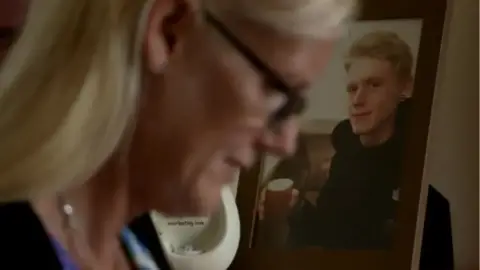
Fraser, whose 18-year-old son Robert died in 2016 after taking fentanyl, said it was still too easy for young people to access drugs and that there was still too much ignorance.
"We've all been teenagers, we think we are invincible, we are in some respects. But in the world of drugs, you're not, nobody is," she said.
She said she was also protecting her younger son from the drugs danger and educating him about how accessible they are online.
"My youngest doesn't have any social media, he's not allowed any social media. All the time I have the power to control that, I will, but other children I work with do have it," she said.
"I am scared for him.
"We don't just the need government to do more, we need parents to do more [to raise awareness]."
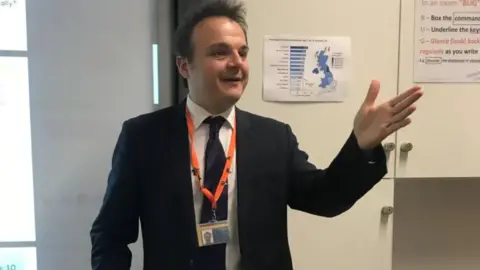
Tris Osborne, Labour MP for Chatham and Aylesford, said he was aware of the threat posed by cannabis vapes when he was a secondary school teacher in Kent.
He told BBC South East that he was particularly concerned by increased ketamine use in the UK.
"It is very dangerous. A tiny amount can have a serious impact on someone and if you do overdose, you end up going into a coma", he said.
Tougher penalties
In January 2025, the government sought expert advice on the drug's classification.
"We need to treat it seriously. It should be in my view a Class A drug, given the impacts we know", Osborn added.
He said education in schools was key to solving the problem.
 Tristan Osborne
Figures from the National Drug Treatment Monitoring System show that 16,212 under-18s were in alcohol and drug treatment between April 2024 and March 2025, a 13% rise in a year.
However, the number in treatment is 34% lower than its peak between 2008 and 2009.
Officials said cannabis remained the most common substance children came to treatment for in 2024-25.
A Department of Health and Social Care spokesman said treatment and recovery funding would be channelled through the Public Health grant by 2026, and that £3.4bn would be ringfenced for drug and alcohol treatment and recovery across three years.
- If you have been affected by any of the issues raised in this article, you can find advice at BBC Action Line.
Follow BBC Sussex on Facebook, on X, and on Instagram. Send your story ideas to southeasttoday@bbc.co.uk or WhatsApp us on 08081 002250.