Summary

  • The SNP launch their manifesto for the Scottish Parliament election 2026

  • Leader John Swinney focuses on the cost of living, pledging a £2 bus fare cap and introducing a legal price ceiling on a basket of essential food items sold by supermarkets

  • He said the "fair foods" law would be time limited, ending when the public's "wellbeing" improves

  • The six larger political parties in Scotland will be hitting the campaign trail

  • Voters will go to the polls on 7 May to elect 129 MSPs

Media caption,

SNP pledges price cap on essential foods sold by supermarkets

  1. SNP manifesto launch and parties on the campaign trail: The headlinespublished at 17:12 BST 16 April
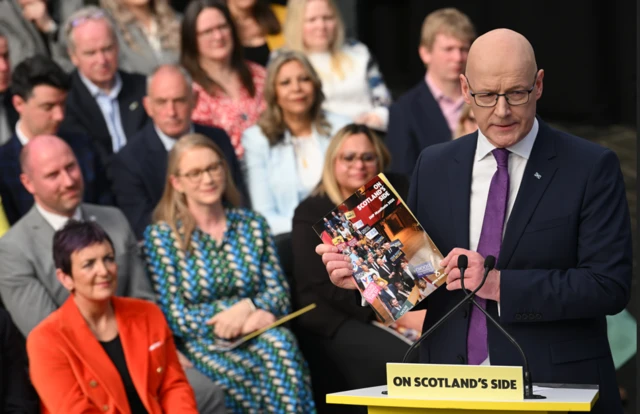
    SNP leader John Swinney at the launch of the party's manifesto for the Holyrood election, at Barras Art & Design (BAaD) in GlasgowImage source, EPA

    SNP leader John Swinney announced his party's Holyrood election manifesto with the following pledges:

    • the price of "essential" supermarket groceries like bread, cheese and milk is to be legally capped to help consumers with the cost of living
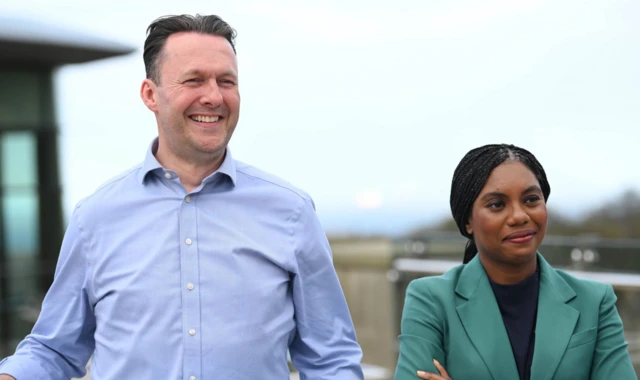
    Russell Findlay and Kemi BadenochImage source, PA Media
    Image caption,

    The leader of the Conservatives, Kemi Badenoch, joined Scottish Tory leader Russell Findlay on the campaign trail

    Elsewhere on the campaign trail:

    • Alex Cole-Hamilton outlined the Scottish Lib Dem plans to help cut the cost of living, including £400 additional support for carers
    • Anas Sarwar was campaigning with Scottish Labour colleagues and focused on getting police back to the streets to fight crime
    • Thomas Kerr from Reform UK said people would vote on the cost of living, the NHS and immigration, not the constitution
    • Conservative leader Kemi Badenoch joined the Scottish Tory leader Russell Findlay in Edinburgh and said "Reform don’t give a monkey’s about the union”
    • In Orkney, Scottish Greens co-leader Ross Greer said his party was chasing a regional Highlands and Islands seat on the peach ballot

    That's all from the live page team today - thank you for joining us.

    We'll be back tomorrow morning, with the early focus on the Scottish Liberal Democrats' manifesto launch.

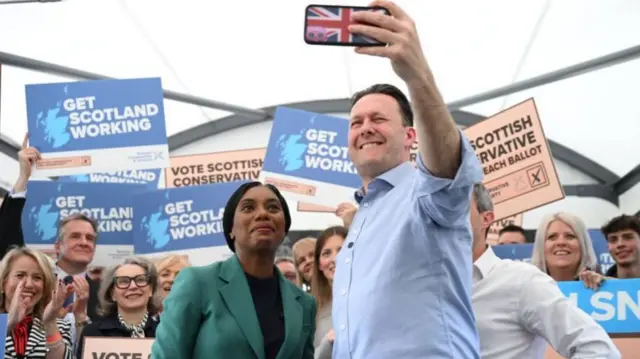
  2. Badenoch joins Findlay on campaign trailpublished at 16:59 BST 16 April

    Lynsey Bews
    BBC Scotland political correspondent

    Kemi Badenoch wearing a green jacket, standing next to Russell Findlay in a blue shirt, he has his arm outstretched holding an iphone in a union jack case.Image source, PA Media
    Image caption,

    Russell Findlay grabs a selfie with Kemi Badenoch at the Tory rally in Edinburgh

    Conservative leader Kemi Badenoch has joined the Scottish Tory leader Russell Findlay at an election rally in Edinburgh.

    She urged pro-union voters to unite behind the party on the regional list vote.

    Badenoch told activists that the party is the only one that can be trusted to stand up to the SNP, claiming that “Reform don’t give a monkey’s about the union”.

    Findlay said that “unlike Scottish Labour, the party’s UK leader is an asset in Scotland”.

  3. Islanders have choice between hope and hate, says Greerpublished at 16:51 BST 16 April

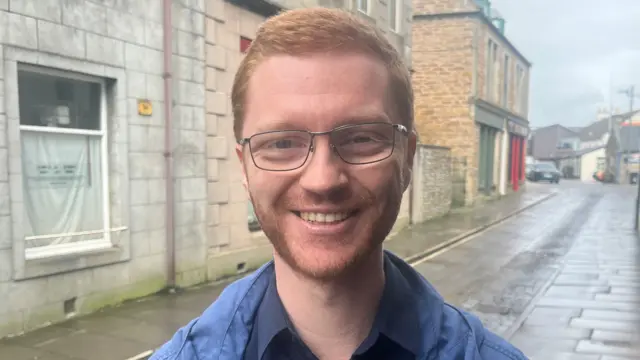
    Ross Greer, a man with ginger hair and glasses, smiling while standing on a cobbled street.

    The Scottish Greens co-leader Ross Greer is in Stromness in Orkney, where he says islanders have a choice between "hope and hate".

    When asked why both he and his fellow co-leader Gillian McKay have visited the island, despite the fact they don't have a candidate running in the constituency, he says: "We're big fans of Orkney."

    Greer says while on the island he has seen the benefits of Green policies that have already been delivered - like the £2 bus fare cap which is already implemented in the Highlands and Islands- and free bus travel for young people.

    He says he is chasing a regional Highlands and Islands seat on the peach ballot- which he says is likely to go to his party or Reform.

  4. IFS warns paying for SNP pledges would require tax rises or cutspublished at 16:45 BST 16 April

    Kirsten Campbell
    BBC Scotland political correspondent

    The Institute for Fiscal Studies has warned that paying for the SNP's manifesto commitments is likely to require further tax rises or deeper cuts to public spending.

    The independent economic research body has published its analysis on the party's proposals for the election.

    It says the SNP doesn't credibly say how it would pay for additional spending pledges worth an extra £1.4bn a year by the end of the parliament.

    The biggest spending commitment is an expansion of childcare. The IFS says means testing costs less than universal provision but also weakens work incentives.

    The report describes the pledge to cap supermarket food prices as a radical but risky policy, which could be a paper tiger.

    It points out that higher growth in an independent Scotland is far easier to promise than deliver, but agrees it is a possibility - with the right policies.

  5. Findlay urges voters to deliver a 'ballot box bazooka'published at 16:37 BST 16 April

    Lynsey Bews
    BBC Scotland political correspondent

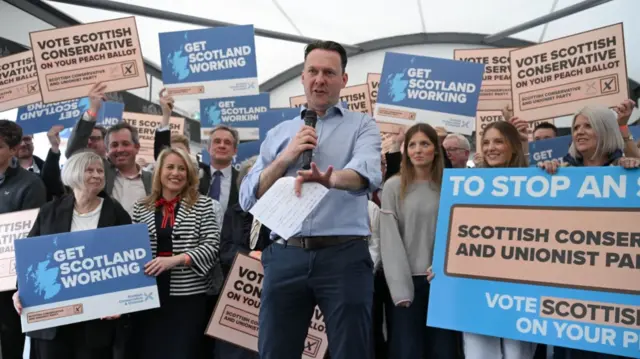
    Russell Findlay backed by Tory supporters holding banners urging voters to back them on the pink ballot paperImage source, PA Media
    Image caption,

    Scottish Tory leader has been speaking to activists in Edinburgh

    The message at the Tories’ rally isn’t exactly subtle.

    The party wants those regional list votes - and is urging voters to choose Tory on the peach ballot paper.

    It’s a “ballot box bazooka” according to the Scottish leader Russell Findlay.

    Their core message centres around stopping the SNP from achieving a majority.

    John Swinney says that result would be a mandate for another independence referendum.

  6. Price cap on essential foods is 'madness' says Reform UK's Kerrpublished at 16:28 BST 16 April

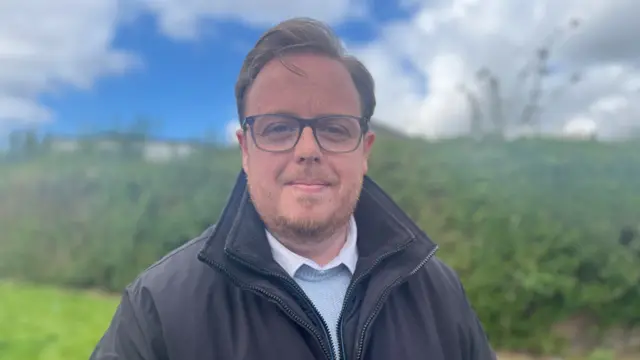
    Reform UK candidate Thomas Kerr

    Reform UK's Thomas Kerr says the SNP's proposed price cap on essential foods is "madness" and he is unsure if it could be done legally.

    "It's very convenient that 19 years after this government's been in charge, John Swinney's now starting to look at issues like the cost of living crisis," he says.

    Kerr adds that he believes people "will decide to vote for this election on the cost of living, the NHS, immigration and other issues that affect them day-to-day and not the constitution.

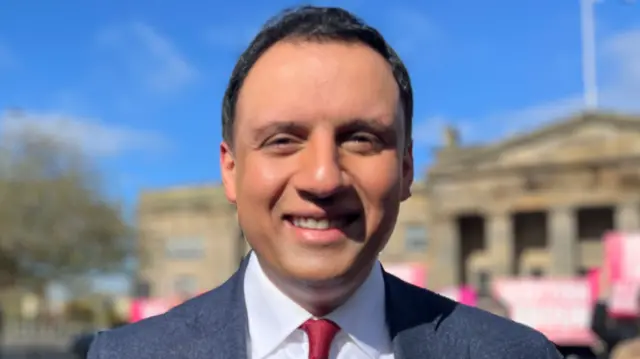
  7. Sarwar wants more police on the streets fighting crimepublished at 16:11 BST 16 April

    Anas Sarwar, smiling while wearing a greyish suit and red tie.

    Out on the campaign trail, Scottish Labour Leader, Anas Sarwar has been at Glasgow Green speaking about policing.

    The Scottish Labour leader says he wants to see police "back where they belong, on our streets fighting crime" and not "stuck in courtrooms not giving evidence" or having to respond to mental health calls.

    He announced plans to have a named crime prevention officer in every community across the country as well as a mental health emergency service.

  8. Cole-Hamilton hopes for fringe benefits from cutting the cost of livingpublished at 15:51 BST 16 April

    Kirsten Campbell
    BBC Scotland political correspondent

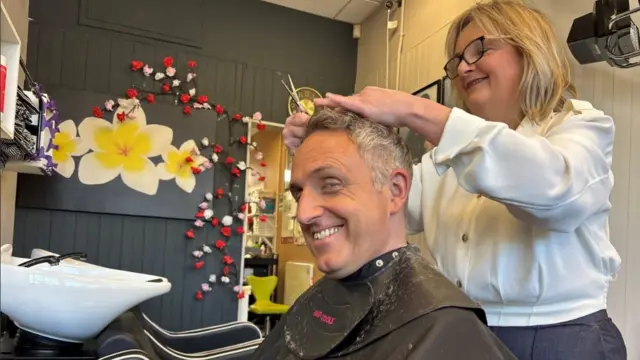
    Alex Cole-Hamilton

    The Scottish Liberal Democrats' leader has been outlining plans to help cut the cost of living.

    Speaking after having an election haircut at an Edinburgh salon, Alex Cole-Hamilton said the Lib Dems would insulate homes to drive down household bills, provide £400 additional support for carers and reform business rates.

    He also called for a cut in fuel duty and said the party’s manifesto which will be launched tomorrow will include proposals to build more affordable homes and provide help with energy bills for people with terminal illnesses.

  9. Scottish Lib Dems warn price cap could cause food shortagespublished at 15:46 BST 16 April

    We're hearing more from the opposition parties on John Swinney's keynote pledge to cap prices on essential foods at supermarkets.

    The Scottish Lib Dems economy spokesperson Jamie Green accuses the SNP of "plucking policies out of a hat in a desperate attempt to distract from their two decades of failure in government".

    He adds: "Price caps have been shown repeatedly to distort markets, cause shortages, and create inefficiencies that make it harder for both suppliers and customers.

    “Ignoring the hard facts of economics, like unintended consequences, will not help those who are struggling most with the cost of living.

    “Scottish Liberal Democrats are focused on bringing down the cost of living by growing business, insulating homes, making our nation healthier, and making practical promises not pie in the sky ones.

  10. Analysis

    Emphasis on removing fossil fuels from grid - but not electrifying things that rely on thempublished at 15:31 BST 16 April

    Kevin Keane
    Scotland environment correspondent

    There are two main parts to decarbonising our economy for tackling climate change; one is removing fossil fuels from our electricity grid, the other is electrifying the things that we do which rely on oil and gas.

    In the manifesto, there's a lot of emphasis on the former but much less on the latter, which relies heavily on us - the voters - changing our habits.

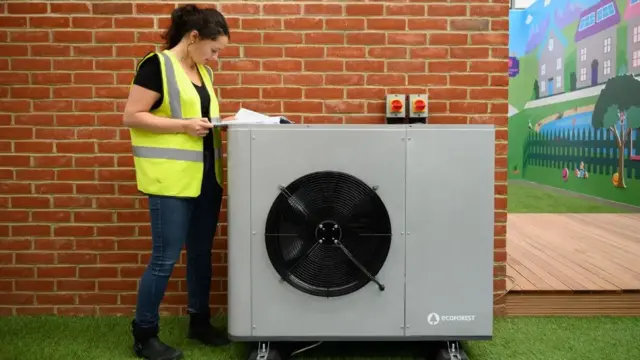
    Heat pumps
    Image caption,

    There's no mention of heat pumps in the SNP manifesto

    One area that has become politically divisive is the installation of heat pumps, which are considered fundamental to taking gas out of our homes.

    And while there's an emphasis on heat networks, there's no mention of heat pumps despite the independent Climate Change Committee suggesting recently that the planned rollout wasn't happening quickly enough.

    There is a promise to revive the Heat in Buildings Bill, introduced by the Greens and then dropped twice by the SNP and originally designed to force home buyers into installing environmentally-friendly heating on completion of a purchase.

    But the contents of that bill were watered down and there's no detail on what a third go at it will seek to achieve.

  11. RCGP 'deeply sceptical' that walk-in clinics will ease pressures on GPspublished at 15:16 BST 16 April

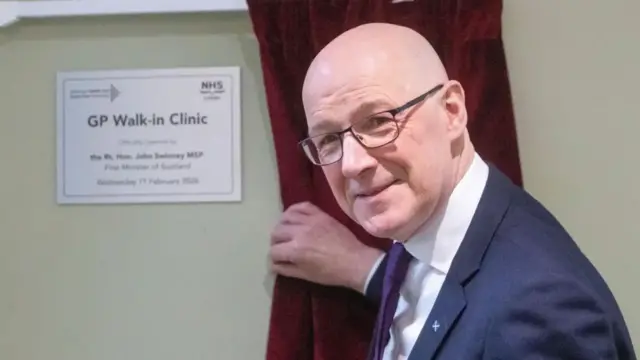
    First Minister John Swinney says the clinics will ensure people get the care they need at a time that works for them
    Image caption,

    First Minister John Swinney says the clinics will ensure people get the care they need at a time that works for them

    More reaction to the manifesto, this time from the Royal College of General Practioners focusing on the GP walk-in centres.

    Dr Chris Provan says: "While there is much to welcome in the SNP manifesto, GPs will be disappointed to see the flagship policy on health is the expansion of the walk-in clinics.

    "Evidence from England shows that walk‑in clinics do not reduce pressure on core general practice or accident and emergency services."

    He says they offer a far narrower range of services than a GP practice, at significantly higher cost, and they risk exacerbating health inequalities, duplicate existing provision, and represent a poor use of a limited health budget.

    "We are deeply sceptical of claims that these clinics will ease pressures on GPs or bring an end to the so‑called '8am rush' for patients."

  12. SNP manifesto launch: The key linespublished at 15:00 BST 16 April

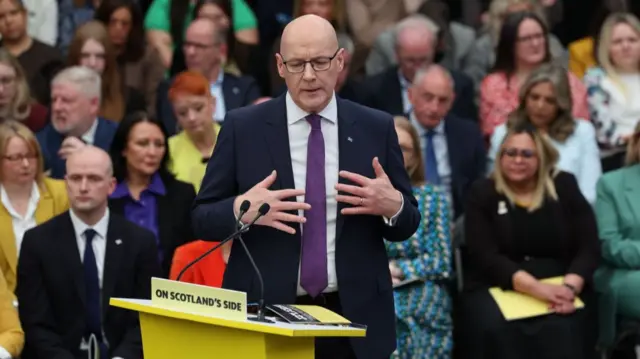
    SNP Leader John Swinney speaking at the launch of the party's manifesto for the Holyrood electionImage source, PA
    Image caption,

    SNP Leader John Swinney speaking at the launch of the party's manifesto

    Now, after a few hours to digest the policies, here are the headlines that emerged from the SNP manifesto launch:

  13. Concerns for small businesses affected by food price cappublished at 14:44 BST 16 April

    Luke McGarty, head of policy at the Scottish Grocers’ Federation, fears the SNP's food price cap proposal, which is aimed at supermarkets, could have a "knock-on effect" on local stores.

    He says the move could encourage customers to travel to out-of-town locations, creating a "competitive disadvantage" for small local businesses.

    "At a time when local retailers are already under considerable pressure from additional costs added by government regulation and global issues, some may feel compelled to try and match supermarket prices, which could threaten both their viability and the benefits they provide," McGarty says.

  14. GPs in disadvantaged communities call for cut in number of fast food outletspublished at 14:30 BST 16 April

    Susie Forrest
    BBC Scotland health producer

    Let's hear more reaction to the NHS policies in the SNP's manifesto.

    The Scottish Deep End Project, external, which represents GPs serving Scotland's most socio-economically disadvantaged communities, says: "We see the impact of food poverty on health, as a key driver of both malnourishment and of obesity.

    "Making healthy food more affordable is a one important way to address this, but the food also needs to be more easily available and accessible to those who need it the most."

    They say improving affordability, accessibility and availability of healthy food would also work best alongside measures to simultaneously reduce the number of fast food outlets which are often clustered in poorer areas

  15. Food price cap is 'back-of-a-fag-packet plan' say Toriespublished at 14:16 BST 16 April

    The Scottish Conservatives are branding John Swinney's pledge to cap essential food prices as "another back-of-a-fag-packet plan that is only designed to create another SNP rammy with the UK government".

    The party's business and economy spokesman Murdo Fraser says people in Scotland are "rightly worried about rising bills right now and deserve better than these ill-thought-out plans from the SNP".

    “And at a time when our farmers and food producers are struggling to stay afloat, a price cap would be the last thing they need when selling their iconic products," Fraser says.

    “The best way the SNP could help people struggling with the cost of living right now is by backing Scottish Conservative plans to reduce people's taxes by reining in their out-of-control benefits bill.”

  16. Analysis

    Many of the SNP's justice pledges are already in placepublished at 13:48 BST 16 April

    David Cowan
    BBC Scotland home affairs correspondent

    Many of the SNP's manifesto commitments on justice are already in the pipeline; a continuation of what they've been doing while in power at Holyrood.

    Their promise to "fund two new prisons within the next parliamentary term," for example, presumably refers to the new jail in Inverness and the replacement for Barlinnie, both of which are already under construction.

    If elected, they say they will expand the use of "mental health triage cars" to reduce the workload on the police from calls involving people in distress.

    Police commanders will argue that it will require a major investment to make a real difference.

    There is a promise to back part of a campaign by a mother whose son died in an alleged stabbing last year.

    Lisa Petrie has been distributing bleeding control kits around Edinburgh since the death of her son, John McNab.

    Each contains medical equipment for dealing with catastrophic blood loss caused by stabbings, falls or accidents.

    The SNP are pledging to roll out the kits to community settings and public areas, including high schools, supermarkets, community centres and pubs.

    Lisa Petrie also wants tighter security around the sale of knives.

    In February, Justice Secretary Angela Constance instructed officials to examine what could be done.

    There's no manifesto commitment to do anything beyond that.

  17. Analysis

    SNP is finding it difficult to back up its own 'climate leader' tagpublished at 13:34 BST 16 April

    Kevin Keane
    BBC Scotland energy correspondent

    The SNP manifesto pledges to "take the necessary action to achieve net zero by 2045" and frames it as an opportunity to create new industries and jobs.

    But it also requires some difficult choices which might not be popular with voters and that's difficult to confront head-on during an election campaign.

    It asserts that Scotland is "ahead of the UK as a whole in delivering long-term emissions reductions" and yet official figures contradict that claim.

    The most recent year for which emissions reporting exists for both the UK and Scottish governments is 2023 - and that data says levels since 1990 fell by 51.3% in Scotland and by 53% for the UK as a whole.

    Add to that the optics of annual targets being scrapped along with intermediate goals for 2030 and 2040 and the SNP's once self-proclaimed title of "climate leaders" looks more difficult than ever to justify.

  18. Analysis

    GPs are sceptical that walk-in clinics will ease pressurespublished at 13:22 BST 16 April

    Claire McAllister
    BBC Scotland health producer

    The SNP manifesto prominently features walk-in GP clinics to end the morning rush for appointments.

    GPs do not believe these will help ease demand on existing services after a similar pilot was largely unsuccessful in England.

    Initially, 16 clinics had been promised; now the SNP is committing to at least another 14 sites.

    Four have opened since February, with the rest of the initial bunch to be running by next year.

    Staff can only help with certain conditions, so it is unclear how much of a difference they are making.

    Doctors say these should be evaluated and if they do not significantly ease pressures, then they should close.

    With ambitions to move more healthcare into the community, staffing continues to be a challenge.

    The manifesto points to a deal worth over £530m over the next three years which has already been struck with GPs to boost recruitment.

    Although questions remain if the longstanding target to increase the GP workforce by 800 by next year is achievable.

  19. Analysis

    Artists' minimum income scheme not enough to resolve pressures on the sectorpublished at 13:17 BST 16 April

    Pauline McLean
    BBC Scotland Arts Correspondent

    Like Labour, the SNP plans to pilot a minimum wage for artists.

    Like the Irish scheme on which it’s based, the Scottish Artists Minimum Income would offer up to two thousand practising artists and creative workers a wage for three years.

    While the pledge will be welcomed by a sector still recovering from the pandemic and the cost of living crisis, it will not resolve the huge financial challenges they face.

    Who would operate the scheme – and thus decide who and what qualifies? Would it be Creative Scotland, the country’s arts agency, which the SNP has pledged to reform?

    Demand for money from any funding stream has long outstripped what’s available, and it’s likely that any new scheme would be just as inundated.

    It’s the flip side of a country which is wildly proud of its cultural identity and keen to express it.

  20. BBC Verify

    Could electricity bills be reduced by one third?published at 13:03 BST 16 April

    BBC Scotland: Anthony Reuben

    The SNP manifesto claims that the party could reduce household electricity bills by one third.

    This relies on Scotland becoming independent, deciding its own energy policy and setting up its own electricity market, and is based on this SNP report, external.

    Clearly there are a lot of hypotheticals involved depending on when Scotland became independent and how the new systems were designed, which means the level of any savings are highly uncertain.

    The ownership of North Sea oil and gas was a key part of the 2014 Scottish independence referendum debate, and it’s possible that the ownership of offshore wind generation would be contested by the Westminster government.

    One of the key points is that the wholesale electricity price in the UK is often set by the price of gas, which the SNP claims would happen less often after independence because Scotland produces so much of its electricity from renewables.

    But the UK government is also aiming to be generating almost all of its electricity from low-carbon sources by 2030, which would begin to have a similar effect.

    The plans also include saving money by not building any new nuclear power stations, although the SNP said there would be additional spending on power storage.

    And there are also savings factored in from changing the way generators in remote areas are charged for energy transmission.

Trending Now