Summary

  • Scottish Labour leader Anas Sarwar launches his party's manifesto ahead of the Holyrood election, urging voters to give him "five years to fix the SNP mess"

  • He pledged that as Scotland's first minister he would cut waiting times; guarantee GP appointments within 48 hours and introduce new screening services "to catch cancer early and save lives"

  • The six larger parties in Scotland have been campaigning ahead of the election on 7 May

  • Party leaders are back on the campaign trail after last night's BBC Scotland Debate Night special, where they faced off on Scottish independence, the NHS, immigration and energy

  • No-one left the debate feeling like they had blown it, but there were also no moments that felt like election game changers, writes BBC Scotland political editor Glenn Campbell

Media caption,

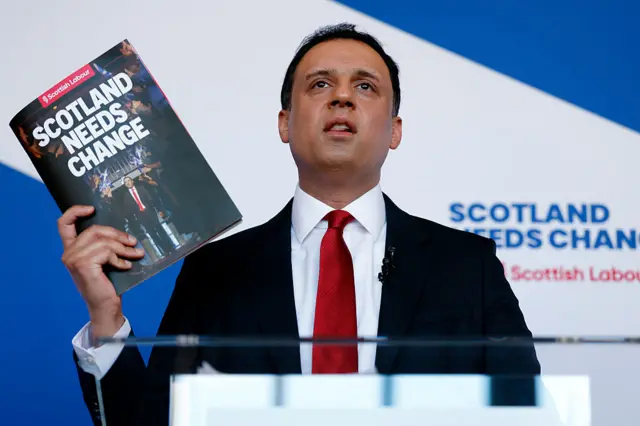
Anas Sarwar speaks at the Labour manifesto launch

  1. The headlinespublished at 17:40 BST

    Just before we draw our coverage to a close, here's a reminder of today's main headlines:

    • Scottish Labour has launched its manifesto, with improvements to the NHS at the centre of the party's pitch to voters
    • The party also wants to top up tax-free childcare, fix potholes, back nuclear energy and deliver 125,000 new homes
    • Elsewhere on the campaign trail, the Scottish Greens promised to raise the school age to seven if they are elected
    • Sticking with education, the Scottish Lib Dems said they would ban mobile phones in classrooms
    • The Scottish Conservatives launched a fund to tackle Scotland's potholes - which they called a "symptom of the neglect" of the SNP government
    • During a visit to the Scottish Association for Marine Science, SNP leader John Swinney made an argument for independence - saying Scotland was not receiving the benefit of energy resources "powering so much of our economy"
    • Reform UK are due to hold a rally in Aberdeen later, with Nigel Farage expected to attend

    Thanks for joining us.

    Today's editor was Mary McCool and the writers were Katy Scott and Claire Thomson.

  2. Analysis

    Labour's economy pitch relies on strong partnership with Westminsterpublished at 17:33 BST

    David Henderson
    Scotland news correspondent

    Scottish Labour want to grow the economy - to deliver a fair society.

    Many of their other keys aims - like improving living standards, reducing poverty, and spreading prosperity to all parts of Scotland - depend on it.

    Their growth plan has multiple strands: they want to remove what they call the independence "distraction", boost skills and be a better partner for business.

    They pledge to streamline planning to deliver better infrastructure and homes where they're needed.

    Their commitment to clean energy - and new nuclear power stations - aims to help business, as well as households, get cheaper bills.

    What this plan lacks, perhaps, is a single, over-arching theme - like the Scottish Tories' tax cuts, or the SNP's promise that independence will boost the economy. But Labour think their rivals aren't being straight with the voters.

    Labour's broader challenge is two-fold.

    Their growth pitch relies in part on a strong relationship with the UK government at Westminster, to deliver things like shipbuilding and defence contracts.

    But it's barely two months since Anas Sarwar called on Sir Keir Starmer to resign - so can the two patch up their differences, and work well together?

    And what happens if the economy doesn't grow much at all over the next few years, thanks to the Iran war?

  3. More election manifesto launches to come this weekpublished at 17:22 BST

    So far we've seen election manifesto launches from Reform UK, the Scottish Conservatives and Scottish Labour.

    The Scottish Greens are next to launch their manifesto on Tuesday, with co-leaders Gillian Mackay and Ross Greer making their pitch to form the next Scottish government.

    The SNP will launch its manifesto on Thursday and the Scottish Liberal Democrats will follow suit on Friday.

    We'll bring you full coverage and reaction to all the manifesto launches this week.

  4. Analysis

    Independence could motivate voters - but Labour avoids the subjectpublished at 17:04 BST

    David Wallace Lockhart
    Political correspondent

    On one of the biggest issues in Scottish politics, Labour have nothing to say. Quite deliberately.

    Independence doesn’t feature in this manifesto at all. Even when some of their political opponents say there could be a second referendum in the next Scottish Parliament (it’s important to note the UK government would have to agree to this).

    Scottish Labour are hoping that the constitutional debate has moved on from 2014. They believe that voters - regardless of whether or not they want independence - are currently more concerned with, for example, the state of their local hospital.

    And they think they can paint other political parties as living in the past if they continue to talk about the constitution.

    But there is still evidence to suggest that the independence question motivates voters in Scotland.

    And Labour politicians still find themselves occasionally facing an awkward question that they don’t really see to have an answer for - if the UK is a voluntary union, what’s the legitimate way to leave?

  5. Scottish Labour's top priorities - at a glancepublished at 16:44 BST

    We've condensed the Scottish Labour manifesto into easily readable sections. Here are the party's top priorities:

    • Improve the NHS
    • Top up tax-free childcare
    • Back nuclear energy
    • Replace business rates
    • Fix potholes
    • 125,000 new homes
    • More teachers and classroom assistants
    • Build the Glasgow Airport rail link

    You can skim through the party's proposals for the NHS, the economy, the cost of living and more in our digest here.

  6. What was Anas Sarwar's route into politics?published at 16:26 BST

    Anas Sarwar stands at a podium holding the Scottish Labour manifesto, the cover of which reads "Scotland needs change"Image source, Getty Images

    Anas Sarwar joined the Scottish Labour party at the age of 16.

    He took over his father's Westminster seat - Glasgow Central - in 2010.

    He held the seat until the 2015 election, when the SNP won all but three seats in Scotland.

    Sarwar then turned his attention to Holyrood and was elected a list MSP for Glasgow in 2016.

    The following year, he ran for Scottish Labour leader. He was firmly in the New Labour camp, while his opponent - Richard Leonard - was seen as an ally of Jeremy Corbyn. Leonard won.

    But the next time the top job came up - in 2021, less than three months before the Holyrood election - Sarwar won.

    He became the first non-white leader of a major political party in the UK.

  7. Analysis

    Labour say classrooms would be safer and calmer with phone banpublished at 16:12 BST

    Lucy Adams
    Education and social affairs correspondent, BBC Scotland

    Scottish Labour are keen to distinguish themselves from the SNP by saying they would ban all mobile phones in classrooms.

    Currently, the position in Scotland is that headteachers can ban mobile phones if they wish to - but there is no national policy.

    In lieu of a blanket policy, some councils - including Edinburgh - have introduced their own ban on smartphones in class.

    But teachers say the practicalities can be more complicated.

    They have pointed out that it can be hard to police an outright ban because of the time taken to remove phones, with some pupils refusing to hand them over and some parents insisting their children need phones at certain times of day.

    There is also a cost to the pouches used in Edinburgh to store phones during the school day.

    Labour's manifesto says taking phones out of classrooms would make schools safe and calm places for learning.

    They would also back a UK-wide ban on social media for under-16s to better protect young people from cyberbullying and harmful online content.

  8. GPs say appointment pledge is 'almost impossible' without more doctorspublished at 15:55 BST

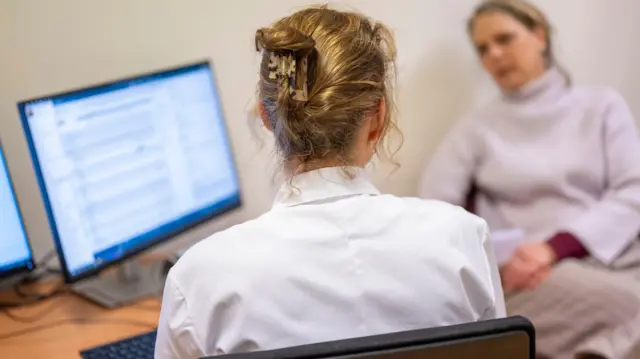
    A woman sits at a computer desk with her back to the camera in a doctor's office, opposite another woman who is out of focus. The woman in the foreground wears a white shirt and has curly blonde hair clipped up at the back of her head.Image source, Getty Images

    The Royal College of GPs (RCGP) Scotland said there was "much to welcome" in Labour's manifesto, such as the shift to more care in the community.

    Policy vice chair Dr Chris Williams praised commitments to support remote practices as well as GPs in deprived areas.

    He also noted plans to take an "evidenced approach" to safer drug consumption rooms, drug testing and tackling alcohol-related harm.

    However he said RCGP Scotland had hoped to see more clarity on long-term funding arrangements for general practice.

    Dr Williams also said the promise of delivering an appointment with a GP within 48 hours was "extremely ambitious".

    "It will be almost impossible to achieve without substantial action to increase GP numbers and expand capacity," he added.

  9. Analysis

    AI in the NHS could be useful - but it won't be simple or cheappublished at 15:42 BST

    Claire McAllister
    BBC Scotland health reporter

    Scottish Labour says it will invest £680m in technology and digital improvements in the NHS.

    Some of that money would go towards rolling out an NHS app and patient portal within the first 100 days in government.

    An app is already being piloted in Lanarkshire but it will be 2030 until it is supposed to be fully up and running across Scotland.

    There are multiple promising studies coming from Scotland’s universities on the use of artificial intelligence in healthcare but each come with environmental and ethical concerns, over things like privacy and data protection, which are not easy or fast to solve.

    So ambitions to invest in AI scanners and equipment to detect cancer early could be a very useful innovation but not one that is necessarily simple or cheap to bring to the NHS.

  10. What's Reform UK's position on Scottish independence?published at 15:27 BST

    Malcolm Offord stands at a BBC-branded podium on the set of a TV programme, wearing a blue suitImage source, Getty Images
    Image caption,

    Malcolm Offord did not rule out a future referendum during a BBC Debate Night special

    Party leaders have been digging into the subject of Scottish independence on the campaign trail.

    It was the topic that sparked some of the liveliest debate in last night's BBC Debate Night special.

    We've not yet heard from Reform UK today - they are expected to host a rally in Aberdeen later tonight.

    But we know the party's Scottish leader, Malcolm Offord has not ruled out a future referendum if support for a Yes vote reaches 60%.

    He also said last night that another referendum would be "divisive".

  11. No big giveaways from Labour but they would still face tough choices - IFSpublished at 15:18 BST

    The Institute for Fiscal Studies (IFS), an independent economics think tank, has posted an initial response to Scottish Labour's 98-page manifesto.

    David Phillips, head of devolved and local government finance at the IFS, says Labour did not pledge big tax cuts or expansions in entitlements in the way that some other parties had - but it would still face tough choices on tax and spending if it won the election.

    He says Labour was mainly focused on improving and reforming existing services although they do aim for bigger changes - including tax cuts - if economic conditions allow in the future.

    Scottish Labour leader Anas Sarwar put improving the NHS at the centre of his pitch to voters ahead of next month's Holyrood election.

    However, the IFS says challenges in improving performance in the NHS - as well as schools and other public services - should not be underestimated at a time when funding is severely constrained.

    Phillips says just maintaining existing health and social care services would likely mean that cuts would need to be made in other areas of government.

  12. Labour manifesto 'not a serious or credible plan', Scottish Tories saypublished at 14:58 BST

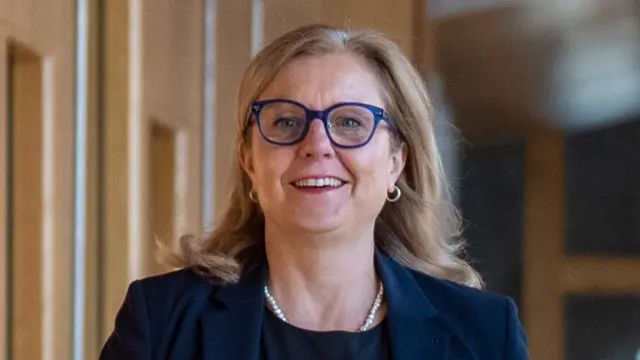
    Rachael Hamilton smiles at the camera. She wears dark blue glasses and a navy suit and has blonde hairImage source, PA Media
    Image caption,

    Rachael Hamilton said Scottish Labour's plans were "not serious"

    Scottish Labour's manifesto is "not a serious or credible plan to deliver the change Scotland needs", according to the Scottish Conservatives.

    The party's deputy leader Rachael Hamilton said Labour had refused to outline how its plans would be paid for, which she claimed followed the blueprint set by UK Labour leader Keir Starmer at the last election.

    Hamilton said that Scottish Labour were also "dangerously complacent" about SNP leader John Swinney's plans for another referendum as soon as 2028, with independence not mentioned once in their manifesto.

    She added that Labour had failed to support the North Sea oil and gas industry by not backing new drilling and were committed to high taxes and increased spending on benefits.

  13. Analysis

    Sarwar wants Scotland to benefit from nuclear powerpublished at 14:45 BST

    Kevin Keane
    Scotland environment correspondent

    Nuclear energy has been the backbone of our electricity supply system for more than half a century, but in Scotland it's on the way out.

    Since the closure of Hunterston B in North Ayrshire in 2022, there has been only one operational nuclear power station at Torness in East Lothian and by 2030 Scotland will be nuclear free.

    The SNP's long-held opposition to new nuclear is now in stark contrast to what's happening south of the border, where a huge new facility isbeing built at Hinkley Point in Somerset and the first small modular reactor has been confirmed for north Wales.

    But large-scale nuclear power is expensive and costs for the Hinkley Point facility have rocketed from £18bn in 2017 to £42bn today.

    It's hoped the smaller reactors can be more financially efficient and Anas Sarwar has said he wants Scotland to benefit from the "investment, jobs and zero-carbon energy" that can come from new nuclear.

  14. Analysis

    It's unclear how Labour will pay for its NHS planspublished at 14:26 BST

    Lisa Summers
    BBC Scotland health correspondent

    It's not a surprise the NHS features at the top of Labour's plans and there is a pick-and-mix of proposals in this manifesto.

    So how will Labour "fix the NHS"?

    Cutting waiting times, guaranteeing GP appointments within 48 hours, and better use of technology are common themes for all the parties.

    With other plans to pay social care workers more, provide menopausal clinics and improve NHS dental care, it is unclear how Labour will bring in staff and pay for all its promises.

    Cost cutting proposals to drastically reduce the number of health boards may require a change to current policy of no compulsory redundancies in the NHS.

    Labour want to see better cooperation right across the UK meaning patients who travel can be seen more quickly, but services are stretched everywhere and transport, operations, and aftercare come at a cost.

    They will compel students to work for the NHS for at least five years after they qualify which might address some gaps but will not fix the workforce crisis.

  15. Your Party Scotland 'over' after mass resignationpublished at 14:07 BST

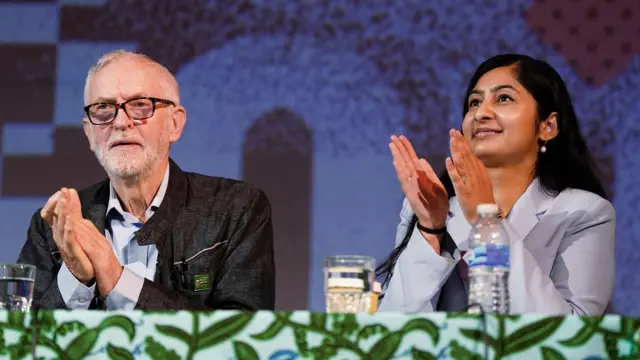
    Jeremy Corbyn and Zarah Sultana clap while sitting behind a table on a stage. Corbyn has short white hair and a short white beard and wears a dark grey suit. Sultana wears a light blue blazer and has long black hair.Image source, Getty Images
    Image caption,

    Jeremy Corbyn and Zarah Sultana launched Your Party in July last year

    Some other political news emerging this afternoon - the leadership of Your Party Scotland (YPS) has declared the party is "over" after a mass resignation of the committee.

    Former Labour leader Jeremy Corbyn set up the left-wing party with ex-Labour MP Zara Sultana last year, with Corbyn previously saying he fancied his chances in Scotland.

    However the party did not stand any candidates for the Holyrood election.

    All 12 members of its Interim Scottish Executive Committee (ISEC) - made up of volunteers who have overseen the running of the party since December 2025 - have unanimously left their roles and pledged to help form a new party.

    The ISEC - made up of former MSPs as well as people who have never been involved in politics before - have cited concerns about a dismissive attitude from the party's UK leadership towards Scotland continuing to be ignored as their reason for resignation.

    Niall Christie, the sole Scotland representative on Your Party's Central Executive Committee, has also resigned with immediate effect.

  16. Scottish Greens hope independence referendum is in 'very near future'published at 13:51 BST

    During a visit to a nursery in Linlithgow this morning, Scottish Greens co-leaders Gillian Mackay and Ross Greer also turned their attention to the subject of Scottish independence.

    The pair believe a majority of pro-independence MSPs should trigger another referendum, saying they hope to return the biggest number of Green MSPs to Holyrood ever.

    Mackay says they hope the Labour government at Westminster will stop standing in the way and an independence referendum will be in the "very near future".

  17. 'Every Lib Dem elected would oppose second referendum'published at 13:40 BST

    Scottish Liberal Democrat leader Alex Cole-Hamilton says there are “no circumstances” under which his party would support another independence referendum.

    He says “the last thing Scotland needs” is 18 months of arguing about independence.

    The ferries fleet in "absolute crisis", schools on their knees, a crisis in the NHS and people struggling to meet their household bills are all things the Lib Dem leader says are more important.

    He pledges that every Lib Dem elected would oppose a second referendum.

  18. UK government could not refuse referendum under SNP majority - Swinneypublished at 13:22 BST

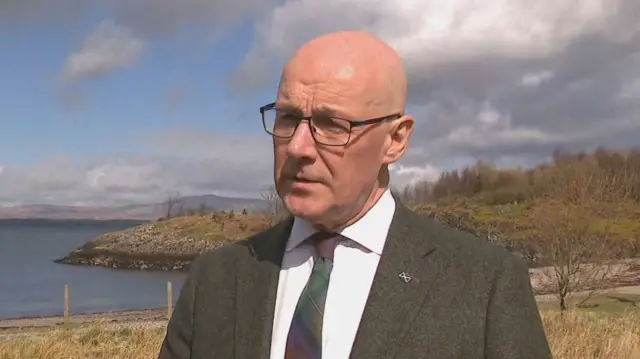
    John Swinney wears a dark green suit with a tartan tie and looks slightly off to the side. He is outside with a rural background of fields and bare trees and water behind him

    SNP leader John Swinney is out on the campaign trail in Oban on his birthday.

    During a visit to the Scottish Association for Marine Science, he said it was necessary to have another independence referendum now due to the "many challenges we face" in the UK.

    He pointed to Scotland not receiving the benefit of energy resources "powering so much of our economy", and the country being taken out of the European Union "against our will".

    When asked what he would do if the UK government refused to hold a referendum, he said it could not stand in the way of the democratic wishes of the people of Scotland if an SNP majority was elected.

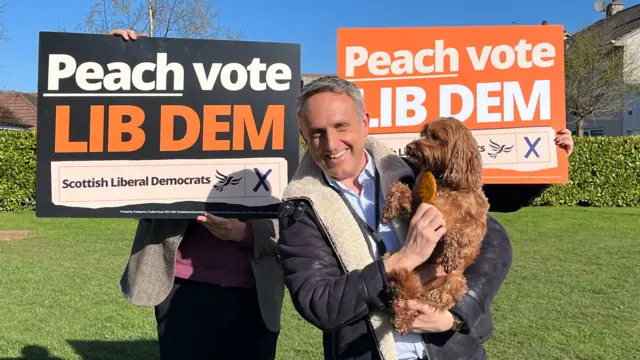
  19. Lib Dems propose to ban phones from schoolspublished at 13:13 BST

    Scottish Liberal Democrats leader Alex Cole-Hamilton holding his dog in a park in Edinburgh. There are Lib Dem campaign signs in the background.
    Image caption,

    Alex Cole-Hamilton was out campaigning with his dog, Bramble, in Edinburgh

    The Scottish Liberal Democrats are proposing to ban mobile phones from schools “from bell to bell”.

    Walking his dog in a park in Edinburgh, Scottish Liberal Democrats leader, Alex Cole-Hamilton, says children need room to breathe and room to think.

    He adds with the mobile phone notifications going off in class time just now, they’re just not learning.

    Cole-Hamilton says they want to give teachers the ability to teach and children the ability to learn but that has to be backed up with legislation that removes mobile phones from classrooms.

  20. Analysis

    Climate is no longer front and centrepublished at 12:52 BST

    Kevin Keane
    Scotland environment correspondent

    This is the first of the three manifestos launched so far to unequivocally back the legally-binding target to reach "net-zero" climate emissions by 2045.

    "Net-zero" refers to the point where any residual planet-warming greenhouse gases being added to the atmosphere are offset by things like tree planting or technological removals.

    Where the Conservatives and Reform have each committed to scrap the "ideological" goal on cost grounds, Scottish Labour says that without action it would end up costing the country more in the long term.

    That's a view backed by experts at the International Energy Agency and reflects the costs of preparing for and responding to more extreme weather events, rising sea levels, climate migration and so on.

    But unlike in previous elections, the climate question is no longer front and centre. In fact it didn't receive a single mention in Anas Sarwar's manifesto launch speech.

    The Scottish Greens, the SNP and the Scottish Lib Dems have still to launch their manifestos.

Trending Now