Moving our live coveragepublished at 04:40 GMT
We are moving our live coverage of the conflict in the Middle East.
You can keep following the latest developments here.
This page is no longer being updated. You can continue to follow our coverage at our new live page here
We are moving our live coverage of the conflict in the Middle East.
You can keep following the latest developments here.
The conflict in the Middle East is becoming "catastrophic for millions of children across the region", says the United Nations agency for children, Unicef.
Since the first US-Israeli strikes on Iran began on 28 February, more than 1,100 children have been reported injured or killed in the violence, Unicef says in a statement.
The statement adds that this includes 200 children reportedly killed in Iran, 91 in Lebanon, four in Israel and one in Kuwait.
"Nothing justifies the killing and maiming of children, or the destruction and disruption of essential services that children depend on", it says.
Unicef says it reiterates UN Secretary-General António Guterres' call "to end the fighting and engage in diplomatic negotiations".
It also calls on parties to take "all necessary precautions in the choice of means and methods of warfare to minimise harm to civilians, including by avoiding the use of explosive weapons that disproportionately affect children".
A memo sent to LA law enforcement by the FBI last week warned Iran may try to launch drones at California in a "surprise attack" from the sea, the BBC's US news partner CBS reports, external.
US and California law enforcement intelligence officials told the outlet there is no known, specific threat as a basis for the memo, which comes from an apparent tip from before the conflict in Iran.
California Governor Gavin Newsom wrote on X: "While we are not aware of any imminent threats at this time, we remain prepared for any emergency in our state".
Asked about the reports on the tarmac at Joint Base Andrews, US President Donald Trump said: "It's being investigated, but you have a lot of things happening and all we can do is take them as they come".
The price of Brent crude just hit $100 (£74.79) a barrel, rising by 9% on Thursday in Asia.
Oil prices have not eased as even after dozens of countries, including the US and the UK, announced they would release record amounts of emergency reserves.
Iran has also continued its threat against ships passing through the Strait of Hormuz, a transit point for a fifth of the world's oil.
US-traded crude has jumped by 9% at $95.27.
Oil prices crossed $110 a barrel on Monday and has fluctuated heavily since.
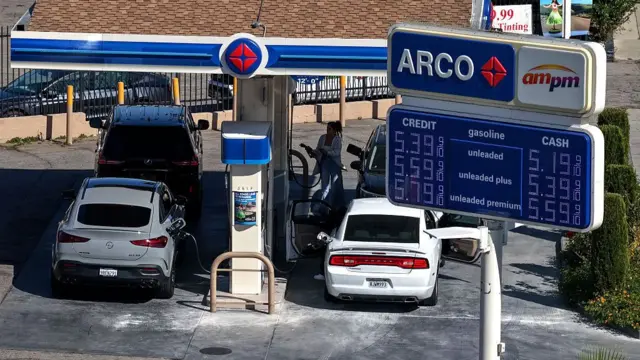 Image source, Getty Images
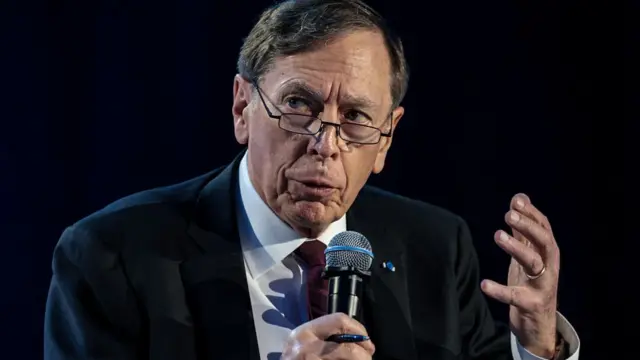 Image source, Getty Images
General David Petraeus, the former CIA Director and Commander of US Central Command, has been asked about the US's possible role in an attack on a school in southern Iran that Iranian authorities say killed 168 people on the first day of the war.
General Petraeus told the BBC News Channel that - while he has not directly seen the evidence being reviewed in the investigation - he believes that the US "tragically, were probably the ones, we were the only ones that have Tomahawk missiles in this particular exercise, this war".
"And it appears that there may have been some old data when this particular building was part of a larger Iranian naval compound... some years ago," he added.
According to the BBC's US news partner CBS a preliminary assessment of the incident by the US suggests it was "likely" to have been responsible for the deadly attack but did not intentionally target the school and may have hit it in error.
 Tom Bateman
US State Department correspondent
Democrats in the US Senate have written to Defense Secretary Pete Hegseth demanding answers about the strike on a girls' school in Iran at the start of the war that Iranian officials say killed 168 people, including around 110 children.
US media has reported that US military investigators believe American forces were likely responsible, but have not reached a final conclusion. The Pentagon has said it is investigating.
The letter is from nearly every Democrat in the Senate. It asks the Defense Secretary a series of detailed questions about the strike in Minab – starting with whether the US carried it out.
It questions whether old or faulty target analysis could have led to the girls' school building being hit, and highlights Hegseth's vow that there would be no "stupid rules of engagement" in the war, asking if he had complied with rules to prevent the commission of war crimes.
The strike, if a US role was to be confirmed, would amount to one of its worst single cases of civilian casualties in decades of US conflicts in the Middle East.
US President Donald Trump has said without citing evidence he believes Iran carried it out, despite video showing a US tomahawk missile hit the Iranian military base near to the school.
Asked by the BBC about the strike, Hegseth said last week the US did not target civilians and was investigating it. The Pentagon has been approached for comment about the Senators' letter.
Watch: US Tomahawk missile hits military base near Iran school
 Osmond Chia
Business reporter
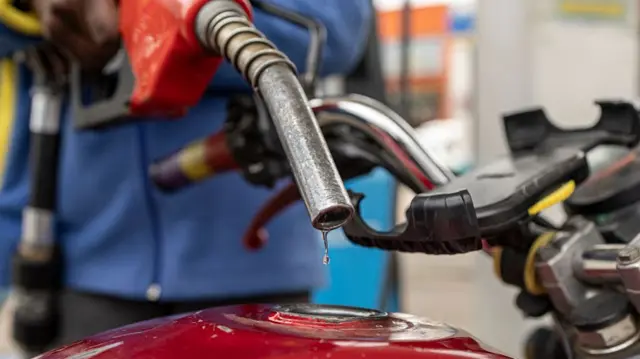 Image source, Getty Images
Oil prices pushed upwards on Thursday in Asia even after major countries agreed to tap an unprecedented amount of emergency reserves to cushion the blow of the Iran war on energy supplies.
Brent rose by around 6.5% to $97.93 (£73.12) a barrel on Thursday, after easing slightly since Monday when US President Donald Trump signalled the war could end soon.
US-traded crude was up by more than 6%, trading at $92.77.
Iran has warned to expect oil to reach $200 a barrel and that no oil will pass through the Strait of Hormuz, a critical waterway for energy shipments.
Major indexes were down during early trade on Thursday, with Japan's Nikkei and Australia's ASX 200 down by around 1%.
South Korea's Kospi index was trading lower by around 0.4%.
 Hugo Bachega
Middle East correspondent in Iraq
Iraqi Prime Minister Mohammed Shia al-Sudani has told Iranian president Masoud Pezeshkian that the attacks on Iraq are unacceptable, and that his government will not allow "any party or individuals" to use Iraqi territory as a launchpad to attack Iran.
Since Israel and the US launched the war on Iran, Iraq has become a target of Iran's retaliatory strikes and of Iranian-backed Iraqi militias.
The targets have included a US diplomatic facility in Baghdad as well as the airport in Erbil, where a US base is located, in the semi-autonomous Kurdistan region in the north.
Iran supports militias under the umbrella of the Islamic Resistance in Iraq (IRI) which are part of the Popular Mobilisation Forces (PMF) that were formed in the last decade to fight the Islamic State group.
Meanwhile, attacks attributed to the US have targeted those groups since the start of the war.
Adding to those tensions, Iran and Iranian-backed militias have attacked Iranian Kurdish forces in Iraqi Kurdistan, after reports that US President Donald Trump was planning to support them for a cross-border operation into Iran.
He has since said he does not want the Kurds to enter the war.
The developments have highlighted the fragmentation of the political and security situation in Iraq, a country that has long been a battleground in the proxy conflict between the US and Iran, with different factions and militias allied with rival foreign powers.
We can bring you some breaking news now after explosions were reported on two foreign oil tankers in the Persian Gulf near the port of Umm Qasr, near the city of Basra.
The head of the General Company for Iraqi ports says it has rescued 38 crew members from the vessels, and one person has died, in comments cited by the Iraqi news agency. Search and rescue operations are ongoing.
Ship tracking websites show the two tankers suspected of being attacked surrounded by rescue boats.
It's unclear at this stage what caused the explosions. An Iraqi security source in Basra told CNN that an Iranian boat rigged with explosives is thought to have hit the two vessels, however, the source added the investigation is ongoing.
The UK's maritime monitor also said it has received similar reports, while Iraq's State Oil Marketing Organisation expressed "deep regret" over the incident.
Oil ports have stopped operations following the attack, Iraqi authorities say.
Earlier, Oman’s navy rescued 20 sailors from a Thai-flagged vessel that was attacked in the Strait of Hormuz, about 13 nautical miles (24km) off the Omani coast, according to the country’s state news agency.
We'll bring you more on this when we get it.
 Simon Browning
Transport correspondent
The war in Iran is costing the travel and tourism sector in the Middle East at least $600m (£448m) a day, according to estimates from the World Travel and Tourism Council (WTTC).
The travel body says the losses come from the reduction in international visitor spending due to the widespread disruption to air travel.
Large swathes of airspace across the region remain closed with a limited number of commercial flights operating.
WTTC had forecast international visitor spending of around $207bn in 2026 in the Middle East before the conflict began.
Gloria Guevara, President & CEO of the World Travel & Tourism Council, said that travel and tourism is one of the most resilient of sectors, "history shows that the sector can recover quickly, especially when governments support travellers through hotel support or repatriation".
Guevera added that WTTC analysis of "previous crises demonstrates that security-related incidents often see the fastest tourism recovery times, in some cases as quickly as two months, when governments and industry work together to restore traveller confidence”.
Airlines continue to change their schedules on routes to the Middle East.
Dutch airline KLM has cancelled all flights to Dubai until March 28th. A similar decision was taken by British Airways on Tuesday regarding its routes in the region.
Sarah Smith, the BBC's North America editor, spoke with an Iraq veteran and the mother of a service member who died in the line of duty about whether they feel action against Iran is justified or not.
Justified or not? US military families on fears of Iran war
The US will be contributing 172 million barrels of oil - nearly half - of the 400 million total barrels that the International Energy Agency announced earlier today its member countries will be releasing.
The release from the US Strategic Petroleum Reserve (SPR) will begin next week and will take about 120 days to deliver, the Energy Department says.
The US will be replacing these reserves with 200 million barrels within the next year, the department says.
Though the cost of replacing spent oil reserves often falls on taxpayers, the energy department says this replacement will come "at no cost to the taxpayer", without providing further details.
As of 6 March, the SPR holds about 415 million barrels of oil out of its total capacity of 700 million, according to data from the Department of Energy.
The Saudi Defence Ministry says the country intercepted and destroyed 18 drones in the country's eastern region.
According to the Saudi Press Agency, several have been destroyed over the last few days. The country has not shared what they believe the source of the drones to be.
A short time later, it was announced that a drone heading toward the Shaybah oilfield was intercepted and destroyed on the northern edge of the Empty Quarter.
Authorities in Dubai say all residents are safe and uninjured after a drone fell on a residential apartment building in the city's Dubai Creek Harbour district, causing a fire.
"Authorities have fully brought the fire under control, and all residents are safe. No injuries have been reported," the city's media office wrote on X.
The post did not mention where the drone came from.
 Asma Khalid
Co-host, The Global Story Podcast
There are a lot of questions about how the war in Iran might unfold next – and questions about what the Trump administration calculated or miscalculated when it, alongside Israel, attacked Iran.
On The Global Story podcast, I sat down with Nate Swanson, a veteran of the U.S. State Department, who worked on American policy toward Iran for nearly 20 years, and he told me he doesn’t see a scenario in which this conflict truly resolves anytime soon. “I think for Iran, the short-term objective is to make this a war of attrition, which is not something the US likes to do and just draw out pain as long as possible,” Swanson told me. Swanson served under both Democratic and Republican administrations, including a short stint in 2025 on the Trump administration’s Iran negotiating team.
“Long term, though, at some point Iran has to come back and talk to the US … but I don't see that happening in the short term,” he added. “ I think Iran does not want to negotiate with the Trump administration again.”
The Iranians say they were in the midst of talks with the Americans when the strikes began this year, as well as last year.
You can listen to my full interview with Swanson on today’s episode of The Global Story.
In a post on X, Dubai's government media office says authorities are responding to an "incident involving a drone that fell on a building in the vicinity of Dubai Creek Harbour".
Dubai Creek Harbour is about 5 miles (8km) from Dubai International Airport.
Earlier on Wednesday, officials in the UAE city said two drones had fallen "in the vicinity” of the airport.
Dubai International is the world’s busiest airport for international passenger traffic.
This latest incident comes after a resolution drafted by Gulf nations calling for an end to attacks by Iran won the backing of the UN Security Council, as we reported earlier.
We'll bring you more on this developing story out of Dubai when we have it.
 Nada Tawfik
Reporting from the United Nations in New York
The Gulf countries’ draft garnered the largest number of co-sponsors on record for a resolution – 135 countries backed it.
Bahrain said it showed this was not just a regional matter, but recognition of the vital importance of the Gulf for global stability and energy security.
The US said Iran’s strategy of sowing chaos and holding neighbours hostage had clearly backfired.
Nevertheless, Russia and China both said they had abstained on the vote because the resolution didn’t fully reflect the root cause and overall picture of the conflict in a balanced manner.
The text did not mention the US and Israeli airstrikes on Iran, which the UN Secretary General has also deemed a violation of the UN charter.
Russia also doubted the Gulf countries’ assertion that their territories weren’t being used to strike Iran.
Bahrain expressed sadness over that claim and said the Gulf countries had never been used to launch attacks.
Moscow’s competing draft - that instead urged ALL parties to stop fighting - failed to get enough votes to pass.
Iran accused those who supported the Gulf country’s draft of allowing political considerations to take precedence over the protection of the UN charter, calling it a stain on the council’s record.
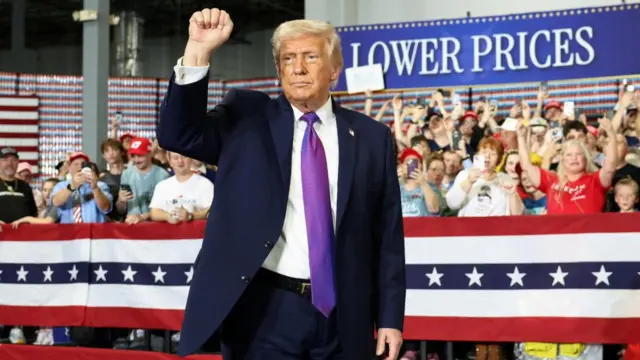 Image source, Reuters
Back in Kentucky, where we earlier brought you some remarks by Donald Trump, the US president has now finished speaking.
We heard little from Trump about the war in Iran, other than that we shared in our earlier post about his praise for the US military and his claim that the conflict will ultimately "substantially reduce oil prices".
A little earlier, the UK government announced that another flight it's chartered to bring British nationals home from the Middle East is due to leave Dubai in the coming days.
It will be the sixth such flight arranged by the government from the region - so far, three have flown from Oman and two from Dubai.
Airspace remains closed across some of the Middle East and the security situation on the ground remains fast-changing, the UK Foreign Office says in the update.
As of Wednesday morning, officials estimate that more than 57,000 British nationals have left the region to return to the UK since March 1.
Samantha Granville
Reporting from Beirut
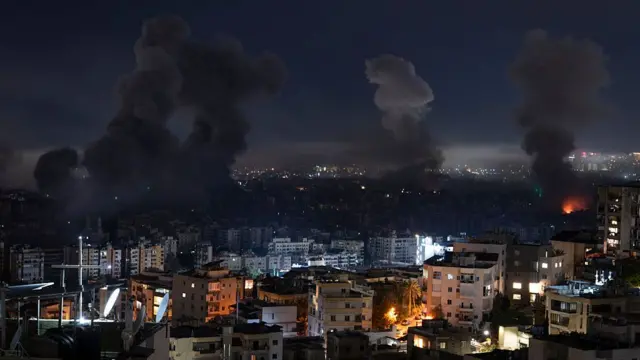 Image source, Adri Salido/Getty Images
This is the loudest night Beirut has had since the war began.
Smoke hangs over the city. Social media is filled with videos and pictures of orange flashes lighting up the night sky.
It’s not a sunset, but Israeli airstrikes hammering the southern suburbs.
Our BBC team was at dinner when our phones started lighting up at the table. First, Hezbollah fired dozens of rockets toward Israel. Minutes later, Israeli evacuation orders for the southern suburbs.
Walking home, the streets were nearly empty. A few cars, fewer people. Everyone already knew the soundtrack of explosions that would come next.
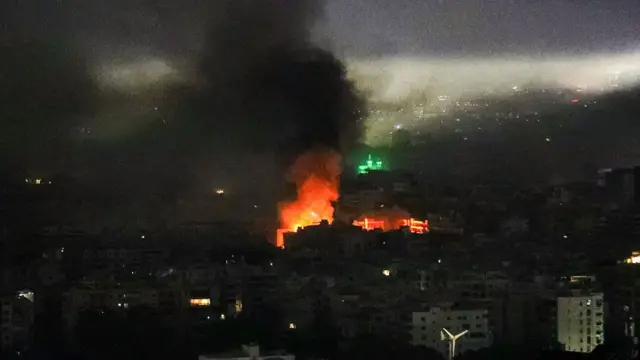 Image source, AFP via Getty Images