Summary

  • The NHS came close to collapse during the height of the pandemic but narrowly avoided it due to the efforts of healthcare staff, the Covid inquiry finds - read the key findings

  • Staff put themselves at exceptional risk because of a lack of suitable personal protective equipment, the report says

  • Both Covid patients and those needing care for other conditions were failed, the report finds, with people deterred from accessing healthcare in order to ease the pressure on the NHS

  • Visiting restrictions meant some patients died without loved ones and very vulnerable patients were left without support, including children in mental health units, women using maternity services and people with dementia

  • The inquiry's chair, Baroness Heather Hallett, summarises the report's findings as: "We coped, but only just"

  • It follows emotional testimony from dozens of healthcare workers about how Covid affected them and their patients - and the agonising decisions they faced as the virus spread

  • Almost 227,000 people died in the UK from Covid between March 2020 and May 2023, when the World Health Organization said the "global health emergency" was over

Media caption,

Healthcare systems came 'close to collapse' says chair of UK Covid-19 inquiry

  1. Analysis

    An overwhelmed NHS only just survived the pandemicpublished at 13:55 GMT 19 March

    Hugh Pym
    Health editor

    A key debate in the early stages of the pandemic was how close the NHS came to collapse.

    Ministers were haunted by chaotic scenes from Italian hospitals and said subsequently that despite huge pressures the UK health system was not overwhelmed. But Baroness Hallett says evidence to the inquiry had stated that some parts of the system were overwhelmed, with patients not getting the care they needed.

    She concludes that it only just survived and the impact on staff and patients was devastating.

    She quotes from one inquiry witness saying a hospital was "a scene from hell" and "in massive, massive trouble".

    This sort of situation, she notes, would be taken by most people to suggest overwhelming of the system.

    We're now ending our live coverage - you can read the takeaways from the report here.

  2. Look past the report's strong languagepublished at 13:52 GMT 19 March

    Nick Triggle
    Health correspondent

    An NHS close to collapse, staff working in war zones and patients harmed by not getting the care they needed, this report – the third of 10 the inquiry will publish – uses strong language to describe what happened.

    But perhaps the most illuminating and thought-provoking parts of the report, which runs to over 400 pages, are elsewhere.

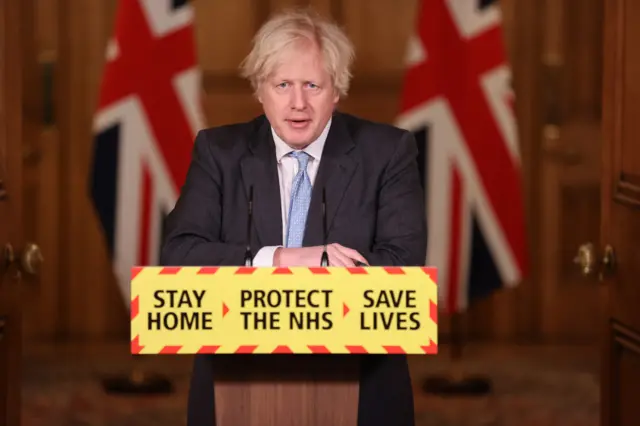
    The slogan Stay Home, Protect the NHS, Save Lives was strong, but may have deterred people without Covid from seeking help – and in itself may have caused harm.

    Shielding the vulnerable to protect them from Covid was so damaging emotionally many have struggled to return to their previous lives.

    Restrictions on visitors, which meant people died alone and women faced childbirth without their partners, were too tough.

    There were trade-offs and difficult balances that were struck when it came to the NHS – did the government go too far?

  3. What the report recommendspublished at 13:49 GMT 19 March

    The inquiry has made several recommendations that it considers necessary to prevent healthcare overwhelm in the next pandemic.

    Here’s an overview of the key suggestions the inquiry is making:

    • Urgent and emergency care capacity should be increased to make sure hospitals can manage future surges in demand
    • The body responsible for infection prevention and control guidance should be strengthened to enhance decision and improve guidance
    • Data collection should be improved to make sure individuals most at-risk of infection can be identified, and the deaths of healthcare workers should be recorded more accurately
    • Support for healthcare workers should be strengthened to ensure staff retention and improved resilience
    • Provide clear criteria for clinical care decisions if resources become completely exhausted
  4. Bereaved families group argues report shows 'callous incompetence' from governmentpublished at 13:42 GMT 19 March

    Covid-19 Bereaved Families for Justice have shared their reaction to the report. It's a pressure group that says it wants to ensure "lessons are learnt to protect lives" in the event of a future pandemic.

    "This report is clear and utterly damning", it says. "Our loved ones, many of whom were healthcare workers themselves, paid with their lives."

    "That outcome was not inevitable."

    It criticises previous governments, saying that "years of austerity left the NHS dangerously exposed... that was a political choice". The group adds that the previous government under Boris Johnson was characterised by "callous incompetence".

    "But this is not only about past failure", it says. "The health service is now in a worse position to cope with another pandemic than it was 6 years ago."

    "We urge the government to use this report as a catalyst for change. Failing to do so would be unforgivable."

  5. 'Beyond distressing': Bereaved families share pain of losing loved ones duringpublished at 13:29 GMT 19 March

    Also included in Baroness Hallett's report are testimonies from people who lost loved ones during the pandemic.

    Sam Smith-Higgins, who is part of the Covid-19 Bereaved Families for Justice Cymru pressure groups, describes a doctor calling to tell her that her father's condition had deteriorated: "To not be with my father and to hear that news was completely devastating."

    She says she text her father a goodbye message "with the hope that it would be read out to him", adding that "it is truly difficult to put into words how painful it is to say farewell to a loved one by text message."

    Catherine Todd - who is a member of Northern Ireland Covid-19 Bereaved Families for Justice - lost her newborn son Ziggy during the pandemic. She says it "was beyond distressing that we were required to wear PPE to visit Ziggy and to have photos with him taken while we were wearing PPE".

    She says that she did "not understand the reasoning behind this" and that it has had "a lasting impact, and we are reminded of this every time we look at any photos of him."

  6. 'This report must be a call to action', says Unison health headpublished at 13:15 GMT 19 March

    This "report is really, really stark in its conclusion that the healthcare service had been underfunded", says Sara Gorton, head of health at Unison - the largest union in the UK for health.

    It shows how that underfunding undermined "the ability of the NHS to cope" during the pandemic, she says.

    Only the "superhuman efforts of staff" pulled the NHS "back from the brink", she says, and it's "really clear that this report must be a call to action".

    NHS staff felt "expendable", she says. "That must never, ever happen again."

  7. Do not resuscitate notices imposed on certain groups 'should not have happened' - chairpublished at 13:00 GMT 19 March

    Hallett says next that she has also heard concerns about those living with Long Covid - and how long it can take for their symptoms to be taken seriously and be diagnosed.

    She says access for care for this condition is variable across the four nations of the UK - each has adopted its own approach.

    Research is ongoing, but has been "significantly" scaled back. The need for a "greater understanding" remains, she stresses.

    Separately, she speaks of reports of inappropriate DNACPR notices (do not attempt resuscitation) - which were imposed on certain groups of people during the pandemic which "should not have happened".

    She says this was not a result of change in policy and was discouraged by the government health departments - the message however did not seem to get through to everyone.

  8. Hallett: High-risk people asked to shield became 'lonely and socially isolated'published at 12:52 GMT 19 March

    Hallett says that "better data systems" across the UK to identify high-risk individuals.

    There were "wide ranging consequences" for the millions asked to shield themselves from the virus, including limiting their access to healthcare and disrupting their daily lives, she says.

    It "inevitably resulted in many people who were shielding becoming lonely and socially isolated", she says.

    She adds that the "harmful consequences" of the programme show the "difficult balance to be struck" between protecting the vulnerable and seeking to prevent the spread of infection.

    Better pandemic planning is needed to mitigate some of the "adverse effects" of shielding, she says.

  9. Assumptions about how Covid spread influenced everythingpublished at 12:46 GMT 19 March

    Jim Reed
    Health reporter, reporting from the inquiry

    The report has detailed the guidance used to control Covid's spread.

    At the start of the pandemic it was assumed the virus was spread by close contact - i.e. either touching something or through large droplets after a cough or sneeze.

    That assumption influenced everything - from the advice to wash our hands while singing Happy Birthday, to those 2m social distancing rules, to the types of flimsy surgical masks given to doctors and nurses.

    In the end that idea turned out to be “flawed”, the inquiry says, and failed to recognise the virus could also be spread in the air in tiny particles known as aerosols that can stay suspended for much longer periods.

    Recognising that earlier could have made a difference - for example schools could have been told to better ventilate classrooms, while the kind of PPE used by doctors could have been upgraded to stop those tiny aerosol particles getting through.

  10. Prevention measures were fundamentally flawed, chair sayspublished at 12:41 GMT 19 March

    Hallett next turns to measures that were introduced to prevent the spread of the disease.

    She explains that infection, prevention, control (IPC) measures are "not new" but that there were "fundamental flaws" in the UK's approach to the IPC guidance.

    Three of her 10 recommendations are therefore focused on this area, she explains.

    She cites the use of PPE as an example which put patients and healthcare workers at risk.

    Shortages of PPE and poor quality PPE caused "immense anxiety" among healthcare workers and tragically there were "many deaths" of healthcare workers.

    She then considers the visiting restrictions put in place at healthcare settings. Although there were some exceptions, it led to some patients dying alone - a "horrific" experience for family members.

  11. Hallett: Hospitals had to ration supplies of vital equipment, including oxygenpublished at 12:37 GMT 19 March

    Beyond a shortage of staff, many hospitals faced shortages of vital equipment, Hallett says next.

    Some hospitals "nearly ran out" of oxygen and had to ration supplies, while others needed more ventilators and kidney dialysis machines for critical care patients.

    Clinicians were "worried" about a lack of guidance on how to ration, and how to prioritise patient care if they entirely ran out of key equipment, she says.

    Despite poor health conditions, some people were not admitted to intensive care, which had "devastating consequences", she says.

    Many that did not come to hospital still needed medical advice, Hallett says. But the pressure on the 111 services led to "long delays" and "calls abandoned", and remote GP appointments "may have led to some conditions being missed" - particularly for those with additional needs, such as disabled or deaf people.

  12. NHS recruitment initiatives 'not enough' to bolster critical care staff - Hallettpublished at 12:29 GMT 19 March

    Hallett turns next to staffing pressures. That includes pressure on ambulance and 999 services.

    She says waiting times for even the most urgent calls grew and crews were unable to discharge patients until a place became available in a hospital department.

    With the pressure inside hospitals "so great", it could take many hours - putting crews and patients at increased risk.

    Hallett explains there were recruitment initiatives, and a campaign was also established encouraging retired staff to return where possible.

    But it was "not enough" to bolster the numbers of critical care staff.

    At the end of March 2020, she says, patient-staff ratios were reduced to the point where rather than one-to-one care, a single intensive care unit nurse could be responsible for up to four critically ill patients.

    One nurse told the inquiry all you had time to do was "manage the alarms", Hallett says.

  13. Paused cancer screenings led to missed diagnosis and loss of life, inquiry chair sayspublished at 12:23 GMT 19 March

    Cancer screening programmes in Scotland, Wales and Northern Ireland had to be paused because of the pandemic, says Baroness Hallett.

    She says she recognises "this was not a decision taken lightly" but it "came at a high cost".

    A lack of screening for colorectal cancer, for example, led to "missed and late diagnoses, longer waits for treatment and ultimately loss of life".

    The postponement of treatment for patients with life-threatening and life-changing conditions shows the "extreme pressure on the system", she says.

    Caring for Covid patients and preventing system collapse required "desperate measures", she adds.

  14. NHS 'overstretched and understaffed' before pandemic hit - Baroness Hallettpublished at 12:20 GMT 19 March

    Baroness Hallett continues her remarks, outlining that the message to stay at home, protect the NHS and save lives was designed to protect the healthcare system from becoming overwhelmed.

    However, she says that when the pandemic arrived, systems were already "overstretched and understaffed".

    She says this "fragility" had profound consequences as there was an increase in people seeking treatment for Covid.

    Extraordinary steps were taken, she continues, including delaying operations and discharging medically fit patients more quickly.

    She cites the example of those waiting for hip replacements, who had to live in constant pain with decreased mobility. For some, their condition deteriorated to the point where surgery was no longer an option.

  15. UK healthcare system 'coped, but only just', says inquiry chairpublished at 12:15 GMT 19 March
    Breaking

    The chair of the Covid inquiry, Baroness Heather Hallett, is now giving a statement.

    She says she can summarise the impact of the Covid pandemic on the UK healthcare system as "we coped, but only just."

    The pandemic came at a huge cost for patients, their families, as well as to non-Covid patients "who were not seen and treated", she says.

    "Collapse was only narrowly avoided" because of the efforts of healthcare workers, and some other patients "did not get the level of care they would normally have received".

  16. Hospital visiting restrictions were devastating and applied inconsistently, report sayspublished at 12:08 GMT 19 March
    Breaking

    Jim Reed
    Health reporter, reporting from the inquiry

    The report also talks about one of the most controversial policies of the pandemic - hospital visiting restrictions in lockdown.

    It says those rules meant some people died without the comfort of being surrounded by their loved ones, while other very vulnerable patients were left without vital support.

    That included some with dementia or a learning disability, and children in mental health units, as well as some women who needed baby scans or other maternity services.

    The report doesn’t pull its punches on this point saying it had a “devastating impact” on bereaved family members, as well as mothers who had to receive difficult news about pregnancy complications alone.

    What’s more it says that the visiting rules were sometimes applied inconsistently leaving many loved ones feeling that they had been unfairly treated when visits were refused.

  17. 'Stay at home' advice suggested NHS was closed - with diagnoses missedpublished at 12:05 GMT 19 March

    Nick Triggle
    Health correspondent

    Boris Johnson in front of a sign saying 'stay home, protect the NHS, save lives'Image source, PA Media

    Stay Home, Protect the NHS, Save Lives was a powerful slogan in the early stages of the pandemic.

    But it came at a cost, the inquiry suggests, by inadvertently sending the message that health care was closed.

    The report notes there was a decline in attendances to A&E and other settings for emergencies, including heart attacks.

    People, it says, were deterred from accessing health care because they did not want to overburden the NHS.

    Disruption to cancer screening and a drop in people presenting with the signs of the disease meant there were missed and late diagnoses and increased death rates.

    Meanwhile, the cancellation of elective care - which includes things such as hip and knee replacements - had a “debilitating effect” on patients’ lives and mobility.

    In some cases, it led to such a deterioration that patients could no longer have surgery.

  18. Austerity left NHS in 'precarious position' as Covid hit - with not enough beds or staffpublished at 12:03 GMT 19 March

    Nick Triggle
    Health correspondent

    We're still looking through the Covid inquiry's report.

    In the decade leading up to the pandemic, the NHS had seen its budget squeezed on a historic level.

    Spending rose, but only just, despite fast-rising demand because of the ageing population and an increase in people with long-term health conditions.

    The inquiry says this meant the NHS entered the pandemic with not enough beds or staff. It was a precarious position as Covid hit, it says.

    The situation meant there was little room to expand and cope with the surge in Covid patients, particularly in the first wave, which led to huge demand for oxygen, ventilators and kidney dialysis.

    During the pandemic, intensive care staffing ratios were diluted, compromising care.

  19. NHS staff put themselves at risk, with PPE unsuitable for women and ethnic minoritiespublished at 12:01 GMT 19 March
    Breaking

    Nick Triggle
    Health correspondent

    The lack of protective equipment for staff was something that became clear in the early stages of the pandemic, the report says.

    Supply levels got “dangerously low” – the inquiry was told at one point the NHS was just days away from running out of key items, such as masks, gloves and gowns.

    The UK was not alone in this, the inquiry says, but it was critical of the approach taken, with specialist masks designed to fit certain face shapes, to the detriment of ethnic minority staff and women.

    It says staff had to work in inadequate and unsuitable PPE and put themselves at risk to care for patients.

  20. Hard-hitting report lays bare how NHS came close to collapse and patients were failedpublished at 12:00 GMT 19 March
    Breaking

    Nick Triggle
    Health correspondent

    The Covid inquiry’s third report covers a wide-range of issues in detail, but it has one clear conclusion – the NHS came close to collapse.

    The report says it “only just coped”, as it set out how overwhelmed the healthcare system was.

    It says both Covid patients and those needing care for other conditions were failed.

    It also criticises the lack of protective equipment for health workers and how an under-resourced NHS entered the pandemic with not enough beds or staff.

    Visiting rules were inconsistent, and it questions whether it was right women had to give birth alone and people with disabilities weren’t able to be supported by carers.

    Collapse was only narrowly avoided, it says, because of the extraordinary efforts of staff.

    We'll bring you more on this in the next few moments.

Trending Now