Summary

  1. UK mortgage costs rising as lenders scramblepublished at 10:06 GMT

    Kevin Peachey
    Cost of living correspondent

    With the prime minister set to discuss “every lever available” to reduce the impact on the cost of living, many households face the prospect of higher bills.

    In a week, at the start of April, various scheduled bill rises kick in, such as council tax and water bills. The cost of food is also expected to rise as fertiliser costs go up.

    Now, those set to remortgage, or with plans to buy a home, are watching lenders scramble to reset rates on new fixed mortgage deals.

    About a fifth of deals (nearly 1,500 in total) have been withdrawn from the market since the start of the conflict, according to the financial information service Moneyfacts.

    That tends to indicate uncertainty and how rapidly the outlook is changing. The average rates on remaining, or repriced, deals have also risen sharply.
  2. Starmer: 'No assessment' to suggest UK is being targeted by Iranpublished at 09:42 GMT

    Speaking to broadcasters a few moments ago, Starmer said there is "no assessment" that the UK is being targeted by Iran.

    It comes after the Israel Defense Forces (IDF) said on Saturday that Iran now has "missiles that can reach London, Paris or Berlin". An Iranian missile would need to travel about 2,700 miles to reach London.

    The claim, shared on X, came after reports that Iran had unsuccessfully fired ballistic missiles at the Diego Garcia US-UK military base, which is about 2,350 miles from Iran's southern coast.

    Asked whether the UK was within range range of Iranian missiles, following the attempted Diego Garcia attack, Starmer says the government carries out assessments "all the time in order to keep us safe, and there's no assessment that we're being targeted in that way at all".

    He goes on to voice the need for a de-escalation, adding that it's important to defend British interests and lives, "without getting dragged into the war".

  3. Government 'doing everything we can' to combat Iran war price rises - Starmerpublished at 09:31 GMT

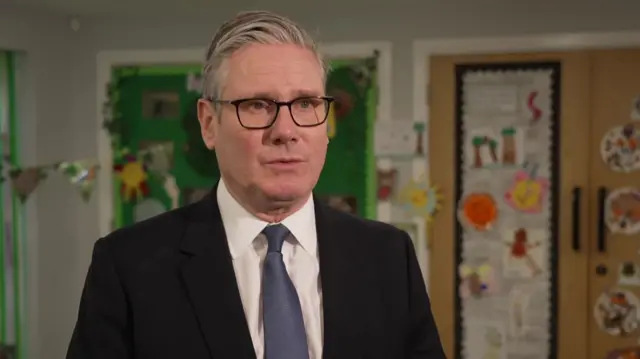
    Keir Starmer in a suit and glasses in a school setting

    UK Prime Minister Keir Starmer says the emergency Cobra meeting today will discuss "every lever available" to deal with the cost of living, given the ongoing Iran conflict.

    Cobra meetings, (also called Cobr) are named after Cabinet Office Briefing Room A in Whitehall. The room is where senior ministers and officials gather in central London, to coordinate the emergency response to a crisis.

    Given the unfolding war in Iran, Starmer says "most people" are concerned with the conflict itself, but also how it is going to affect them and their families.

    "And so today we're looking at the economic impact, and I am asking for every lever that's available to the government to deal with the cost of living to be discussed at Cobra," Starmer told reporters.

    He says the Bank of England and others will be in attendance, adding that he wants to make sure that his government are "doing everything we possibly can" to mitigate cost of living impacts.

  4. Warnings of 'huge increase' in farmers' costspublished at 09:00 GMT

    Farmers and food producers are seeing a "huge increase" in their costs amid the conflict in the Middle East, the head of a UK farming union says, as he warns of the impact on how much making food costs.

    Tom Bradshaw, president of the NFU, tells BBC Breakfast that "farmers and growers are carrying all of the risk within the supply chain, and we're seeing a huge increase in the cost of fertiliser, red diesel, gas to heat our greenhouses.

    "This is going to have a real impact on the cost of producing the country's food."

    "While we recognise that there's a cost of living crisis going on here and that consumers can ill-afford increased shelf prices, we need a resilient food supply chain for the long term, and that means farmers must be able to get fair returns for the risks that we're taking in the supply chain."

    He describes this as "the start of the next cycle of inflation coming through the supply chain".

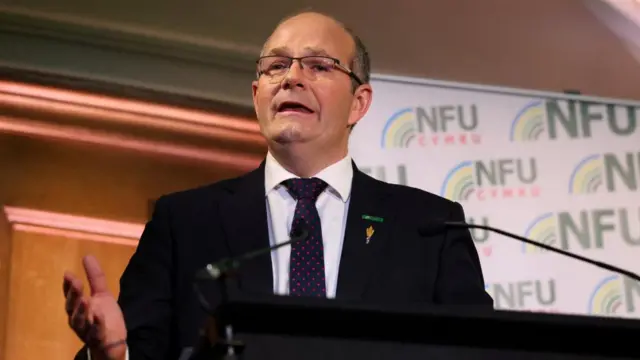
    Tom Bradshaw speaking at an event, there is a microphone in front of himImage source, Reuters
    Image caption,

    Tom Bradshaw, pictured in November 2024

  5. UK government 'very alive to the fact' more support may be needed as fuel prices risepublished at 08:37 GMT

    As we've been reporting, Keir Starmer will convene another Cobra meeting today.

    The BBC's political correspondent Joe Pike has said that Downing Street has been facing pressure to set out how it'll support households and businesses as conflict continues.

    Ahead of the meeting, housing minister Matthew Pennycook tells BBC Breakfast he is "not going to get ahead of what comes out of that meeting" but that it will be attended by "important" figures such as the Governor of the Bank of England, Chancellor Rachel Reeves and Energy Secretary Ed Miliband.

    He says that the government has already introduced some support on heating oil but later adds: "We're very alive to the fact that further action might be required and we're closely monitoring the situation."

  6. Iran Defence Council issues Strait of Hormuz order for 'non-hostile countries’published at 08:14 GMT

    Ghoncheh Habibiazad
    Senior reporter, BBC Persian

    Iran’s high-level security body Defence Council has said in a statement that the “only way for non-hostile countries” to pass through Strait of Hormuz is “coordination with Iran”.

    The Council has also said in the statement published by Iranian outlets that “any attempt by the enemy to attack Iranian coasts or islands” will lead to “all access routes” in the Gulf [they have said Persian] and coastal areas getting “mined with various types of naval mines, including drifting mines deployable from the shore”.

    In the case of such an attack, in “addition to the Strait of Hormuz, the whole (Persian) Gulf would in practice be blocked, with “responsibility belonging to the aggressor”, the statement adds.

  7. Oil and stock markets impacted by energy strikes threatpublished at 07:56 GMT

    Nick Edser
    Business reporter

    Oil prices have risen and stock markets in Asia have fallen heavily on Monday as traders assess threats by the US and Iran to escalate hostilities.

    The price of Brent crude oil climbed more than 1% on Monday to above $113.40 (£85.30) a barrel. Japan’s Nikkei share index closed down 3.5% while South Korea's Kospi index fell by 6.5%.

    Donald Trump warned on Saturday he would "obliterate" Iranian power plants if the key Strait of Hormuz shipping route was not reopened, while Iran said it would respond to any such strikes by targeting key infrastructure in the region.

    Simon Flowers, chairman and chief analyst at energy consultancy Wood Mackenzie, said the markets were waiting to see if the threats were "carried through".

    "If the US does strike Iranian infrastructure, it escalates the whole intensity of the war a step further and then we'd have to see if Iran strikes back at infrastructure tit-for-tat as they've done over the last week or so," he told the BBC's Today programme.

  8. Fears over when civilians in Lebanon will be able to return homepublished at 07:46 GMT

    Lina Sinjab
    Middle East Correspondent

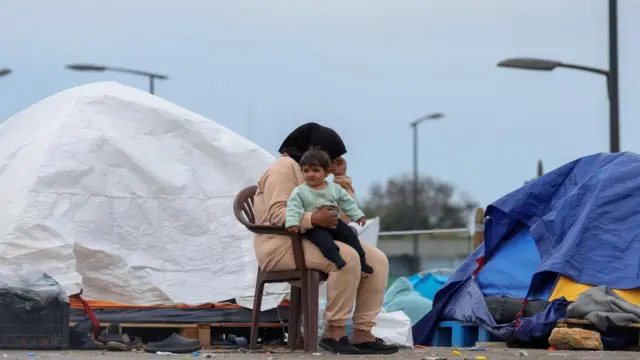
    A woman sits as she holds a baby at a temporary encampment for displaced people, in BeirutImage source, Reuters
    Image caption,

    Temporary encampments have been established in Beirut for displaced people

    Israel has begun moving into southern Lebanon to create a buffer zone clear from any threats from Hezbollah.

    But for hundreds of thousands of civilians who were forced to flee their homes and villages, the fear is that there is no clear sign on when or if they will ever be able to return home.

    Voices that criticised Hezbollah for dragging the country into this war, have now started to turn against Israel because of the level of destruction and violations being inflicted on civilians.

    Over 1000 have been killed since the war began including 118 children and more than a million are displaced.

    The Lebanese government banned Hezbollah’s military activities and said it is ready for direct negotiations with Israel to put the war to an end. Something the Israelis have rejected and said Lebanon’s army should be responsible for disarming the group.

  9. British couple in Iran prison say situation is 'life-threatening'published at 07:29 GMT

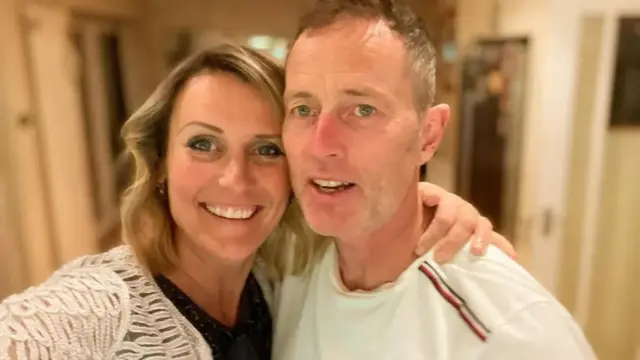
    Craig and Lindsay Foreman standing close together smiling at the cameraImage source, Handout

    A British man jailed with his wife in Iran on espionage charges says they feel frightened by the war and abandoned by the UK government.

    Craig Foremansays the couple, who were arrested in January 2025 while on a global motorbike journey, felt"let down, alone and completely frustrated".

    In the message, recorded over the phone by the couple's son, Foreman says that evidence against them was fabricated by the Iranian authorities to justify a 10-year sentence - and the UK government is fully aware of their innocence.

    "We are now in prison in a war zone," hesays."We have gone from a challenging situation to a life-threatening one. You have chosen to give us zero information on what's happening to us, what to do and where to go if the prison doors were to open."

    You can read more on their story here

  10. TUC calls for emergency taskforce to combat energy cost riskspublished at 07:19 GMT

    In the UK, the Trades Union Congress (TUC) says it is concerned about the impact of rising energy costs on household incomes and jobs, and is calling for an emergency taskforce to be set up.

    "What we have learned from previous difficult situations like Covid is that it is important to start planning early," says the union's Assistant General Secretary Kate Bell.

    Jobs in energy-intensive sectors like steel and manufacturing could be "most at risk", she tells BBC Breakfast. But all union members will be impacted if household bills rise, she adds.

    Asked what the TUC wants from today's Cobra meeting (the UK government's emergency committee), Bell calls for the conflict to be "deescalated" and for the government to think about "how to protect jobs and livelihoods".

    This should be a collaborative conversation, she says: "[It is] really important that the voices of those workers and of employers are heard".

  11. Trump's 48-hour deadline on Strait of Hormuz loomspublished at 06:56 GMT

    Donald Trump's deadline for Iran to open the Strait of Hormuz is due to expire shortly before midnight UK time.

    On Saturday evening, the US president said that if the shipping channel was not opened "without threat" in 48 hours then the US would "obliterate" Iran's power plants.

    In the post, shared at 23:44 GMT (19:44 ET) on Saturday, Trump said: "If Iran doesn't FULLY OPEN, WITHOUT THREAT, the Strait of Hormuz, within 48 hours from this exact point in time, the United States of America will hit and obliterate their various POWER PLANTS, STARTING WITH THE BIGGEST ONE FIRST!

    "Thank you for your attention to this matter. President DONALD J. TRUMP."

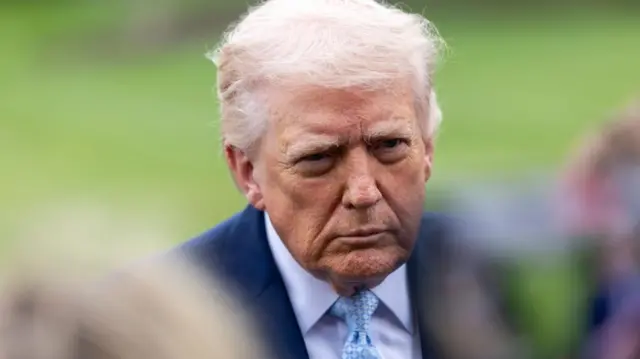
    Donald Trump pictured on FridayImage source, EPA
    Image caption,

    Donald Trump pictured on Friday

  12. 'PEACE THROUGH STRENGTH' - Trump's latest postpublished at 06:47 GMT

    US President Donald Trump shared a short post on his Truth Social platform overnight.

    In a message posted all in capital letters, he says: "PEACE THROUGH STRENGTH, TO PUT IT MILDLY!!!"

  13. Trump-Starmer call lasted 20 minutes and was 'constructive', Downing Street sayspublished at 06:24 GMT

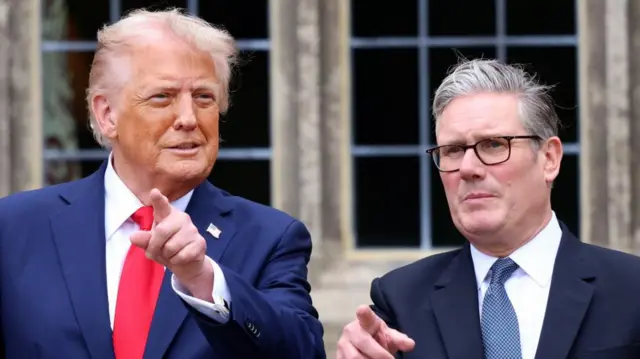
    Trump and Starmer, pictured during the president's state visit to the UK last SeptemberImage source, EPA
    Image caption,

    Trump and Starmer, pictured during the president's state visit to the UK last September

    As we reported earlier, UK PM Keir Starmer and US President Donald Trump spoke on the phone yesterday evening.

    The call lasted 20 minutes and was "constructive", Downing Street says.

    A Downing Street spokesperson said the two discussed the situation in the Middle East and, "in particular, the need to reopen the Strait of Hormuz to resume global shipping".

    "They agreed that reopening the Strait of Hormuz was essential to ensure stability in the global energy market," the spokesperson said, adding that they "agreed to speak again soon".

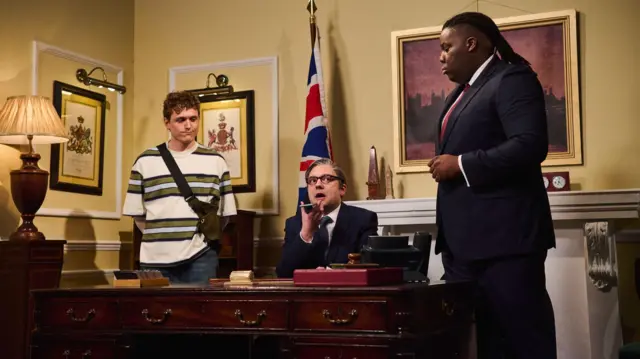
    Yesterday, Donald Trump also re-shared a satirical SNL sketch on Truth Social, in which actors playing Starmer and Deputy PM David Lammy talk about an imminent phone call with the US president.

    "Oh golly, what if Donald shouts at me? What do I say, Lammy?" the actor playing Starmer says, before adding: "I'm out of my depth here, Lammy. How did Liz Truss make this job look so easy?"

    George Fouracres as Prime Minister Sir Keir Starmer and Hammed Animashaun as Deputy Prime Minister and Justice Secretary David Lammy during the first episode of Saturday Night Live UKImage source, PA Media
    Image caption,

    Trump shared the SNL UK clip without comment on Sunday

  14. Iran fires missiles towards Israel, IDF sayspublished at 05:58 GMT

    The IDF says in its latest update that Iran has fired missiles towards Israel.

    Air defence systems are intercepting the strikes, the IDF says.

    Earlier, we learned blasts hit several locations in the Iranian capital Tehran.

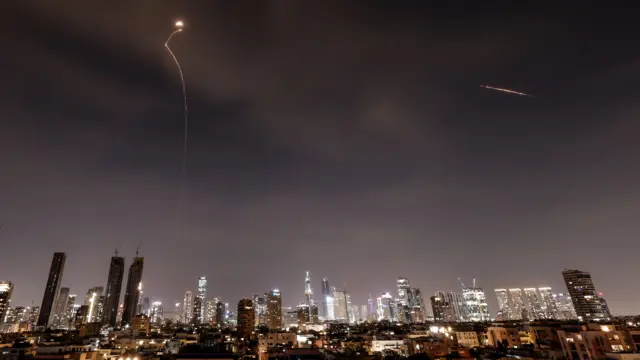
    Another wave of Iranian strikes, including cluster munitions, was shot down over Tel Aviv overnight.

    Stream appears in the Tel Aviv skylineImage source, Reuters
    Image caption,

    Skyline overnight in Tel Aviv shows defence systems intercepting a missile

  15. Cost of living pressures in the Philippinespublished at 05:48 GMT

    Suranjana Tewari
    Asia Business Correspondent in Manila

    A yellow colour jeepney in Manila

    Rising oil prices are being felt across daily life in the Philippines, where weeks of increases are pushing up the cost of transport and food.

    In Manila, an estimated nine million people rely on jeepneys every day - colourful, open-air buses that run on diesel.

    Driver Ricky Romano says he is struggling to absorb fuel price increases of more than 100%. His take-home pay has halved since the war began, and he’s now borrowing from family just to cover the rent on his vehicle.

    Some subsidies are being offered, but he says what he really needs is to increase fares for passengers travelling to work and school.

    Higher fuel costs are also pushing up transportation expenses across the supply chain, making it more expensive to move goods from farms to markets.

    That is feeding into a rise in the price of staples like rice, as well as fresh produce and packaged food.

    Armelita Rayos runs a small canteen for jeepney drivers at a Manila terminal. She says the price of rice has surged by 50%, while cooking gas is up by more than a quarter. But she’s reluctant to raise her prices, as her customers are already struggling. Many who once ate here three times a day now only eat twice.

    The Philippines imports 98% of its oil from the Persian Gulf. In a country so dependent on imported energy, a sustained rise in global oil prices is pushing up the cost of living for millions.

  16. PM to lead another Cobra meeting on Middle East impactpublished at 05:25 GMT

    Joe Pike
    Politics reporter

    Prime Minister Sir Keir Starmer will lead a meeting this afternoon of the government's emergency committee, Cobra, to discuss the economic consequences of the conflict in the Middle East.

    Chancellor Rachel Reeves, Foreign Secretary Yvette Cooper and the governor of the Bank of England Andrew Bailey will join the meeting, which is expected to focus on energy security and the resilience of supply chains.

    Downing Street is facing pressure to set out how it'll support households and businesses as conflict continues.

    Earlier today, we heard the head of the International Energy Agency compare the current energy crisis to those of the 1970s and the impact of Russia's 2022 invasion of Ukraine.

  17. Air strikes continue as Israel warns of 'several more weeks' of fightingpublished at 04:18 GMT

    If you are just joining us, here's what's been unfolding over the last few hours:

    We'll bring you the latest developments as we get them.

  18. Explosions rock Tehran after IDF launches attackpublished at 03:13 GMT

    Israel's military has launched an early morning "wide scale" airstrike on sites across Iran's capital Tehran.

    Blasts were reported across the city by Iranian state media, including IRGC-aligned Fars news agency.

    "Terrible sounds of explosions have been reported," Fars wrote.

    The Israel Defense Forces (IDF) says it is targeting "terrorist infrastructure" in Tehran.

  19. No country 'immune' from potential worst energy crisis in decadespublished at 02:37 GMT

    The Middle East war could spark an energy crisis worse than the combined shocks of the 1970s and comparable to the initial impacts of Russia's invasion of Ukraine in 2022.

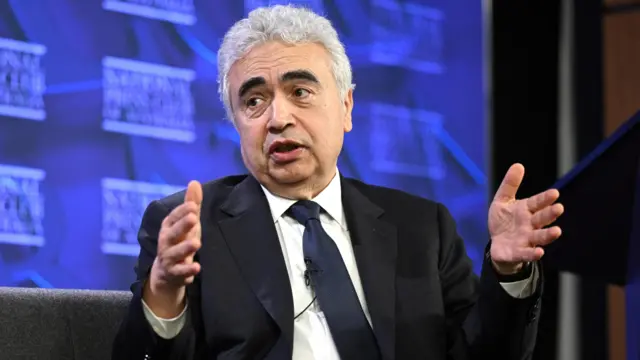
    That was the warning of Fatih Birol, Executive Director of the International Energy Agency, in comments made to Australian media at a press event in Canberra.

    "Many of us remember the two consecutive oil crises in the 1970s... at that time, in each of the crises, the world has lost about five million barrels per day, both of them together, 10 million barrels per day," Birrol said.

    "As of today, we lost 11 million barrels per day, so more than two major oil shocks put together."

    He added that no country "will be immune" to the energy consequences of the crisis, as shipments of oil and liquefied natural gas (LNG) flowing through a vital channel – the Strait of Hormuz – remains stifled by an Iranian blockade.

    Fatih Birrol in a suit addressing mediaImage source, Reuters
  20. Iran blames US and Israel for deadly strike on Persian broadcasterpublished at 01:50 GMT

    At least one person has been killed in a strike on a broadcast station in southern Iran, according to the semi-official news agency Tasnim, which is associated with Iran's Revolutionary Guard Corps (IRGC).

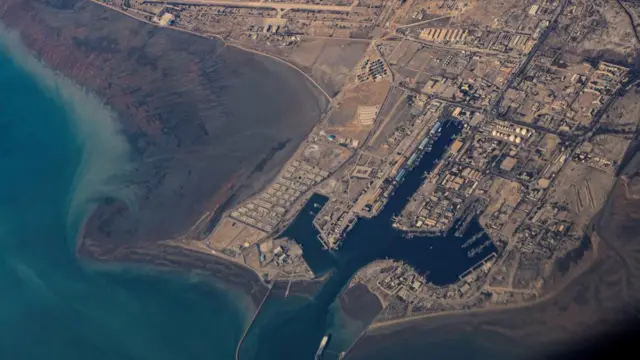
    The strike hit a transmitter in Bandar Abbas, a port city lying on the southern coast of Iran next to the Strait of Hormuz.

    A security guard stationed at the Persian Gulf Radio and Television Center was killed, Tasnim says.

    It blamed the US and Israel for the strike, which also left another person injured.

    The claims were not immediately independently verified.

    n aerial view of the Iranian shores and Port of Bandar Abbas in the strait of Hormuz.Image source, Reuters
    Image caption,

    The port at Bandar Abbas sits on the Strait of Hormuz

Trending Now