Summary

  1. Israeli army confirms death of soldier in Lebanonpublished at 05:00 BST
    Breaking

    The Israeli Defense Forces (IDF) have confirmed the death of a soldier in southern Lebanon, where it launched a ground invasion almost two weeks ago.

    Another three IDF soldiers were injured in the incident, in which Sergeant Moshe Yitzchak HaKohen Katz was killed, and have been taken to hospital, the IDF says in a post on X.

    Katz was originally from New Haven in the US state of Connecticut, the IDF says.

    More than 1,100 civilians, including 120 children and 42 paramedics, have been killed in Lebanon during the conflict so far, according to the Lebanese Ministry of Health.

  2. UAE air defences activated amid Iranian attackpublished at 04:20 BST

    Not long after Israel and Kuwait reported Iranian attacks, the United Arab Emirates is now saying it has also activated its missile defence systems.

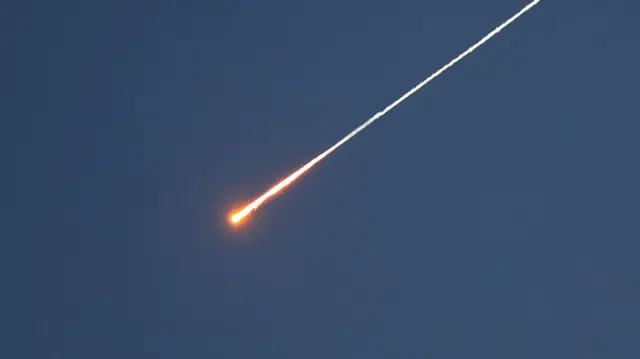
    "The sounds heard in scattered areas of the country are the result of the UAE air defence systems intercepting ballistic missiles, cruise missiles, and drones," the UAE Ministry of Defence says in a post on X.

  3. Australian state to make public transport free as fuel prices soarpublished at 04:00 BST

    Simon Atkinson
    Australia reporter in Queensland

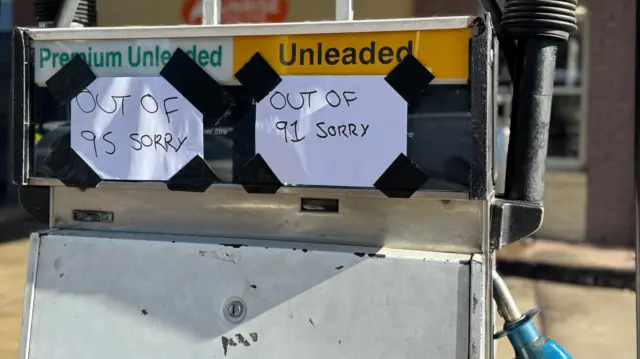
    Fuel pumps in Queensland

    The price - and availability - of fuel is one of the biggest talking points here in Australia right now.

    As we’ve been reporting this week - hundreds of petrol stations are reporting running out of unleaded and diesel. The fuel which is available costs up to 85% more than before the conflict.

    So some welcome news for residents of the state of Victoria today, who’ve been told that public transport will be free throughout April as authorities grapple with how to offer some cost-of-living relief.

    The state premier hopes it’ll encourage more people to use buses, trains and trams and take pressure off demand at the pump. Panic buying has been blamed for the fuel situation - with Canberra insisting supply has not fallen.

    Here in Queensland, most public transport has cost a flat fare of 50 cents (26p) since mid-2024 - it started as a temporary move which became permanent after proving hugely popular and getting more passengers out of their cars.

    In Victoria they are saying the free rides - which will cost A$70m (£36.3m ) - will very much be a temporary measure.

  4. Israel activates air defences as Iranian missiles detectedpublished at 03:30 BST

    Israel says it has activated its air defences after detecting missiles launched from Iran, and says it has sent alerts to those in the affected areas.

    "Upon receiving an alert, the public is instructed to enter a protected space and remain there until further notice," the Israel Defense Forces says on social media.

    Kuwaiti air defences are meanwhile also "confronting hostile missile and drone attacks", the army says in a post on X.

    "Any explosion sounds heard are the result of air defence systems intercepting the hostile attacks," it says, urging civilians to follow safety instructions from authorities.

  5. Attacks in Iran over past day among highest since war began, rights group sayspublished at 02:49 BST

    The Human Rights Activists News Agency (Hrana) says that as of 17:00 ET (21:00 GMT) on 28 March, it has recorded at least 701 attacks across Iran.

    It says this is among the highest number of attacks recorded in a single day since war broke out a month ago.

    Of these attacks, Hrana reports that 74% of the strikes occurred in Tehran, the nation's capital.

    The agency says 1,551 Iranian civilians have been killed in the conflict to date, with at least 236 children among the death toll.

  6. Pentagon preparing for weeks of ground operations, Washington Post reportspublished at 02:11 BST

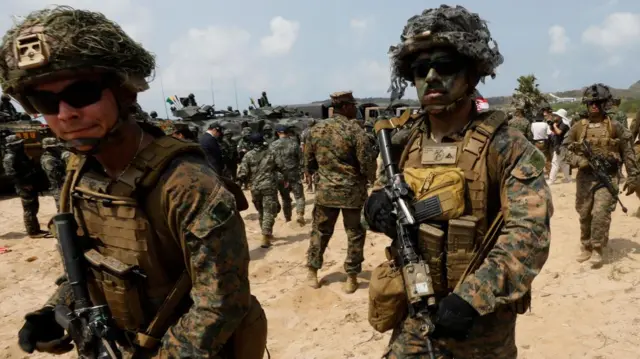
    US Marines take part during amphibious assault trainingImage source, EPA

    The Washington Post is reporting that the Pentagon is preparing for weeks of ground operations in Iran.

    Whether President Donald Trump would approve plans for deploying ground troops remains uncertain, the Post reports, citing US officials.

    The report says current plans indicate such ground operations would not be a full-fledged invasion, but rather more raids by a mixture of Special Operations forces and conventional infantry troops.

    The Americans are believed to have more than 4,000 US Marines on ships heading to the Gulf, paratroopers from the 82nd Airborne on standby and are discussing further reinforcements.

    The BBC has contacted the White House and the Pentagon for comment.

  7. Analysis

    The unusual dual condemnation of Kurdistan drone attackpublished at 00:39 GMT

    David Bamford
    BBC World Service News

    The drone aimed at the Iraqi Kurdish leader's home in Erbil was shot down by air defences before it could reach its target.

    As we reported earlier, no group has claimed responsibility.

    What's unusual is that both Iran and the US criticised that same attack.

    Since the Iran conflict began a month ago, pro-US and pro-Iranian factions in Iraq have been targeting each other with missiles and drones.

    The US embassy in Baghdad as well as US military bases in Iraq have come under fire numerous times.

  8. Analysis

    Trump is waging war based on instinct and it isn't workingpublished at 00:06 GMT

    Jeremy Bowen
    International Editor

    Some old truths about warfare have been knocking on the door of the Oval Office in the month since US President Donald Trump and Israel's Prime Minister Benjamin Netanyahu sent US and Israeli warplanes to bomb Iran.

    The failure to learn from the past means that Donald Trump now faces a stark choice. If he can not get a deal with Iran, he can either try to declare a victory that will fool no-one, or escalate the war.

    The oldest of the old truths comes from the Prussian military strategist Helmuth von Moltke the Elder: "no plan survives first contact with the enemy." He was writing in 1871, the year Germany was unified as an empire, a moment that was as consequential for the security of Europe as this war might be for the security of the Middle East.

    Maybe Trump prefers the boxer Mike Tyson's modern version: "everyone has a plan until they get hit." Even more relevant for Trump are the words of one of his predecessors, Dwight D. Eisenhower, the American general who commanded the D-Day landings in 1944 and went on to serve two terms as a Republican president of the United States in the 1950s.

    Eisenhower's version was "plans are worthless, but planning is everything." He meant that the discipline and process of making plans to fight a war make it possible to change course when the unexpected happens.

    For Trump, the unexpected item has been the resilience of the regime in Iran. It seems that he was hoping for a repeat of the US military's lightning-fast kidnap in January of the President of Venezuela Nicolás Maduro and his wife, Cilia Flores. They are now in prison in New York, facing trial. Maduro's deputy Delcy Rodríguez replaced him as president and is taking orders from Washington.

    Read the full analysis here.

  9. Key recent developmentspublished at 23:33 GMT 28 March

    • The Israeli military killed three Lebanese journalists in a targeted strike on their media car in southern Lebanon. Ali Shoeib, a reporter for Al Manar TV, a network operated by militant group Hezbollah, died along with Al Mayadin reporters Fatima and Mohamed Fetoni in the town of Jezzine.
    • Israeli air strikes in Lebanon have killed more than 1,100 civilians, including 120 children.
    • Yemen's Houthi rebels say they have conducted a second attack in parts of southern Israel today. A spokesperson says the group carried out a "barrage of cruise missiles and drones" targeting "several vital military sites" belonging to Israel.
    • Yemen's internationally recognised government has condemnedIran's "frequent attempts to drag Yemen" and other countries in the Middle East into the conflict "through its terrorist militias". For context, Yemen has been engulfed in a civil war that escalated in 2015 when the Iran-backed Houthi rebel group seized control of the country's north-west from the internationally recognised government, leading to intervention by a Saudi-led coalition supported by the US.
    • Iran has been "plunged into digital darkness"for a month due to the war in the Middle East, reports internet monitoring group NetBlocks. NetBlocks says the internet blackout by the Iranian authorities has been in effect for four full weeks "violating Iranians' right to communicate and stay informed". The Iranian regime also imposed a blackout in January for weeks as protests took place across the country.
    • Nine paramedics were killed in southern Lebanon on Saturday according to the director-general of the World Health Organization (WHO). In an X post, Tedros Adhanom Ghebreyesus adds that this takes thenumber of health personnel killed in Lebanon this month to 51 - making it the second most deadly month for the country's health workers since the WHO began monitoring them in October 2023.
    • The Israel Defence Forces (IDF) says it's working to intercept Iranian missiles launched towards Israeli territory. As we reported in our last post, emergency services have been inspecting the site of a missile strike in central Israel.
    • Saudi Arabia's ministry of defence said it had intercepted three drones and a ballistic missile launched towards Riyadh.
    • Five people were reportedly injured in Abu Dhabi - in the United Arab Emirates - after a ballistic missile was intercepted.
    • Kuwait International Airport has seen "significant damage" to its radar system after being targeted by 15 drones, says Kuwait's defence ministry. No casualties have been reported.
    • Qatar's defence ministry says the country has been "targeted by an attack" involving a "number of drones launched from Iran" today, all of which have been intercepted.
  10. Iran threatens to target Israeli and American universities in Middle Eastpublished at 22:59 GMT 28 March

    Ghoncheh Habibiazad
    Senior reporter, BBC Persian

    Iran’s Islamic Revolutionary Guard Corps (IRCG) has threatened to target Israeli and American universities in the Middle East, following the attack on the University of Science and Technology in Tehran.

    The IRCG says all universities in the region are considered legitimate targets "until two of their universities are struck in retaliation for the Iranian universities that were attacked".

    “We advise all staff, faculty, and students of American universities in the region, as well as residents in their vicinity, to maintain a distance of 1km from these universities to ensure their safety”.

    The statement adds that the US must condemn the bombing of Iranian universities to avoid retaliation at US institutions in the region, giving a deadline of 12:00 local time on Tuesday, 30 March to do so.

  11. Several strikes in northern Iraq as Macron urges action to prevent country joining conflictpublished at 22:33 GMT 28 March

    French president Emmanuel Macron looks into distance, wearing suit and patterned tieImage source, Reuters

    Earlier today, Iraq's national security adviser reported an attack targeted the home of the president of the Kurdistan Region of Iraq.

    Qasim al-Araji says President Nechirvan Barzani's home in Dohuk, northern Iraq, was targeted "in a cowardly act that represents a dangerous escalation and a violation of security and stability".

    It is not clear who launched the strike on Barzani's home - Iran has blamed the US and Israel, while the US has blamed Tehran.

    "Everything must be done to prevent Iraq from being dragged into this turmoil," French President Emmanuel Macron said following a call with Barzani.

    Separately, a strike in Kirkuk, northern Iraq, killed three members of paramilitary group the Popular Mobilisation Forces (PMF) today, according to the group.

    The PMF is integrated into the Iraqi army but contains some pro-Iran factions.

    Meanwhile in Mosul, Iraq's second-largest city, two police officers were killed in a strike which the interior ministry has blamed on the US and Israel, AFP news agency reports.

  12. Exiled son of Iran's shah speaks at US conservative conferencepublished at 21:55 GMT 28 March

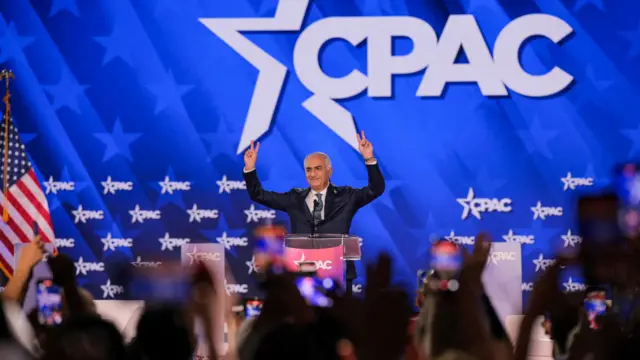
    Pahlavi holds fingers in a peace sign in front of a crowdImage source, Reuters

    Let's turn our attention to the US for a moment, where Reza Pahlavi, the exiled son of Iran's last shah, has appeared today in front of the Conservative Political Action Conference (CPAC) - a base that has been welcoming ground for US President Donald Trump for a decade.

    Pahlavi has previously claimed he is "uniquely placed" to lead a transitional government in Iran and indicated he would be willing to return to his country for the first time in 47 years.

    To loud cheers, Pahlavi asked the crowd to imagine "Iran going from death to America to God bless America" as he promised: "When Iran is free, America regains a great friend".

    The exiled Iranian also envisaged a future of "no more hostage taking, no more closing of the Strait of Hormuz, no more blackmailing of the global community..."

    Despite Pahlavi's pro-American stance, Trump has expressed scepticism that the 65-year-old might run Iran in the future.

    "I don't know whether or not his country would accept his leadership," Trump said earlier this month. "Certainly if they would, that would be fine with me."

    Instead, Trump said that he believes someone already within Iran "would be more appropriate." However, he did not identify a potential option.

    Pahlavi's father was overthrown in a 1979 revolution largely led by the Ayatollah Ruhollah Khomeini, the predecessor of Khamanei who was killed by joint US-Israeli strikes at the start of the conflict last month.

    The revolution brought together a broad coalition of opposition groups that had grown weary of what they saw as the Shah's authoritarian rule and economic problems, as well as modernisation efforts that destabilised rural areas and angered traditional clerics who resented secularisation.

  13. BBC Verify

    Footage shows moments after strike in central Israelpublished at 21:16 GMT 28 March

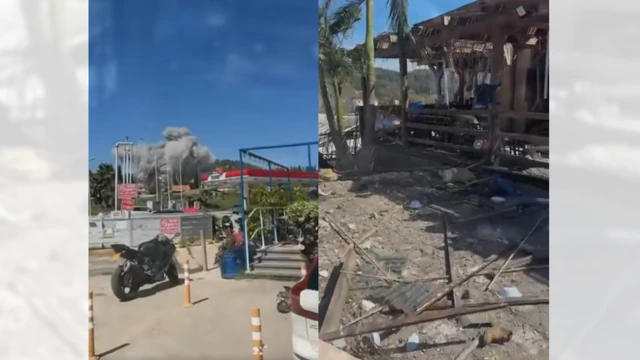
    Two stills showing aftermath of missile strike in Beit Shemesh. The first shows a plume of smoke in the distance, and the second shoes debris on the floor outsideImage source, X/Facebook

    By Jacob Boswall

    The BBC has verified two video clips showing the moments after missiles struck Eshtaol in the Beit Shemesh area of Israel, east of Jerusalem, on Saturday.

    Two pieces of mobile phone footage showed different angles of the strike, which caused structural damage to buildings and reportedly injured several residents.

    In one clip at the site of the impact, the roof of a building has been damaged and dozens of cars appear to have been flattened by the force of the explosion. In another clip, captured from further away, smoke rises above the impact site.

    We verified the video by matching the roofs, machinery and petrol station seen in the footage with satellite imagery of the settlement. Reverse-image searches indicated that the video was not shared before today.

    Drone shots of the same site show a large crater and considerable damage to the roofs of nearby buildings. Earlier today, the Iran-backed Houthi group in Yemen confirmed it had attacked Israel for the first time since the start of the US-Israeli war with Iran.

  14. Houthis confirm second missile attack on Israelpublished at 20:46 GMT 28 March
    Breaking

    Yemen's Houthi rebels say they have conducted a second attack in parts of southern Israel today.

    Yahya Saree, spokesperson for the Yemeni Armed Forces - the Houthi faction of Yemen's military - says the group carried out "a barrage of cruise missiles and drones" targeting "several vital military sites" belonging to Israel.

    He adds that the strikes "coincided" with that of Iran and Hezbollah's respective military operations, and that it "successfully achieved its objectives", adding that there would be further attacks in the coming days "until the criminal enemy ceases its attacks and aggression".

    The statement on his Telegram account comes after reports in Israeli and American media about a second round of Houthi strikes - hours after the Houthis confirmed they had launched their first missile towards Israel since the conflict with Iran broke out.

    Earlier today, Israel said it had intercepted a missile coming from Yemen.

  15. Pro-Iran group says it plans to target US-linked sites in Jordanpublished at 20:20 GMT 28 March

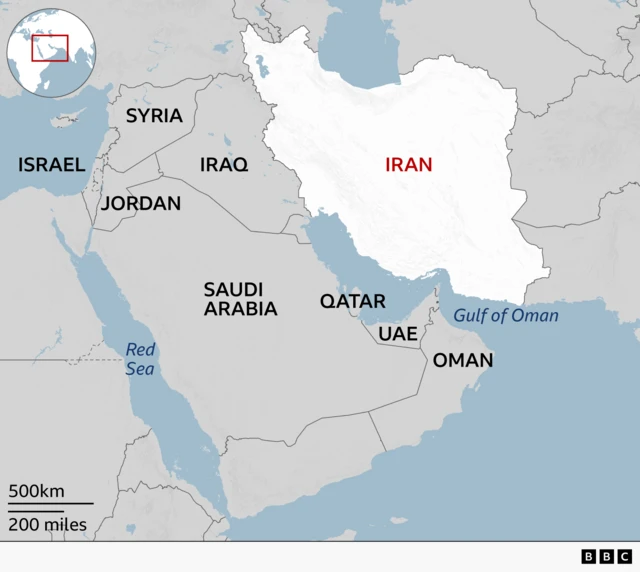
    A regional map highlighting Iran in white with its name in red. Surrounding countries are labeled in grey, neighbouring Iraq to the west and other Middle Eastern countries including Syria, Jordan, Israel, Gaza and Saudi Arabia, Qatar, UAE, and Oman. Bodies of water such as the Red Sea and the Gulf of Oman are marked in blue.

    A pro-Iranian militia group operating in Iraq says it will start targeting US and Israeli interests in Jordan.

    The group, called Ashab al-Kahf, says in the statement on Telegram that it is speeding up its operations and tells civilians to stay away from locations linked to the US.

    The militia group has claimed responsibility for many rocket attacks in recent years on the bases of the US and its allies, as well as the US embassy in Iraq.

    The Jordan Armed Forces says it intercepted 20 out of 22 missiles launched by Iran towards its territory during the fourth week of the war, the state-run Petra News Agency reports, citing a military statement.

    The Jordanian Air Force has destroyed 242 missiles and drones since the start of the conflict but defences failed to stop 20 attacks, adds the statement.

  16. Analysis

    Potential Houthi threat to Red Sea shipping could further damage global economypublished at 20:04 GMT 28 March

    Sebastian Usher
    Middle East analyst

    A missile fired at Israel from YemenImage source, Getty Images
    Image caption,

    The Houthis have fired a missile at Israel for the first time since the recent conflict in the Middle East began

    The Houthis held their fire for the first four weeks of the war, despite their affiliation with and backing from Iran.

    Now, the movement that still holds the Yemeni capital, Sanaa, and the north and other areas of the country, has made its first move, firing missiles towards Israel.

    It is true that the threat the Houthis pose to Israel through its missile fire is far less than that of Iran, but the group poses a threat off the coast of Yemen.

    As part of their support for Hamas in Gaza, the group targeted shipping coming through the Bab al-Mandab strait at the southern end of the Red Sea, between Yemen and the Horn of Africa.

    Their action then endangered that key commercial maritime route.

    Were they to do so again, it would be another big blow to the global economy.

    Coupled with Iran's near-closure of the Strait of Hormuz, two of the main strategic waterways in the world for trade and energy supplies could potentially be cut off.

  17. Pakistan given greater access to Strait of Hormuz, deputy prime minister sayspublished at 19:48 GMT 28 March

    Ishaq DarImage source, Reuters
    Image caption,

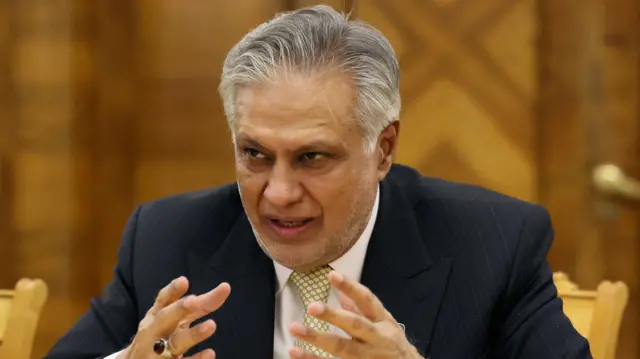
    Ishaq Dar says two ships under the Pakistani flag will now cross through the Strait of Hormuz each day

    Pakistan has been given greater access to the Strait of Hormuz, according to Deputy Prime Minister Ishaq Dar.

    Dar, who is also foreign minister, says Iran "has agreed to allow 20 more ships under the Pakistani flag to pass through the Strait of Hormuz".

    He says this means "two ships will cross the Strait daily". Iran is yet to confirm this.

    Since the start of the recent conflict, Iran has effectively closed the Strait of Hormuz, one of the world's busiest oil shipping channels.

    About 20% of the world's oil and liquefied natural gas (LNG) usually passes through the strait, but BBC Verify analysis has shown daily traffic has been down by about 95%.

    Dar says the agreement with Iran is a "harbinger of peace" which "will help usher stability in the region".

    Pakistan's Prime Minister Shehbaz Sharif has volunteered his country as a venue for possible talks between Iran and the US.

  18. US-Israeli strikes hit Iranian water facility, official sayspublished at 19:38 GMT 28 March

    A large water facility in Iran has been hit by US-Israeli strikes, according to Iran's Fars news agency.

    Citing the deputy for security and law enforcement of the Khuzestan Governorate, Fars says a "10,000 cubic metre" water source in Haftkel, western Iran, was targeted.

    The news agency, which is affiliated with Iran's Islamic Revolutionary Guards Corps, says there were no reported casualties and adds that water sources are still functioning in Haftkel.

  19. Centcom says it has struck more than 11,000 targets in war with Iranpublished at 19:17 GMT 28 March

    We've just seen an update from the US Central Command (Centcom) detailing key figures regarding Operation Epic Fury - their ongoing military action in Iran.

    Centcom says they have:

    • Struck more than 11,000 targets
    • Carried out more than 11,000 combat flights
    • Either damaged or destroyed over 150 Iranian vessels

    In the update, Centcom also says its forces are "striking targets to dismantle the Iranian regime's security apparatus, prioritizing locations that pose an imminent threat".

  20. Iran Foreign Ministry spokesman condemns attacks on universitiespublished at 19:10 GMT 28 March

    Ghoncheh Habibiazad
    Senior reporter, BBC Persian

    Iranian Foreign Ministry spokesman Esmail Baghaei, in a post on X, has condemned attacks on two universities in Iran; Isfahan University of Technology in central Iran and the University of Science and Technology in Tehran.

    Baghaei accuses the US and Israel of attempting to cripple the “country’s scientific foundation and cultural heritage by systematically targeting universities, research centers, historical monuments, and prominent scientists”.

    He has also says that US and Israel claims of countering Iran’s nuclear programme and threats by Tehran were “nothing but vicious pretexts” and “mere fabrications designed to conceal their real intention”.

Trending Now