The Promised Land
The The collected 24 books of the Jewish Bible. There are three sections: Torah, Nevi'im and Ketuvim (TaNaKh). May also be spelled Tenakh. repeatedly refers to God’s commitment to a Promised Land for Abraham and his descendants. God promised Abraham and his wife Sarah many descendants, who would be made into nations and who would be kings with whom God would keep an eternal covenant (Genesis 17:6–7) throughout future generations.
Today, many Jews believe that the modern State of Israel is the beginning of the fulfilment of God's promise to Abraham. However, views vary. For some, the land holds deep spiritual and cultural significance. Others believe that a true return to the Promised Land should only happen with the coming of the Messiah.
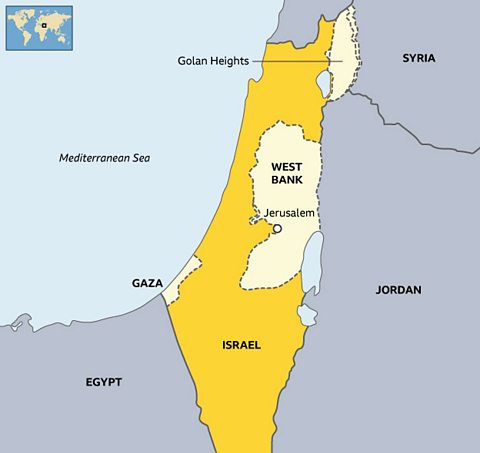
The modern State of Israel
In 1947, with Jews fleeing from antisemitism in Europe and after the Holocaust of World War II, the United Nations voted for both a Jewish and an Arab state. A year later in 1948, Israel declared its independence, leading to war when neighbouring Arab countries invaded. There have been further wars and conflicts involving Israel in the region, including a long-running conflict with the Palestinian people over the territory.
The importance of the covenant with Abraham
- Through the covenant, Abraham's rejection of other gods demonstrated his commitment to One God. This is known as 'monotheism'.
- Jews believe that the covenant between God and Abraham extends to all Jews. It was the start of the relationship between God and the Jewish people.
- The covenant carries with it the promise of the land of Canaan. Many Jews believe this promise of land and blessing is eternal, while others believe the fulfilment is still to come.
Different views about the importance of the Promised Land
- Many Jews see the land as essential to their Jewish identity and believe that God's promise to Abraham lasts forever as the prophet Micah says "The Mount of the Lord's house shall stand firm above the mountains" (4:1).
- Some Jews may emphasise the ethical and spiritual lessons of having a Promised Land taking inspiration from Isaiah 51:3 "her wilderness like Eden" being symbolic of spiritual renewal.
- Other Jews value Israel culturally but don't see residing there as a religious necessity.
- For some Jews the Promised Land comes with the return of the Messiah.
Question
Why is Abraham important to Jewish people?
Abraham is believed to be the founding father of Judaism. He was the first person to worship One God in a society of people who worshipped many Gods. Through the covenant, Abraham formed the important relationship with God, who promised the Jewish people descendants, blessings and a Promised Land.