Key points
Overview
An imaginary reversal of the carnage and destruction of World War One, instigated by a nameless war poet within the poem itself. Duffy honours the courage and sacrifice of those who died, while condemning the futility of war.
Main themes
Death, destruction, sacrifice, history, poetry, imagination, possibility.
Tone and voice
Sombre, reflective, surreal, poignant, defiant. Uses second person – "you" – to address a nameless soldier, possibly Wilfred Owen or symbolic of all who served.
Context
Written in 2009, commissioned by the BBC to mark the deaths of Harry Patch and Henry Allingham, the last surviving World War One veterans. Duffy was the first female Poet Laureate. Duffy described it as "an attempt at healing". The title refers to the military bugle call played at funerals and remembrance ceremonies.
Form and structure
The poem is written in free verse and consists of four stanzas of unequal length. There is no regular rhyme scheme or metre, which reflects the surreal and emotional nature of the imagined reversal. It opens with two quoted lines from Wilfred Owen’s Dulce et Decorum Est, setting a tone of remembrance and critique. Internal rhyme is used for emphasis, such as "mud" with "blood", "mothers" with "brothers", and "bayonet" with "cigarette". The final stanza uses slant rhyme, pairing "wall" with "possible".
Poetic devices to spot
- Apostrophe – direct address to a soldier: "shrapnel scythed you".
- Sensory imagery – "stinking mud", "warm French bread", "glistening healthy horses" evoke smell, touch and sight.
- Symbolism – "mud" as futility, "scythed" as death, "poet" as miracle worker.
- Caesura – ellipses and dashes interrupt flow: "Dulce – No – Decorum – No – Pro patria mori".
- Alliteration – "bled bad blood", "shrapnel scythed".
- Assonance – "slime", "lines and lines", "rewind".
- Consonance – "mud", "amazed", "bled bad blood".
- Repetition – "you walk away" repeated to emphasise reversal.
- Listing – family members, named soldiers, pleasures of life.
- Enjambment – lines flow freely to reflect emotional release.
- Tone – reflective, surreal, mournful, hopeful.
Last Post
by Carol Ann Duffy
The text of this poem is available in the CCEA Poetry Anthology, which can be downloaded from the CCEA website.
The BBC is not responsible for the contents of any other sites listed.
Summary
An imaginary reversal of the carnage and destruction of World War One, instigated by a nameless war poet within the poem itself. Written in 2009.
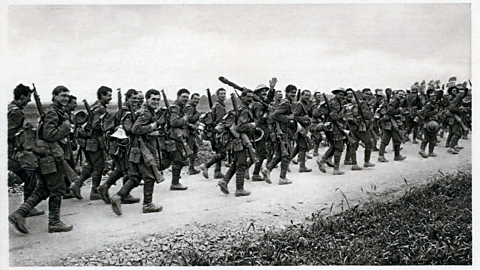
- Title: Named after the famous bugle call – it began in the army as a signal that the last sentry duty (or ‘post’) was finishing for the night. It became a powerful and renowned tribute played to commemorate dead soldiers at funerals and Remembrance ceremonies.
- Themes: Death, the destruction and waste of war, history, sacrifice, poetry and imagination, possibility.
- Tone: Sombre, reflective, surreal, poignant, defiant.
- Speaker: Uses second person – “you” – to directly address a nameless soldier in World War One, possibly the war poet Wilfred Owen or elderly veterans like Harry Patch and Henry Allingham.
Applicable context
Carol Ann Duffy was the first woman to become Poet Laureate, an honorary role bestowed on a poet whose work is considered to have national significance. Poets Laureate often write special verses to mark important occasions for their nation; in this case, the BBC commissioned Duffy to write a poem paying tribute to Harry Patch and Henry Allingham, two of the three last survivors of World War One, when they both died in 2009. Last Post was read on BBC Radio 4 by Duffy herself on the day of Henry Allingham’s funeral. She said the poem was “an attempt at healing”.
Last Post begins with two lines quoted from Wilfred Owen’s well known anti-war poem Dulce et Decorum Est, which in turn takes its title from an epigram by the Roman poet Horace: “It is a sweet and noble thing to die for your country”. Owen’s poem was itself inspired by Jessie Pope’s Who’s for the Game?, a Showing extreme patriotism in an aggressive or warlike way, often combined with hostility toward other countries. verse encouraging military recruitment and likening it to playing a boisterous ‘game’ or sport; he was appalled by her approach and responded by relating the grim realities of trench warfare and rejecting the common narrative of a ‘patriotic’ death as something to be glorified. The interplay of these other World War One texts plays a major part in Duffy’s poem, which acknowledges a great wealth of World War One and pays tribute to the power of that poetry to engage,
In all my dreams, before my helpless sight,
He plunges at me, guttering, choking, drowning.
- World War One saw the earliest attempts by the government to provide film footage of what was happening in France, largely as propaganda and a recruitment tool – maintaining popular support at ‘home’ was crucial to the war effort. Newsreels were fairly new and much of the footage was staged, but it was still the first time many ordinary people had seen ‘realistic’ depictions of – and dead bodies from – a war. The content of a lot of this footage is so well known that it is part of the fabric of British culture; for modern audiences who have no direct link to the conflict themselves, film is a popular touchstone in trying to understand the experience. Duffy’s use of a “rewind” motif in her poem may well be linked to this. Duffy’s urge to ‘turn back time’ and rewind the ‘footage’ for the soldiers is both heartfelt and ridiculous – a poignant attempt to give them the lives they deserved. It is also a symbol of how far removed from the desperate reality of war most modern audiences and readers now are.
Only a little context is needed for each poem; where used, it should be applied to the point you're making.
Form and structure
- Last Post is written in free verse, without a regular rhyme scheme, rhythm, or poetry form. It is divided into four A grouped set of lines within a poem. of unequal length, the first of which is in its entirety a two-line quote. The poem is left open and not constricted by rules, leaving it more free to tackle the hugeness and complexity of its topic.
- The irregularity of the The rhythm of a line of poetry based on how many syllables it has and where they are stressed or emphasised – likes beats in music. means the poem’s rhythm lacks predictability, which supports the wholly unexpected turning back of time and reversal of death in stanza two. Allowing the poem to flow freely in ways that enhance how the emotions – disbelief, relief, joy, excitement and so on – in each section are captured and expressed.
- The poem doesn’t use a regular rhyme scheme, but there are instances of internal rhyme used to enhance particular moments. The rhyming of “mud” with “blood” in stanza two, for example, is used to highlight the wonder and unexpectedness of what is happening; in the same stanza, rhyming “mothers” with “brothers” is an unremarkable occurrence in itself, but the rhyme highlights the “younger brothers” running into the next line, where they are “not entering the story now / to die”.
Stanza three offers rhymes – “bayonet” with “cigarette”, “bread” with “dead”, “square” and “hair” – and even half rhymes – “Tipperary” with “History” – as a playful way of capturing the celebratory mood as the dead return to life and wait to go home. The final stanza’s slant rhyme (another term for ‘half rhyme’) of “wall” with “possible” is another example of rhyme used to underline the positive atmosphere. The last line “Then it would” is rhymed with “food” from three lines previously, which lends the poem some sense of closure, despite the mixed emotion of being reminded at the end that this joyous “if” scenario did not really occur.
Language and poetic methods
Apostrophe: The poem is directly addressed to a soldier, made clear by the fourth line stating “shrapnel scythed you” and the subsequent uses of “you” to directly address this person, this is Not the punctuation mark, but a figure of speech where the poet addresses someone who cannot answer back because they are absent, or an inanimate object.. The poem was written in tribute to the last survivors of World War One, yet it seems that Duffy is not addressing Patch or Allingham, but rather an unnamed soldier whose death occurred in the war. She chooses to ‘resurrect’ within the poem as part of the A long or extended metaphor comparing two very different things, where the author keeps coming back and exploring in detail throughout a poem or story. (or idea) to “tell it backwards”. This focus on a single ordinary person amid the huge numbers of those who died gives a personal perspective, helping to make them more real and sympathetic to the reader.
Sensory imagery: The poem tries to make the scenario more real for the reader by using various images to appeal to the senses. “Stinking mud” is Related to the sense of smell. It’s used to describe anything involving scen. that adds to the indignity of dying by conjuring the foul smell; the later image of soldiers “shaking dried mud from their hair” offers some relief from this, as well as being Means related to touch or how something feels. (images related to touch or feeling) in its own right. A reference to “slime” is tactile, appealing to the sense of touch but in a repellent way, while “warm French bread”, also tactile, has the opposite effect, seeming inviting, soft and appetising. The “glistening healthy horses” are visually shining with life, cared for and clean, a reassuring image that neatly complements the idea of everyone involved being “freshly alive”.
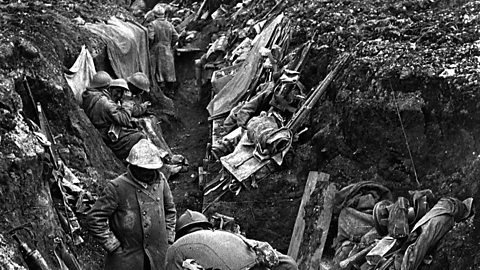
Symbolism: World War One was fought in and around trenches; mud and flood water became notorious features of trench life and warfare. The mention of “mud” in the poem is both literal and A literary device where an object, person, place, or event represents something beyond its literal meaning. – it was literally everywhere, but it also symbolises the futility and indignity of the war when the soldier dies “in the stinking mud”; later in the poem, those who would have died are now “shaking dried mud from their hair”, A metaphor is a word or a phrase used for dramatic effect, to describe something as if it were something else. showing their escape from their fate. The term “scythed” is symbolic, as a scythe is not only a farming tool for harvesting crops but a symbol of death, the tool carried by the ‘Grim Reaper’ figure of Death itself.
The “poet” who appears in Last Post is Duffy’s nod to the many war poets like Owen, symbolising all of those who documented the horror of the front lines; in this poem, she writes “You see the poet tuck away his pocket-book and smile”, presenting him as a miracle worker who sees the thousands of lives saved by ‘telling it backwards’ and is satisfied. This imagery is then qualified – “If poetry could truly tell it backwards” – reminding us the poet did not really achieve this miraculous outcome. The tension between these images shows both the power and the limits of poetry itself in such a terrible situation.Caesurae: The poem uses various A break in poetic rhythm in the middle of the line, a momentary pause. to accentuate important moments – the first is, of course, the The omission of a word or words usually indicated by three dots. that ends line four, separating the soldier’s death and his remarkable resurrection; the ellipsis allows a pause for a moment of tension where all seems lost, and thus helps to highlight the hugely surprising reversal of death which follows. Lists of family members in A grouped set of lines within a poem. two and of named friends in stanza three are preceded by a caesural dash to ‘set up’ the list and show the reader the fullness of the contents that follow. This emphasises the extent of the people helped by reversing the deaths.
Another hugely significant use of caesurae occurs at the end of stanza two, where it used in the form of dashes to help punctuate the phrase “dulce et decorum est pro patria mori” (the Latin quote from Owen’s original poem, meaning “it is a sweet and noble thing to die for one’s country”) with two assertive, defiant “Nos". The effect of the caesura here is to interrupt the quote, showing contempt for what it expresses and refusing to let it be said unchallenged; the caesural dashes emphasise the fractures in the phrase, showing the speaker’s refusal to engage with a statement that tells people they should give up their lives for this cause.
Dulce - No - Decorum - No - Pro patria mori.
You walk away.
- Alliteration, assonance, and consonance: Throughout the poem, Duffy adds little pockets of repeated sound to create and enhance particular feelings or moods. The repetition of similar consonant sounds in nearby words. can be seen in the repeated dull, thudding ‘d’s of “mud”, “amazed” and also in “bled bad blood”, evoking the heavy downward pull of the mud from which he is about to be unexpectedly resurrected; or in the liquid ‘L’ sounds of “You lean against a wall, / your several million lives still possible”, which sound smooth, easy and satisfying, echoing the freedom they now have. When a vowel sound is repeated in words close together. occurs in various places: “slime…lines and lines… rewind” offers repeated long ‘I’ sounds that accentuate the surreal events taking place by making the language sound more deliberate. The plosive ‘B’ sounds in “bled bad blood” use Marked by alliteration - the repetition of a sound at the beginning of consecutive words, such as ‘the big, bold, blue sea' to emphasise the violence of the wound, and the sibilance in “shrapnel scythed you” makes a hissing, negative sound and evokes the swish of a blade or weapon in air before hitting its target.
This is not a list of every method or notable use of language and structure in Last Post.
Look at the poem again. Can you find any of the following?
Repetition
The repetition of “die and die and die” emphasises the senseless loss of life in the war. The reference to “lines and lines of British boys” has a similar effect, stressing the vast numbers of men who died in the conflict. The “No” that punctuates the Latin phrase from Owen’s poem, “_dulce et decorum est pro patria mori” is repeated to defiantly and sternly accentuate that dying for one’s country is neither sweet nor noble, but a waste. “You walk away” is also repeated for emphasis – a short, blunt phrase that sums up both the pointed rejection of sacrificing oneself for a pointless cause, and the wondrous chance that the men have been given to free themselves from this imminent death.
Listing
The poet uses lists of what is good in life – family members in stanza two, named “mates” in stanza three, and an overview of what is now “possible” for the living soldiers’ futures: “love, work, children, talent, English beer, good food”. It creates a sense of abundance, relief, and hope, emphasising everything that can now be experienced and enjoyed in the “several million lives still possible” for each man who has escaped death. Before reminding us in the final two lines that the ‘what if’ of the poem hasn’t really happened, and these ‘little wonders’ of everyday life are still no longer accessible to those who served and died.
Enjambment
A poetic device where a sentence continues beyond the end of the line or verse. is used throughout the poem to give a sense of momentum and wonder to the surreal spectacle of the war ‘rewinding’. The events cannot be contained by neatly end-stopped lines and overflow into the next line or even stanza, creating a sense of the freedom, energy, and positivity of this reversal of death. It also shows that ‘rules’ do not necessarily apply in this unlikely scenario.
If you have found these methods, consider what you know about the poem and the poet already.
What effects do these methods create? Why has she used them?
What other poems could I compare with Last Post?
Vitaï Lampada' – a contrasting view which aligns with the original sentiment in the statement “dulce et decorum est prop patria mori”. It views the sacrifice of soldiers’ lives in war as a necessary evil and an act of honour, bravery, and selflessness rather than a futile tragedy.
Anthem for Doomed Youth – another of Wilfred Owen’s poems, interrogating the purpose of war; aside from the poet connection, both poems also allude to those ‘back home’ awaiting the soldiers, and find the war to be pointless.
The Man He Killed – a poem which also uses the ‘what if?’ idea, employing a possible alternative scenario to the violence and killing of the battlefield; this in turn underscores the tragic waste of life war represents.
Practice questions
Use these questions to hone your knowledge of Last Post, and to practise using your notes and analysis in organised paragraphs that focus on how particular themes or ideas are shown in the poem. There is an example answer in the following section to demonstrate how you can do this.
- What does Last Post show us about Duffy’s attitude to war?
- How does Duffy show what she referred to as “an attempt at healing” in Last Post?
- What poetic methods does Duffy use to show the soldiers’ new leases of life in Last Post?
- How does Duffy pay tribute to the war poets in Last Post?
Example answer
Below is a demonstration of how to use the material in this section to answer an example essay question. The answer below is not a full essay, but only an extract of a longer answer showing some of the points that could be made.
Q: What does Last Post show us about Duffy’s attitude to war?
A: Duffy wrote Last Post in tribute to two surviving veterans of World War One, Harry Patch and Henry Allingham; she also quotes from renowned war poet and serving soldier Wilfred Owen in her poem, all of which suggests she has a good deal of respect for the actual people who fought in the war. However, she makes it clear in Last Post that she ultimately considers the war itself to have been a tremendous waste, cutting short thousands of lives that should have otherwise flourished. Duffy uses the idea of ‘rewinding’ the war in the poem, creating a conceit of ‘turning back time’ and giving the massacred soldiers of World War One a chance at the lives they deserved. She uses free verse to illustrate this unusual idea, not sticking to any particular metre or rhyme scheme so as not to be constrained; this maybe shows that she feels war is too terrible to fit into a set pattern or form. Her inclusion of a horrifying descriptive quotation from Owen’s famous anti-war poem Dulce et Decorum Est as the first two lines of her own verse makes it clear that Last Post is also anti-war. Duffy has a negative attitude to war itself, while respecting those who fought and died in it.
Duffy uses apostrophe, directly addressing an unnamed soldier in the poem as “you”; this focus on one person in a cast of thousands makes it more personal and allows the reader to sympathise more directly, showing Duffy’s attitude that the human cost and individual tragedy of war deserves to be highlighted. Through the sensory imagery of “stinking mud” and the consonance of repeated dull, thudding ‘d’s in “mud”, “amazed” and “bled bad blood”, she evokes some of the horrible conditions in which the soldier fights at the moment of his death; the death is described with sibilance in “shrapnel scythed you” making a hissing, negative sound and evoking the swish of a blade or weapon in air before hitting its target. The symbolism of a scythe evokes the ‘Grim Reaper’, death personified. This highly negative language creates sympathy for the soldier, making his death seem unfair and undignified and supporting the attitude that war is a pointless waste of life.
This essay could go on to make the following points, backed up by evidence from the poem and detailed analysis of that evidence:
- Duffy uses repetition and caesurae to interrupt the quote in the line “Dulce - No - Decorum - No - Pro patria mori”, showing defiance and contempt to the idea that people should give up their lives for their country, and supporting a negative attitude to war.
- Duffy uses listing to illustrate the good things in life – family, friends, small pleasures – to emphasise the things the resurrected soldiers can now experience, showing a disregard for war and how it offers nothing but a place in “History”.
- Duffy uses positive sensory imagery, internal rhyme and enjambment to give a sense of the wonder, possibility, and freedom the soldiers are (hypothetically) granted by being able to “walk away” from the war, showing her clear understanding of the war’s negative impact.
Test your knowledge of Last Post
More Carol Ann Duffy
The Echo Chamber. audio
Carol Ann Duffy on her approach to poetry.
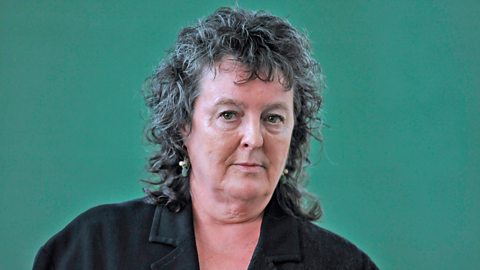
Meet the Author: Carol Ann Duffy. video
In a series of special Meet the Author interviews, Nick Higham meets the winners of 2012's Costa Book Awards.
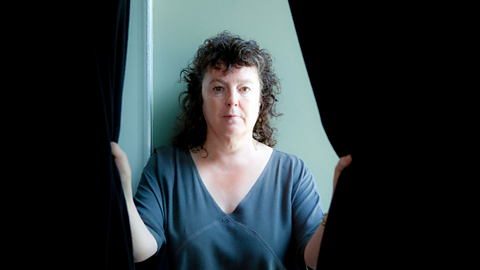
The conflict that defined a century. collection
World War One was the first truly global conflict – the battle raged not just in the trenches of the Western Front but in Africa, the Middle East and Asia.
More on Anthology Three: Conflict
Find out more by working through a topic
- count7 of 11
- count8 of 11

- count9 of 11