Key points
Overview
A soldier charges across a battlefield, overwhelmed by fear and confusion. The poem shows how patriotic ideas collapse when faced with the brutal reality of war.
Main themes
Violence, fear, survival, confusion, loss of identity, the failure of patriotism.
Tone and voice
Frantic and disoriented. Third person voice describes the soldier’s experience from the outside, highlighting his isolation.
Context
Ted Hughes was born in 1930 and became Poet Laureate in 1984. He didn’t fight in a war but did National Service. His father survived Gallipoli in World War One, and Hughes grew up hearing stories of battle. The poem isn’t set in a specific war, making it a general statement about the horror of combat.
Form and structure
The poem is written in free verse and split into three stanzas. The first and last are full of action, while the middle offers a brief moment of reflection. The irregular rhythm and lack of rhyme mirror the chaos of battle. The soldier’s realisation that war is pointless comes suddenly, then he’s thrown back into danger.
Poetic devices to spot
- Simile – "numb as a smashed arm", "sweating like molten iron", "rolled like a flame".
- Metaphor – "cold clockwork of the stars and the nations", "smacked the belly out of the air", "terror’s touchy dynamite".
- Rhetorical question – "In what cold clockwork…" shows the soldier’s sudden doubt.
- Caesura – dashes interrupt thoughts: "In bewilderment – he almost stopped –".
- Alliteration – "bullets smacking the belly", "plunged past".
- Assonance – "raw", "hot", "clods", "lugging".
- Consonance – "numb", "arm", "brimmed".
- Juxtaposition – "King, honour, human dignity, etcetera / Dropped like luxuries".
- Personification – "frowning barrel", "smacked the belly out of the air".
- Enjambment – lines run on to show breathlessness and panic.
- Tone – frantic, confused, disillusioned.
Bayonet Charge
by Ted Hughes
The text of this poem is available in the CCEA Poetry Anthology, which can be downloaded from the CCEA website.
The BBC is not responsible for the contents of any other sites listed.
Summary
A vivid and brutal illustration of the thoughts and feelings of a soldier mid-charge on the battlefield. First published in 1957.

Title: A clear, concise description of the setting and situation, which contrasts with the chaotic confusion and disorientation in the poem itself.
Themes: Violence, destruction, nature, survival instinct, obedience, dehumanisation, the reality of war, the foolishness of patriotism.
Tone: Panicked, frantic, confused, disoriented, disillusioned, desperate.
Speaker: A third person speaker describes what happens from an outside perspective; the thoughts and feelings of the soldier are described but the reader cannot experience them first-hand as he does, highlighting his isolation amid the chaos of the battlefield.
Applicable context
- Ted Hughes was born in the North of England in 1930. He amassed a huge and impressive body of work throughout his life as a poet, translator and writer of children’s stories, and became Poet Laureate in 1984. His early love of nature was fostered in the exploration of farms and moorland around his home and images of nature, especially birds and animals, became a recurring theme in his poetry. He never experienced a war personally, but did complete two years of National Service before university – his RAF mechanic post was remote and undemanding, which meant he could devote much of the time to reading.
- Hughes’s father served in World War One, fighting in Check your connection, refresh the page and try again. in France and the Gallipoli campaign in Turkey. He returned from Gallipoli as one of fewer than 20 survivors from his regiment. Hughes heard his father’s tales from the war when he was a child, and they made a deep impression on him. Some believe that Bayonet Charge is partly written in tribute to his father’s experiences in service.
- Bayonet Charge is not explicitly linked to any particular war, and Hughes may have intentionally avoided setting it in any specified conflict in order to keep the focus on the soldier’s bewilderment and fear. This allows the poem to be more universally understood and regarded as a condemnation of all war in general. However, the use of the bayonet as a weapon and the image of the soldier’s “charge” is strongly evocative of the weaponry and tactics used in World War One.
Only a little context is needed for each poem; where used, it should be applied to the point you're making.
Form and structure
- Bayonet Charge is written in Free verse is a poem with no set rhyme or rhythm. and divided into three A grouped set of lines within a poem. – the first an octet (an eight line stanza), the second a septet (seven lines) and the last an octet again. The first and last stanzas are a whirlwind of action, while the middle stanza functions as a kind of ‘eye of the storm’ in between them – a moment of clarity amidst the chaos. The soldier stops for an instant and is struck by the The sudden realisation or moment of clarity when you understand something in a new or deeper way. that the war he is fighting is stupid and pointless. This plunges both him and the reader back into the danger and confusion of the battlefield.
- The The rhythm of a line of poetry based on how many syllables it has and where they are stressed or emphasised – likes beats in music. is irregular, keeping the reader guessing amid the unpredictability and chaos and threatening to jar them at any moment, just as the soldier is constantly threatened by gunfire as he runs.
- There is no set rhyme scheme in the poem, mirroring the lack of order on the battlefield and offering the reader no sense of organisation or neatness, just a barrage of detail in irregular form.
Language and poetic methods
Simile: Bayonet Charge is full of A simile is a word or phrase used to make a comparison for dramatic effect, using 'like' or 'as'., helping to build intense impressions quickly throughout the poem to help the reader understand the overwhelming power of the thoughts and feelings that grip the soldier in such a short space of time. Likening his rifle to a body part – “numb as a smashed arm” – shows he himself is being used as weapon, becoming less human as a result, and yet the rifle itself is useless: he has to keep carrying it awkwardly (“lugging”) but it is “numb” and unfeeling, a foreign object in this visceral, forceful scene. The simile “sweating like molten iron” evokes the metal of war machinery and a painful heat, while the upsetting imagery of the “yellow hare that rolled like a flame” shows the destructive toll war has taken on nature, taking an agile living creature and throwing it, wounded, along the earth; the “flame” also evokes intense heat and pain.
Describing the soldier as “running like a man who has jumped up in the dark and runs” simplifies the character – he is only a man, running blind and not knowing why. His foot that “hung like statuary” likens him to a statue – perhaps showing he will soon be as lifeless as one, or perhaps evoking war memorials. The verb “hung” indicates the tension of the moment, as if he is suspended in mid-air while these realisations strike him. The reasons for his joining the fight – nationhood, honour, and service – as well as his “human dignity” are said to be “dropped like luxuries”; these may have once seemed important but are now things he can no longer afford as he fights to stay alive in the direst possible circumstances.Metaphor: The “cold clockwork of the stars and the nations” appears at the centre of the poem and is of central importance because it A literary device where an object, person, place, or event represents something beyond its literal meaning. the unfeeling indifference of the institutions for which this soldier decided to lay down his life – “cold” shows they are remote and detached; “clockwork” indicates machinery working automatically, without human feeling, and creates a sense the soldier is a small cog in a big machine; “the stars” represent fate and “the nations” symbolise not just the soldier’s own country but every country involved in war, offering its citizens as cannon fodder. It is a powerful A metaphor is a word or a phrase used for dramatic effect, to describe something as if it were something else., made all the more resonant by its extended imagery of the soldier as the “hand” of the clock, “pointing that second” – it strongly suggests that his time is running out.
The evocative metaphor “smacked the belly out of the air” gives a sense of the violence of the bullets; the “belly” is a tender and primal body part, and the idea of violence done to it is a hint of strength and cruelty. It could even evoke the sense of being winded – a force that ‘smacks’ the breath out of a person – which mirrors the running soldier’s breathlessness. His “terror’s touchy dynamite” suggests he is in such a heightened state of fear and desperation that he could easily ‘explode’ like dynamite. This, like the rifle in stanza one, shows him being closely compared to weaponry and machinery, as though he has become less human and more a tool of war.Rhetorical question: Stanza two marks the point at which the soldier’s logical brain catches up with his animal instinct and visceral terror, and he has a moment of clarity that is pinpointed by the A question asked in order to create a dramatic effect or to make a point, rather than to get an answer. : “In what cold clockwork of the stars and the nations / Was he the hand pointing that second?” This question forms the crux of the poem, in that it highlights his realisation that the forces for he is fighting do not care about him. These “nations” are ”cold” and heartless; to them, he is not a terrified human being but a cog in a “clockwork” machine. Questions can show uncertainty, but this one is chillingly clear in its sudden understanding that he has given his life to a cause that cares nothing for him.
Caesurae: The use of A break in poetic rhythm in the middle of the line, a momentary pause.in the poem works in conjunction with its frequent A poetic device where a sentence continues beyond the end of the line or verse. to create a juddering, uncertain flow of sensory overload that mirrors the experience of being on the battlefield. Dashes are used as the primary form of caesural pause, creating abrupt halts and interruptions as new thoughts and actions pile up on one another. The first half of the poem, with dashes marking its frequent self-interruptions, is broken into fragments, reflecting how the battle is a forceful, jagged assault on the senses, overriding logic and giving no time to think properly. The poem’s initial sentence runs on indefinitely in this irregular way until finally halting at the caesura of the question mark in stanza two. Dashes notably ‘frame’ the epiphany at the start of stanza two - “In bewilderment then he almost stopped” –, marking it out as a significant moment of realisation and setting up the rhetorical question at the heart of the poem with a short pause for gravitas before it.
Alliteration, assonance and consonance: Much of Hughes’ work uses sound, particularly A poetic device where a sentence continues beyond the end of the line or verse., to enhance mood. Repeated plosives like “bullets” and “belly”, “plunged past” or “terror’s touchy” create small, spiky pockets of abrupt Marked by alliteration - the repetition of a sound at the beginning of consecutive words, such as ‘the big, bold, blue sea' in key moments which emphasise the aggression and danger of the atmosphere. The repeated ‘h’ sounds in “hot”, “his” and “heavy” in stanza one work to instantly evoke the huffing breaths of someone running and panting, reflecting the hard effort and human vulnerability of the soldier.
When a vowel sound is repeated in words close together., with repeated vowel sounds across short phrases, creates a similar effect to alliteration. Densely packed moments in the poem that make it feel too full and create a sense of being overwhelming, mirroring the situation the soldier finds himself in. “raw”, “hot”, “across” and “clods” are a good example of this, as is the combination of “lugging” and “numb”, or “wide”, “silent” and “eyes” at the start of the third stanza. This enhances the sense of A plea or argument designed to evoke an emotional response. around the suffering, wounded hare.
Similarly, The repetition of similar consonant sounds in nearby words. often appears, with small instances building to a heavy, oppressive whole: “numb”, “arm” and “brimmed” are a good example of this, the repeated ‘m’ like a person thinking – ‘hmm’ – and seeming non-committal and unsure. This emphasises the uselessness of the rifle and the “patriotic tear” as well as the larger warfare they represent. The crisp repeated ‘k’ sounds in “clockwork” emphasise the remote, formal coldness of the nations that led him to fight, and how far from his dangerous and violent reality they actually are.
This is not a list of every method or notable use of language and structure in Bayonet Charge.
Look at the poem again. Can you find any of the following?
Enjambment
A poetic device where a sentence continues beyond the end of the line or verse. is used in conjunction with caesurae throughout the poem to give a sense of the uncertainty and danger of the situation. While caesurae adds halts for emphasis as the soldier sees his doom, enjambment means other phrases flow uncontrollably down into the next line and even into the next stanza. This shows the overwhelming onslaught of the battlefield and how overpowering and immediate it is.
Repetition
In stanza one the soldier is “raw” and his khaki uniform is “raw-seamed”, with the repetition of “raw” in such close succession emphasising that the soldier is unprepared and uncomfortable, maybe even tender or in pain. The situation is brutal and violent. The verb ”running” (including “runs”) is repeated several times to underscore the soldier charging without question, emphasising his initial mindless obedience and lack of reason before his realisation properly strikes him.
Asyndeton
The soldier’s desperate charge sees him running for his life; as he runs, things that once felt worth fighting for are “dropped” because he cannot keep holding them dear as he struggles to survive. The list “King, honour, human dignity, etcetera” sounds noble and principled until the “etcetera”, which diminishes the content, making the items sound humdrum and boring compared to the primal urge to stay alive. The lack of conjunctions between phrases, like and, or, so, since, for, because, as, but, yet, still, while, as soon as, therefore etc, in which conjunctions like ‘and’ are left out between words and phrases they might usually connect, is used to enhance this effect; the causes he once fought for are all now equally meaningless, and the soldier will let go of a never-ending list of any ideals he has to, in order to simply survive.
If you have found these methods, consider what you know about the poem and the poet already.
What effects do these methods create? Why has he used them?
What other poems could I compare with Bayonet Charge?
The Charge of the Light Brigade – while the poets’ attitudes to war seem broadly different, both poems take place during a battle charge. They use some of the same poetic methods to evoke a sense of the soldiers’ experiences for the readers.
Anthem for Doomed Youth – another poem in which pointedly questions the relationship between (and attitudes towards) the nation state that sends people to war and those who die in the service of that nation.
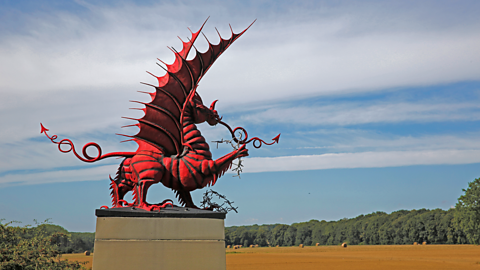
Mametz Wood – in contrast to the heart pounding ‘in medias res’ (mid-action) of Bayonet Charge, Sheers’ poem offers a quiet, if still grim, scene long after the war. It also provides a space to reflect on the conclusions Hughes’s soldier drew amid the battle itself.
Practice questions
Use these questions to hone your knowledge of Bayonet Charge, and to practise using your notes and analysis in organised paragraphs that focus on how particular themes or ideas are shown in the poem. There is an example answer in the following section to demonstrate how you can do this.
- What does Bayonet Charge show us about Hughes’s attitude to war?
- How does Hughes show the sense that the reality of war is different from patriotism in Bayonet Charge?
- What poetic methods does Hughes use to show the soldier’s feelings in Bayonet Charge?
- How does Hughes create a tone of confusion and disorientation in Bayonet Charge?
Example answer
Q: What does Bayonet Charge show us about Hughes’s attitude to war?
A: Ted Hughes did not fight in a war himself, but his father was one of a few in his regiment who survived the World War One Gallipoli campaign; as a child, Hughes heard many stories from the battlefront and many feel Bayonet Charge is at least in part a tribute to his father’s service (not least since bayonets were a key piece of weaponry in World War One). Hughes seems aware of the massive psychological toll of warfare and creates a poem which begins ‘in medias res’ (in the middle of the action) to highlight the frantic sensory overload of the battlefield. Enjambment is used in conjunction with caesurae throughout the poem to give a sense of the uncertainty and danger of the situation. While caesurae adds halts for emphasis as the soldier sees his doom, enjambment means other phrases flow uncontrollably down into the next line and even into the next stanza. This shows the overwhelming onslaught of the battlefield and how overpowering and immediate it is. This shows Hughes to have a negative attitude to war, viewing it as something unnatural and overpowering that individuals have no control over.
Bayonet Charge is written in free verse and divided into three stanzas. The first and last stanzas are a whirlwind of action, while the middle stanza functions as a kind of ‘eye of the storm’ in between them – a moment of clarity amidst the chaos. The soldier stops for an instant and is struck by the epiphany that the war he is fighting is stupid and pointless. This plunges both him and the reader back into the danger and confusion of the battlefield. The metre is irregular, keeping the reader guessing amid the unpredictability and chaos and threatening to jar them at any moment, just as the soldier is constantly threatened by gunfire as he runs. There is no set rhyme scheme in the poem, mirroring the lack of order on the battlefield and offering the reader no sense of organisation or neatness, just a barrage of detail in irregular form. The fact the soldier ‘realises’ halfway through the poem that he has risked his life for a cause that does not really matter would indicate Hughes had a negative, even cynical, attitude to war.
This essay could go on to make the following points, backed up by evidence from the poem and detailed analysis of that evidence:
- Hughes’s central metaphor of the “cold clockwork of the stars and the nations” and use of listing and asyndeton show a sense that the higher powers do not care for their soldiers, showing a negative attitude to war.
- Hughes’s uses of alliteration, assonance and consonance help create a claustrophobic and nightmarish atmosphere on the battlefield, showing war to be dreadful and terrifying and confirming a negative attitude to war.
- Hughes’s various similes show the destruction of nature and wildlife, liken the man to a statue and emphasise his simplicity as a human being, all conveying a negative attitude to war.
Test your knowledge of Bayonet Charge
More Ted Hughes
The Essay. collection
Telegraph Wires - Five Views of Ted Hughes. A collection of episodes of The Essay in which writers explore the works of Ted Hughes.

Ted Hughes: Stronger Than Death. video
Simon Armitage talks about the Ted Hughes poem Pike and the method of Hughes's writing.
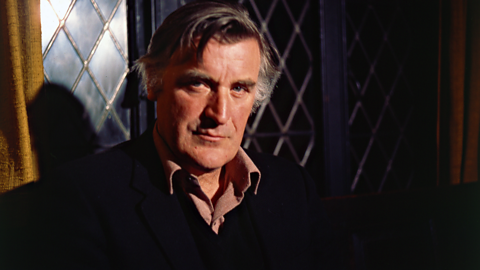
Profile of poet Ted Hughes. document
The late Poet Laureate Ted Hughes (1930-1998) may have been born in Yorkshire, but he made Devon his home.
More on Anthology Three: Conflict
Find out more by working through a topic
- count9 of 11
- count10 of 11
- count11 of 11
- count1 of 11