Key points
Overview
Catrin is a personal poem about the emotional bond between a mother and daughter. It shows the tension between love and the need for independence.
Main themes
The poem explores motherhood, growing up, and the struggle between closeness and separation. It shows how love can also involve conflict.
Tone and voice
The tone is honest, conflicted and intimate. The speaker’s voice moves from the raw physicality of labour to the weary frustration of negotiating independence with a growing child. The poem balances affection with tension, suggesting both pride and exasperation.
Context
Gillian Clarke is a Welsh poet. She wrote Catrin about her real daughter. The poem reflects her feelings during birth and later moments of parenting.
Form and structure
The poem is written in free verse – no regular rhyme or rhythm. It has two stanzas: one about birth, one about growing up. The structure reflects the shift from physical connection to emotional tension.
Poetic devices to spot
- Metaphor – the “red rope of love” stands for the umbilical cord and emotional bond.
- Imagery – “Hot, white room” and “rosy, defiant glare” show strong emotions and vivid scenes.
- Juxtaposition – bright hospital versus dark street shows safety versus freedom.
- Alliteration – “Walls with my words” and “fierce confrontation” add intensity.
- Enjambment – lines flow into each other, showing emotional movement.
- Direct address – the speaker talks to her daughter using “you”.
- Shift in tense – moves from past (birth) to present (ongoing struggle).
- Tone – honest, conflicted, caring, and frustrated.
Catrin
by Gillian Clarke
The text of this poem is available in the CCEA Poetry Anthology, which can be downloaded from the CCEA website.
The BBC is not responsible for the contents of any other sites listed.
Summary
A consideration of the complexity of a mother-daughter relationship, the eternal connection between parent and child, and the difficulty of balancing the need to protect with the need to encourage independence. Written in 1978.

- Title: The The name of a particular person, place or thing. They always begin with a capital letter.Catrin is the name of the poet’s real daughter, about whom the poet is written; the single word ensures the child is the focal point of the poem.
- Themes: Motherhood, parent-child relationships, growing up, independence, boundaries.
- Tone: Wistful, frustrated, honest, caring, stoical, measured, conflicted.
- Speaker: A first person speaker we can assume is the poet herself, reflecting on her own experience and directly addressing her own daughter.
Applicable context
- Gillian Clarke is a Welsh poet and playwright, born in 1937. She was the National Poet of Wales from 2008 to 2016, and has won numerous awards and recognition for her work. Her subject matter is commonly concerned with nature, and her accessible language and style means her work is widely translated and studied in schools. She often responds directly to students who send her questions about the poems they study.
- The poem is written about Clarke’s real-life daughter. Clarke noted in a Q&A page on her website that she felt the central question that triggered the poem was: 'Why did my beautiful baby have to become a teenager?'.
- Clarke has three children, but Catrin was her firstborn and also her only daughter. This may help to explain the intense focus on her rather than her younger siblings as the subject of this poem about birth and motherhood – it was Clarke’s first experience of giving birth. Catrin’s struggles for independence as she grew were the first that Clarke had to deal with as a parent. The newness of the experiences may have made them more resonant for the poet.
Only a little context is needed for each poem; where used, it should be applied to the point you're making.
Form and structure
- Catrin is written in Free verse is a poem with no set rhyme or rhythm., having no regular rhyme scheme or Pronouns are short words like it, she, he, you, we, they, us and them. They are used to describe either individuals or groups of people, rather than using their name or names.. This lack of a set form or structure might be a reflection of the messiness, unpredictability, and complexity of the parent-child relationship and how there are no neat and regular rules to govern such a situation.
- However, despite the lack of a regular rhythm or rhyme, the poem contains some irregular internal rhyme, and some Regular patterns of stressed and unstressed syllables that create a predictable rhythm across lines. The second A grouped set of lines within a poem. closely rhymes “strong, long” and “there”, “hair” and “glare” in a way that doesn’t happen elsewhere in the poem. These internal rhymes create a little sense of consistency that could represent Catrin’s growing strength in making a stand for her independence.
… as you stand there
With your straight, strong, long
Brown hair and your rosy,
Defiant glare
- The poem is divided into two stanzas; the first takes place at the time of Clarke’s labour and Catrin’s birth. The second is later, when Catrin is more grown up and demanding some independence – the chance to stay out playing for longer than she is usually allowed. The two stanzas are end-stopped and separate, but connected by their shared theme of the parent-child relationship; this structure could reflect the two separate people, mother and daughter, who are also nonetheless connected by this relationship.
Language and poetic methods
Direct address: Clarke directly addresses her daughter throughout the poem as “you”, after initially identifying her as “child”. This is not the poetic device of Not the punctuation mark, but a figure of speech where the poet addresses someone who cannot answer back because they are absent, or an inanimate object. since the addressee, Catrin, is not absent as the poet speaks to her but present in front of the speaker, with her “glare” – the direct address is immediate and personal. The poem is named after her daughter, but the poet’s use of “you” throughout could generally apply to any child, which gives the poem some universality despite its specifically personal subject. The personal pronouns “I” and “you” are repeated throughout, emphasising the separateness of mother and daughter; they are only “we” at one point in the poem, and it’s when they insist on being apart: “We want, we shouted, / To be separate”.
Metaphor: The description of the umbilical cord connecting mother and newborn as “the tight / red rope of love which we both / fought over” is a fairly rich A metaphor is a word or a phrase used for dramatic effect, to describe something as if it were something else.. It helps illustrate how this physical connection between them also symbolises an emotional connection (“love”), a restrictive feeling (“tight”), and a power struggle, almost like a tug-of-war. Clarke notes in the second A grouped set of lines within a poem. how “that old rope” is still “tightening about my life”, reusing the metaphor to depict how their once-physical connection is still present in her feelings of love, responsibility, and frustration towards her growing daughter. Clarke saying she “wrote / All over the walls with my / Words” is a metaphorical reference to her screams and shouts in labour, so intense she feels they marked the sterile room.
Another metaphor is that of the “glass tank clouded with feelings” – Clarke has explained that she intended this to mean the hospital room itself, but many have noted how it works to illustrate their relationship beyond this. For example, a glass tank is clear and contained, as their relationship is clear and contains them both. The “feelings” that cloud the tank like smoke can make it harder to see the love and care that connects them, or might make the tank/relationship feel oppressive and smothering.Sensory imagery: The hospital room in which Catrin is born is “hot” and “white”, “blank” and “square”. Clarke’s reference to “the dark” at the end is literal – her child asks to continue playing in the street as night falls. It also works as a symbol of the fears parents have and the dangers they want to protect their children from. The dark is full of the hidden and the unknown, and may threaten Catrin’s safety; Clarke hesitates at the end of the poem between keeping her child safe and allowing her horizons to expand as she grows up.
Alliteration and consonance: Small, concentrated instances of Marked by alliteration - the repetition of a sound at the beginning of consecutive words, such as ‘the big, bold, blue sea' in the poem help to highlight and intensify particular powerful moments. The intensity of the labour and birth, for example, is heightened with repeated sounds in “walls with my words… with the wild” which almost mimic the exaggerated breathing exercises used during labour; the moment of Catrin’s birth, which sets up their relationship of “love and conflict”, is detailed with A fricative is a sound made by squeezing air through a narrow space, like in f, v, s, z, or th in think and this. ‘f’ sounds (mostly alliteration but also some The repetition of similar consonant sounds in nearby words., within “confrontation”) that highlight the ferocity of the moment they meet and how it is as if they are fighting each other immediately: “our first / Fierce confrontation… which we both / Fought over”.
Juxtaposition and contrast: Catrin’s life begins in a “hot, white/ Room” and the poem ends with her seeking to stay out in the dark – the hospital room is bright, clean and “square” to symbolise its safety and containment; “the dark” is unknown, obscure, and the street is open and unconfined. Catrin’s journey from one to the other symbolises her ongoing growth and her inclination to keep pushing boundaries. The safety of the room at the start contrasted with the indefinite darkness outside at the end is a representation of her mother’s internal conflict: parents wish to protect their children but know they have to allow them increasing personal independence as they grow.
The second stanza reference to “love and conflict” is another To place two or more contrasting ideas, images or words close together to highlight their differences. representing this struggle. The “clean squares” of the hospital room are also contrasted with “wild, tender circles”, which represent the messy physicality of giving birth overtaking the pristine surfaces of the “disinfected” room.
As I stood in a hot, white
Room at the window watching…
…As you ask may you skate
In the dark, for one more hour.
This is not a list of every method or notable use of language and structure in Catrin.
Look at the poem again. Can you find any of the following?
Enjambment
Clarke captures a sense of disjointedness, unpredictability, and tension in her frequent use of A poetic device where a sentence continues beyond the end of the line or verse. in the poem. The two stanzas are each end-stopped, but within each one the lines overflow at irregular moments, interrupting the flow in some places and overflowing in others to reflect the tension and unpredictability in the relationship. The boundaries are pushed to change.
Repetition
The first line, “I can remember you” is repeated to emphasise the intensity of the experience of Catrin’s birth; it also serves to heighten the contrast between the past and the present, making the latter more immediate. The first stanza ends with “We want, we shouted, / To be two, to be ourselves” – the repetition here creates two 'we’s' and two ‘to be’s', one for each character, suggesting that even as they fight to be apart, they have the same desires and are more alike than different.
Shift in tense
Clarke clearly illustrates the sense of her daughter growing up by switching from recounting the past – the time of her birth – to detailing an incident in the ‘present’. Her daughter is standing in front of her asking to stay out for an extra hour of playing. Past tense verbs in stanza one like “stood”, “wrote” and “shouted” switch to present tense in stanza two: “Still I am fighting”, “you stand there”, “you ask”. The shift in tense makes the power dynamic more immediate and imposing. It also reflects some ongoing tension between mother and daughter; the ‘present’ situation is happening as the poet speaks, and remains unresolved at the end of the poem.
If you have found these methods, consider what you know about the poem and the poet already.
What effects do these methods create? Why has she used them?
What other poems could I compare with Catrin?
- Kid – a poem concerning the young speaker’s difficult growing up process, which included ‘detaching’ himself from an older mentor and making an independent life for himself; could provide a useful comparison to the parent’s view in Catrin.
- Genetics – an adult speaker’s consideration of the traits she has inherited from her parents and how a family connection can exist both physically and emotionally despite geographical distance or even fractured relationships; this could compare to the sometimes fraught connection between Clarke and her daughter.
- I Remember, I Remember – Larkin’s poem uses a similar A long or extended metaphor comparing two very different things, where the author keeps coming back and exploring in detail throughout a poem or story. insofar as it flashes from a present situation to a past one and then back again; there is also an opportunity to compare a parent’s view of a child’s childhood with a grown-up’s view of their own past.
Practice questions
Use these questions to hone your knowledge of Catrin, and to practise using your notes and analysis in organised paragraphs that focus on how particular themes or ideas are shown in the poem. There is an example answer in the following section to demonstrate how you can do this.
- How does Clarke show that the parent-child relationship is emotionally complex in Catrin?
- What does Catrin show us about Clarke’s attitude to her daughter?
- What poetic methods does Clarke use to show her feelings about motherhood in Catrin?
- How does Clarke create a sense of tension in Catrin?
Example answer
Below is a demonstration of how to use the material in this section to answer an example essay question. The answer below is not a full essay, but only an extract of a longer answer showing some of the points that could be made.
Q: How does Clarke show that the parent-child relationship is emotionally complex in Catrin?
A: Catrin is about Clarke’s own firstborn daughter; the poet noted on her website she thinks of the poem as a response to the question “Why did my beautiful baby have to become a teenager” – as such its main theme is the complexity of the parent-child relationship as the latter grows up. The poem is written in Free verse is a poem with no set rhyme or rhythm., and this lack of a set form or structure reflects the messiness and unpredictability of the parent-child relationship and how there are no neat and regular rules to govern such a situation. The poem is divided into two stanzas; the first takes place at the time of Clarke’s labour and Catrin’s birth. The second is later when Catrin is more grown up and demanding some independence – the chance to stay out playing for longer than she is usually allowed. The two stanzas are end-stopped and separate, but connected by their shared theme of the parent-child relationship; this structure could reflect the two separate people, mother and daughter, who are also nonetheless connected by this complex relationship.
The description of the umbilical cord connecting mother and newborn as “the tight / red rope of love which we both / fought over” is a fairly rich metaphor. It helps illustrate how this physical connection between them also symbolises an emotional connection (“love”), a restrictive feeling (“tight”), and a power struggle, almost like a tug-of-war. Clarke notes in the second stanza how “that old rope” is still “tightening about my life”, reusing the metaphor to depict how their once-physical connection is still present in her feelings of love, responsibility, and frustration towards her growing daughter. Another metaphor is that of the “glass tank clouded with feelings” – Clarke has explained that she intended this to mean the hospital room itself, but many have noted how it works to illustrate their relationship beyond this. For example, a glass tank is clear and contained, as their relationship is clear and contains them both. But the “feelings” that cloud the tank like smoke can make it harder to see the love and care that connects them, or might make the tank/relationship feel oppressive and smothering, showing it’s an emotionally complex relationship.
This essay could go on to make the following points, backed up by evidence from the poem and detailed analysis of that evidence:
- The poet uses enjambment to show the unpredictability and tension in the relationship, illustrating its complexity.
- The poet employs contrast and juxtaposition to depict the sometimes oppositional nature of the relationship and her internal struggle to protect the child while giving her some independence, showing the emotional complexity of the relationship.
- The poet uses a shift in tense from past to present to highlight the ongoing nature of the power struggle between them and show its intensity and immediacy as part of their emotionally complex relationship.
Test your knowledge of Catrin
More Gillian Clarke
Desert Island Discs audio
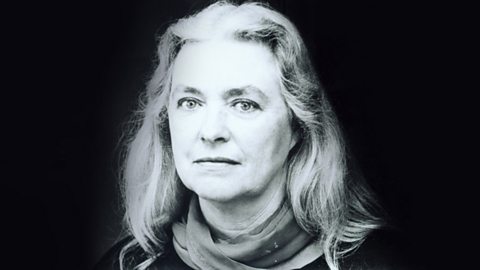
Kirsty Young talks to poet Gillian Clarke.
Bookclub. podcast
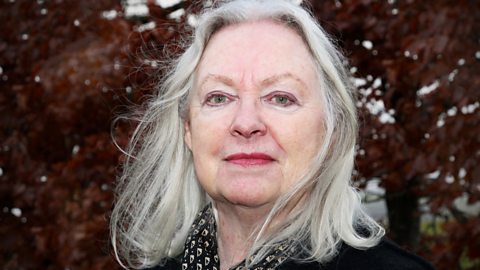
The national poet of Wales, Gillian Clarke discusses her collection Ice with James Naughtie.
The Essay. podcast
Welsh poet laureate Gillian Clarke explains why she writes.

More on Anthology One: Identity
Find out more by working through a topic
- count7 of 11

- count8 of 11

- count9 of 11

- count10 of 11