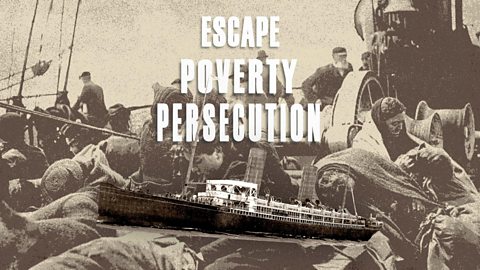
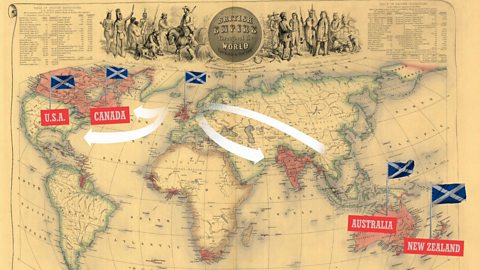
In the late 1800s and early 1900s many people in Southern and Eastern Europe became migrants to escape poverty and persecution at home.
Many dreamed of a new life in the USA. Others made Scotland their home.
From the 1880s, thousands of Italians, escaping the poverty of their home country, had settled across Scotland. Many set up small businesses – pushing barrows around the streets selling a delicacy that was new to the Scots public – ice cream.
They did good business, and expanded – opening ice cream shops, cafes, and fish and chip shops.
Scots Italian communities stayed close to each other – businesses were family run, and ‘marrying out’ was discouraged.
The café parlours became a popular part of Scots society – but some saw them as a problem.
For the United Free Church, they were a dangerous Catholic influence, and a threat to Scottish morals – “young people of both sexes congregate there after legitimate hours and sometimes misbehave themselves”
In the late 1800s, a new wave of migrants arrived in Scotland. They were Jewish communities who were escaping violent religious persecution in the Russian Empire.
Most set up in trades - as tailors, furniture makers, or jewellers. They spoke only Yiddish – and for a time, the Jewish area of the Gorbals was full of Yiddish signs and even Yiddish newspapers. But with newer generations, born and bred in Scotland, the language faded away.
Italian and Jewish immigrants were subject to some racial stereotyping and harassment. But as people who set up their own businesses, they weren’t seen as competing for jobs.
The Lithuanian immigrants who came to Scotland between 1890 and 1914, were also escaping persecution in Russia, particularly because of their Catholic faith.
Many started working in the mines of Lanarkshire and Ayrshire. Some Scots saw them as stealing jobs and undercutting wages, and they faced hostility.
As one man, born in 1903, remembered: “we were all called Poles back then. I think my worst time was at school, when I was bullied and asked, time after time, ‘What’s your name? Tell us your name. Go home to your own country’ ”.
But over time, they earned respect as hard workers, and joined with Scots miners in trades unions to fight for better working conditions.
Blamed, insulted, then accepted – the experience of immigrants was often challenging. But as they struggled to create more prosperous lives, they also brought experience and diversity to Scotland, making it a richer nation.
Description
During the late 1800s and early decades of the 1900s, thousands of migrants arrived in Scotland to escape poverty or persecution at home. The largest groups were Italians, Jewish migrants, and Lithuanians. This video explores the reasons for this migration.