Key points
Overview
The poem expresses deep grief after the death of a loved one. The speaker wants the whole world to stop and mourn, showing how overwhelming and isolating the loss feels.
Main themes
The poem explores grief, love, loss, isolation, and remembrance. It shows how death can make everything else feel meaningless.
Tone and voice
The tone is sad, serious, and emotional. The speaker uses the first person but keeps details vague, making the grief feel universal and relatable.
Context
Auden was a modernist poet who focused on emotion and experimented with poetic form. The poem began as a satirical song for a play, but Auden reworked it into a serious elegy. Some believe it reflects his own experience of losing a male partner, though the speaker remains anonymous.
Form and structure
The poem has four stanzas of four lines (quatrains), written mostly in rhyming couplets. There are traces of iambic pentameter, but the metre varies. These small irregularities reflect the speaker’s struggle to stay composed while grieving. The use of heroic couplets gives the poem a grand, formal tone, suggesting the speaker sees their loved one as monumental.
Poetic devices to spot
- Imperatives – “Stop all the clocks” shows strong emotion and a desire to control the world.
- Repetition – “Let” and “my” emphasise the speaker’s personal loss and obsessive grief.
- Hyperbole – “Pack up the moon and dismantle the sun” shows how huge and irrational grief can feel.
- Contrast – everyday objects vs cosmic symbols highlight the scale of the loss.
- Check your connection, refresh the page and try again. – pauses reflect emotional breaks and hesitation.
Funeral Blues
by WH Auden
A link to this poem is available in the CCEA Poetry Anthology which can be downloaded from the CCEA website.
The BBC is not responsible for the contents of any other sites listed.
Summary
A famous a serious poem usually written to reflect on and show sorrow for someone’s death describing the enormous grief and sense of loss the speaker feels on the death of a loved one. First published in 1938.

Title: The word “Funeral” immediately evokes depression and sadness; the “Blues” reference makes it sound like a song, which links with the way the poem was developed.
Themes: Grief/mourning, death, loss, isolation, love, remembrance.
Tone: Depressed, inconsolable, resolute, nihilistic.
Speaker: First person, though we learn nothing of the speaker personally – perhaps a way of showing the universal nature of grief.
Applicable context
WH Auden was born in York to a middle class family with a longstanding Church of England background. Auden believed his love of language and music stemmed from the Anglican church services he attended as a child.
Auden became hugely influential as a poet and playwright in the Modernist movement, which valued breaking with traditional forms and experimenting with new means of expression in art and literature. Auden was often concerned with capturing not what happened, but how it felt – this focus on feeling is evident in the poem.
Auden was homosexual, which leads many to assume this first person poem is based on his own experience and about a male loved one. However, the poem’s creation was very different – it began life as a song for a play, meant to satirically mock the death of a politician. Auden reworked the lyrics over time into a poem form, attempting to alter the effect of its exaggerated tone from creating humour to creating a feeling of deep emotional truth.
Only a little context is needed for each poem; where used, it should be applied to the point you're making.
Form and structure
Funeral Blues is made up of four A grouped set of lines within a poem. of four lines each; these are known as A type of stanza - or a complete poem - consisting of four lines that have a rhyming scheme.. The poem was actually intended as a song to begin with; it was later reworked into this poem format, but retained an even stanza structure that may remind us of the verses in a song.
The The rhythm of a line of poetry based on how many syllables it has and where they are stressed or emphasised – likes beats in music. varies; there is some One ‘iamb’ is a two-beat combination: an unstressed syllable followed by a stressed (emphasised) syllable, making a ‘da-DUM’ pattern, like a heartbeat. Pentameter means five of these two-beat units per line, making ten syllables altogether, such as line four of the first stanza:
| Bring out | the cof- | -fin, let | the mourn- | -ers come |
| da-DUM | da-DUM | da-DUM | da-DUM | da-DUM |
Other lines vary in metre; the first line of the poem, for example, is mostly iambic pentameter apart from the first two syllables, where a spondee (two stressed syllables) is used at the start, for emphasis:
| Stop all | the clocks, | cut off | the tel- | -e-phone |
| DUM-DUM | da-DUM | da-DUM | da-DUM | da-DUM |
The most important thing to recognise is that the small variations and irregularities in metre help to give the sense that the deeply upset speaker is attempting to keep control of their speech throughout their grief. As if they are struggling to hold themselves together.Despite its metrical variations, the poem is usually agreed upon as being made up of Two rhyming lines of iambic pentameter traditionally used in epic poems about heroes and battles. – it certainly contains two sets of In poetry, a pair of lines that rhyme and have the same length and metric pattern. per quatrain. Heroic couplets are considered to be a grand and elevated form, classically reserved for huge and heroic tales. The fact the speaker may have chosen this form for the loss of their beloved shows they believe their loved one to be as significant as any hero. Their loss to be as monumental as any historic war or journey.
Stop all the clocks, cut off the telephone
Prevent the dog from barking with a juicy bone.
- This poem can be considered an a serious poem usually written to reflect on and show sorrow for someone’s death, a particular poetic form paying tribute to serious themes and most usually used for writing about the loss felt after a death.
Language and poetic methods
- Imperatives: The poem consists almost entirely of Verbs that give commands, instructions, or requests directly to the reader or a specific character to the reader, giving it a commanding and serious tone throughout. The speaker’s insistence on having these requests met centres around the idea that the whole world must join them in grieving their loss. Focusing on issuing orders outwardly may help stop them from focusing inward, on the extreme pain they feel.
Silence the pianos and with muffled drum
Bring out the coffin, let the mourners come.
Repetition: “Let” and “my” are repeated throughout the poem; the first emphasises the multiple commands that are issued by the speaker, while the latter returns the reader again and again to the deeply personal nature of the loss the speaker has experienced.
Metaphors: The third stanza of the poem comprises A metaphor is a word or a phrase used for dramatic effect, to describe something as if it were something else.that signify what the deceased person meant to the speaker, each item representing an important part of life. The four compass points symbolise the globe, suggesting he was ‘the whole world’ and maybe even alluding to the idea that his presence gave direction (as in purpose) to the life of the speaker. “My working week and my Sunday rest” signify a ‘normal’, everyday life, and may be a nod to Auden’s Anglican upbringing. “Noon” and “midnight” symbolise time given that they are markers of a full round of the clock; they are also opposites, again implying the immensity of what the deceased was to the speaker. “My talk” and “my song” are forms of communication – really, this stanza effectively utilises metaphors to propose that the person who has died meant ‘everything’.
Check your connection, refresh the page and try again.imagery: The speaker's requests escalate as the poem progresses, until he is demanding the impossible – the sun, moon, stars, oceans, and woods must all be discarded because the speaker has no use for them without his beloved. This Over-the-top exaggeration for effect. is used to illustrate the vastness and agony of grief, and perhaps the irrational nature of trying to make others understand its particular pain when none of them can feel the loss as keenly.
Pour away the ocean and sweep up the wood;
For nothing now can ever come to any good.
- Contrast: Aside from the opposites used in stanza three (such as “noon” and “midnight”) the poet uses other contrasts. Some critics note how the first half of the poem concerns itself with mundane things we see every day – telephones, dogs, aeroplanes, birds – while the second half focuses on more romantic symbolism like time, space, and nature. In the final line of A grouped set of lines within a poem. three, the speaker contrasts the romantic ideal with a harsh reality: “I thought that love would last forever: I was wrong.”
This is not a list of every method or notable use of language and structure in Funeral Blues.
Look at the poem again. Can you find any of the following?
The lack of conjunctions between phrases, like and, or, so, since, for, because, as, but, yet, still, while, as soon as, therefore etc
Check your connection, refresh the page and try again. is a lack of conjunctions between phrases, and the lack of conjunctions used between the items listed in the third line of Funeral Blues' third stanza creates an escalating effect, emphasising the list of losses. It creates a regular beat in the line and helps to illustrate just how hard the bereavement has hit.
A break in poetic rhythm in the middle of the line, a momentary pause.
Various mid-line breaks are used throughout the poem to emphasise the amount of separate demands being made, which in turn emphasises the enormity of the grief. The final line of stanza three uses a colon for a caesural pause, emphasising the contrast between the romantic ideal and the harsh reality of loss.
Symbolism
Many of the items listed in the poem have symbolic as well as literal meaning. The metaphors used in stanza three can all function as symbols of what the person meant to the speaker, but some of the more mundane objects also work in this way. Pianos represent music and joy – the speaker has no use for this now. Clocks symbolise time, and the speaker wishes time to stop, as he has no intention of moving on from his grief. Black clothing has long been a symbol of mourning, and the speaker wants this to extend to everyone, as symbolised by the “traffic policemen” who serve the public and were not personally familiar with the deceased.
If you have found these methods, consider what you know about the poem and the poet already.
What effects do these methods create? Why has he used them?
What other poems could I compare with Funeral Blues?
On My First Son(ne) – another poem considering grief and loss, albeit in a parent-child relationship.
Remember – provides an interesting contrast between how a deceased person may wish to be remembered and how their beloved may actually mourn them once they’re gone.
Long Distance II – another poem examining the form grief can take for those left behind and suggesting an inability to move on from the loss.
Practice questions
Use these questions to hone your knowledge of Funeral Blues, and to practise using your notes and analysis in organised paragraphs that focus on how particular themes or ideas are shown in the poem. There is an example answer in the following section to demonstrate how you can do this.
- How does Auden create a sense that the speaker is isolated by their grief in Funeral Blues?
- How does Auden show the sense that love persists after death in Funeral Blues?
- What does Auden show us about the speaker’s attitude to death and mourning in Funeral Blues?
- What poetic methods does Auden use to show the relationship between the speaker and the deceased in Funeral Blues?
Example answer
Below is a demonstration of how to use the material in this section to answer an example essay question. The answer below is not a full essay, but only an extract of a longer answer, showing some of the points that could be made.
Q: How does Auden create a sense that the speaker is isolated by their grief in Funeral Blues?
A: Auden’s Funeral Blues is presented in heroic couplets, a form usually reserved for epic tales of heroes and battles, and this immediately suggests that the speaker feels that the loss of his loved one is a serious and monumental event. The poem presents the reader with a list of imperatives that show the speaker demanding that the whole world stop and grieve along with him. This form and content gives a sense that the loss, which means more to them than anyone else, places the speaker in a unique spot. His first person account is deeply personal and raw with grief in its unrelenting detail of the things he wants and the extent of his bereavement; Auden thus shows the speaker is isolated in their grief, because he is alone in the poem and trying to explain the loss to others and impose it on them also.
The demands the speaker issues about who should mourn and how become more and more extensive until they demand the impossible – discarding the heavens, the oceans, and the woods. This implies that they want the entire world to stop because of their loss. This hyperbolic imagery demands things that are not only physically impossible but not desired by anyone but the speaker, showing them to be alone in feeling this way. The repetition of “let” throughout the poem serves to emphasise the list of demands, while the repetition of “my” shows how deeply personal the loss is for the speaker. These repetitions make the speaker’s tone sound obsessive and even self-centred, and this is understandable given their grief; however, the reader is still aware that the unreasonable demands can’t and won’t be met, showing the speaker is isolated in their desire for these things to happen.
This essay could go on to make the following points, backed up by evidence from the poem and detailed analysis of that evidence:
Auden uses metaphors and symbolism in stanza three to attempt to express what the speaker meant to him, as if trying to convince the reader of the extent of his loss and have them understand his isolation.
Auden uses contrasts within the imagery to demonstrate the deceased was everything to him and to show his confusion and upset; this emphasises his anguish, reinforcing the sense of isolation he is trying to express.
Auden emphasises the list of demands – and the list of what the deceased meant to him – with various uses of caesura and some asyndeton, showing the enormity of his grief and his isolation within it.
Test your knowledge of Funeral Blues
More WH Auden
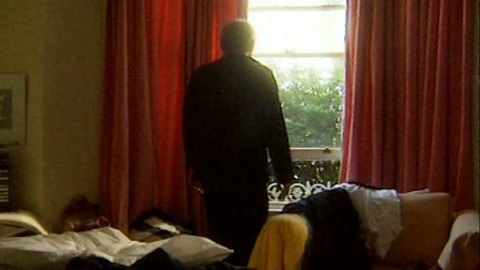
Stop All the Clocks. video
A dramatisation of WH Auden’s poem Funeral Blues, also known as Stop All the Clocks.
Three Faces of WH Auden. audio
Michael Symmons Roberts considers three different aspects of WH Auden's work - politics, religion and love.

Great Lives - WH Auden. audio
Jeremy Vine and presenter Matthew Parris dispute the relative merits and attractions of WH Auden's poetry.

More on Anthology Two: Relationships
Find out more by working through a topic
- count6 of 12

- count7 of 12

- count8 of 12

- count9 of 12