Key points
Overview
The poem is a tribute to Duffy’s mother, imagining her life before becoming a parent. It reflects on how motherhood changed her and how Duffy admires the person her mother used to be.
Main themes
The poem explores youth and freedom, parent-child relationships, sacrifice and responsibility, and the tension between memory and identity.
Tone and voice
The tone is warm, thoughtful and slightly regretful. Duffy speaks in the first person, showing love and respect for her mother while reflecting on her past.
Context
Carol Ann Duffy grew up in Glasgow in the 1950s. Her poetry often gives voice to women and explores how their lives are shaped by family and society. This poem honours her mother’s past and the freedom she gave up to raise a child.
Form and structure
The poem is an elegy, though not about death. It has four stanzas of five lines each and is written in free verse with no set rhyme or rhythm. The structure reflects shifts in time and memory, and the even stanza lengths suggest stability and support.
Poetic devices to spot
- Imagery – glamorous details like “Marilyn” and “red shoes” evoke her mother’s vibrant past.
- Symbolism – “Relics” and “red shoes” represent the mother’s stored-away youth.
- Enjambment – reflects emotion and movement, especially the mother’s rebellious energy.
- Caesura – pauses like “You reckon it’s worth it.” show decisiveness and tension.
- Synecdoche – “Loud possessive yell” symbolises the demands of motherhood.
- Allusion – “Stomping stars from the wrong pavement” hints at lost glamour and possibility.
- Real place names – ground the poem in her mother’s actual life and community.
- Tone – affectionate, reflective and appreciative, with a hint of regret.
Before You Were Mine
by Carol Ann Duffy
The text of this poem is available in the CCEA Poetry Anthology, which can be downloaded from the CCEA website.
The BBC is not responsible for the contents of any other sites listed.
Summary
An a serious poem usually written to reflect on and show sorrow for someone’s death written in tribute to the poet’s mother, examining the carefree life she had in the past before having her daughter. First published in 1993.

Title: “Before” has connotations of the past; the possessive “mine” is an ironic subversion as we usually think of children as ‘belonging’ to their parents, whereas in this title ownership of the parent is claimed by the child – she repeats the title twice within the poem.
Themes: Youth, loss of freedom, selfhood, parent-child relationships, the past, responsibility.
Tone: Affectionate, wondering, appreciative, reflective, grateful, a hint of regret.
Speaker: First person; the voice of the poet using Not the punctuation mark, but a figure of speech where the poet addresses someone who cannot answer back because they are absent, or an inanimate object..
Applicable context
Carol Ann Duffy grew up in a Glasgow A building that has several flats inside it. They are usually found in cities and often built to house working-class families. In places like Scotland, tenements are common and can be old stone buildings with shared staircases and entrances. in the 1950s – the area was poor and had been devastated by World War Two with little done to rebuild or regenerate it. The place names used in the poem are all real areas from her mother’s early life, placing her firmly in these ordinary local locations even as the poem jumps back and forth in time.
After the war’s negative impact on society, young people rebelled against traditional social values and experienced a new era of increased liberation – Duffy imagines carefree scenes of fun from her mother’s past as being a part of this rebellion.
Duffy is a feminist, sympathetic to 'forgotten' women and underdog characters, and often uses her poetry to give voice to their otherwise untold experiences. Here, she focuses on her mother’s past to pay tribute to her as the person she was before becoming a parent, and honours how mothers sacrifice their youth and identity for their children.
Only a little context is needed for each poem; where used, it should be applied to the point you're making.
Form and structure
Even though it wasn’t written to the poet’s mother after her death, the poem is still technically an a serious poem usually written to reflect on and show sorrow for someone’s death. An elegy is written in tribute to serious themes, which this poem is, and does not always have to be addressed to one who is dead (though it usually is).
Before You Were Mine is divided into four A grouped set of lines within a poem. of quintains (five lines each), each of which plays with place, time and memory. The stanzas are in Free verse is a poem with no set rhyme or rhythm., having no regular rhyme scheme or The rhythm of a line of poetry based on how many syllables it has and where they are stressed or emphasised – likes beats in music.. The varied line lengths help create a choppy, sprightly rhythm that mirrors the mother’s jaunty, carefree energy.
The evenness of the four stanzas may suggest that even though she is free and bends the rules, Duffy’s mother has the capability to be stable and supportive as a parent; it may even show that Duffy’s relationship to her mum is not disordered or insecure, but even and wholesome.
Language and poetic methods
Enjambment: The poet uses both A poetic device where a sentence continues beyond the end of the line or verse., where the information spills into the next line to reflect the mother’s chaotic energy and sense of rebellion, and some end-stopped lines. The most notable example of an end-stopped line is the brief and emphatic “You reckon it’s worth it.”, which shows the mother is decisive and sure about her choice to stay out late, even though she got “a hiding” (slang for being slapped or beaten as a punishment).
Imagery of glamour: Duffy’s pop-culture reference “Marilyn” evokes the iconic movie star Marilyn Monroe, internationally known as a glamorous figure and a sex symbol; she calls her mother this as a metaphor to reinforce the sense of her mother being dazzling and beautiful. After years of drab wartime clothing, a “polka-dot dress” would seem wonderfully flamboyant and vibrant, while the reference to how the dress “blows round your legs” is also a nod to Monroe and a famous series of pictures with her dress billowing up.
The imagery of glamour is further evoked by the metaphorical line “stamping stars from the wrong pavement” – Duffy is referring to the Hollywood Walk of Fame (where movie stars’ names are enshrined on special sidewalk tiles) implying her mother was as sensational as celebrities. Even “fizzy movie tomorrows” suggests a life of excitement, like something from a film, before the demands of motherhood set in. These images stand out in glittering opposition to the realities of bomb-damaged Glasgow, the austerity of everyday life and the traditional moral values of society, as well as a stereotypical unglamorous mother figure.A literary device where an object, person, place, or event represents something beyond its literal meaning. : “Those high-heeled red shoes” that Duffy remembers pushing her hands into as a child are a symbol of the mother’s past – the shoes themselves represent dancing, alluring style and being on show, while the colour red suggests passion, excitement, and even danger. They are now in the wardrobe, too showy and impractical for a mother to wear, symbolising how her past life – a life of being looked at with desire and being free to dance – is stowed away, no longer in use.
Duffy uses the A metaphor is a word or a phrase used for dramatic effect, to describe something as if it were something else. “Relics” which implies something ancient from the past, an artefact dug up as evidence of a long-gone civilisation, to represent the mother’s past now being gone. “Relics” can have religious meaning too, as items associated with saints and holy figures were treasured and revered; Duffy seems to hold a fascination for the shoes even as a child, showing her awe of them.Synecdoche: “My loud possessive yell” is an example of A figure of speech where a part of something is used to represent the whole thing, such as calling a car ‘wheels’ symbolising the selfish and unrelenting demands of a baby on its mother, and emphasising the fact that Duffy is now aware that motherhood must have been hard. She uses Check your connection, refresh the page and try again. again with the “ballroom with a thousand eyes” as a metaphor to represent the idea of so many young people being there together and staring to ‘check each other out’. This conjures an atmosphere of excitement and possibility that Duffy thinks her mother could have felt at those dances and parties.
References to ordinary people and places: While Duffy conjures an almost magical sense of her mother’s sensational beauty and bold spirit with the scenes she imagines, she also takes care to place her mother soundly in the ordinary Glasgow streets where she grew up.
The names of her friends, places such as “Portobello” and “George Square” and even the familiar locations of “the corner” and “the close” (a close is the main door, hall, and stairs that everyone in the tenement uses to get to their homes) are used as they were all elements of and influences on her mother’s sense of self. Duffy pays tribute to these as parts of the life her mother had when she was a person in her own right and not just Duffy’s mother; she may also be showing their closeness and shared roots, as Duffy grew up around these areas too.
This is not a list of every method or notable use of language and structure in Before You Were Mine.
Look at the poem again. Can you find any of the following?
Repetition of vowel sounds in consecutive or nearby words, such as ‘the sound was loud’.
The first stanza uses assonance, with the repeated ‘e’ sounds in “each other, or your knees, and shriek”, reinforcing their laughter by making the reader mimic their smiles to form these sounds, as if the girls’ mirth is infectious.
Shifts in tense
Duffy goes back and forth in time as she creates the scenes of her mother’s past that she did not really witness. The present tense used in the third stanza – “now your ghost clatters toward me over George Square/ till I see you” – shows the past can be so vivid it is like the glamorous aspect of the mother still sometimes exists. While Duffy assures her mother that “That glamorous love lasts / where you sparkle and waltz and laugh”, again in present tense, showing that her sacrifice is appreciated and that her mother’s self and spirit can still be seen.
Sensory language
The fourth stanza contains several instances of sensory language, from the ghost who “clatters” towards her, as though noisily stumbling in high heels, to the A simile is a word or phrase used to make a comparison for dramatic effect, using 'like' or 'as'. “I see you, clear as scent” which mixes sight and smell to give a sense of how surreal it is to see her. Even the reference to “small bites on your neck” appeals to our sense of touch, combining with the other sensory images to make a vivid picture that shows how clearly Duffy can imagine her mother as a spirited teen.
If you have found these methods, consider what you know about the poem and the poet already.
What effects do these methods create? Why has she used them?
What other poems could I compare with Before You Were Mine?
Clearances 7 – also about the poet’s mother and offering some sense of her life before her children, when the poet’s father refers to their past courtship as comfort in the moments before she dies.
I Am Very Bothered– also a poem focused on behaviour in one’s youth; focuses on a single incident in the poet’s past, showing regret for past actions that could be compared with the mild regret Duffy hints at for costing her mother her freedom.
Long Distance II – the poet also addresses a parent; theirs isn’t a close relationship and could be contrasted with the affection and understanding Duffy shows towards her mother.
Practice questions
Use these questions to hone your knowledge of Before You Were Mine, and to practise using your notes and analysis in organised paragraphs that focus on how particular themes or ideas are shown in the poem. There is an example answer in the following section to demonstrate how you can do this.
What does Before You Were Mine show us about Duffy’s relationship with her mother?
How does Duffy pay tribute to her mother in Before You Were Mine?
What poetic methods does Duffy use to show a sense of her mother’s past self in Before You Were Mine?
How does Duffy create a tone of appreciation in Before You Were Mine?
Example answer
Below is a demonstration of how to use the material in this section to answer an example essay question. The answer below is not a full essay, but only an extract of a longer answer showing some of the points that could be made.
Q: What does Before You Were Mine show us about Duffy’s relationship with her mother?
A: Duffy wrote the elegy Before You Were Mine in tribute to her mother, but not to her role as a parent. Instead, she focuses on who her mother was before she had to sacrifice her time, energy, and freedom in order to take care of her daughter. The fact she not only appreciates her as a parent, but as a person suggests they have a close and loving relationship.
The possessive pronoun in the title creates some irony – we usually think of children as ‘belonging to’ their parents, while in this case it is Duffy, the child, who has claimed ownership of the mother. She repeats the title twice within the poem, making clear that she knows now that her arrival took over her mother’s life, but reflecting with care and affection on the person who mother was before that. This shows the love she feels for her.
Duffy clearly admires her mother, as seen not only in the scenes she imagines taking place before her birth, but also in the little anecdotes from childhood that she shares. Stomping out irreverent dance steps as they walked home from Mass; toying with her mum’s red high heels, symbols of her past glamour now classed as metaphorical “relics” from an ancient past and banished in a wardrobe. Even as a child, she recognises spirit in her mother – “I wanted the bold girl winking in Portobello” – and enjoys the glimpses of her fun and cheeky side.
Most of the poem is nostalgic, with an appreciative tone of wonder and gratitude. There is also a hint of regret. Duffy acknowledges, not only in relegating the glamorous red shoes to being “relics” but also in her reference to “the fizzy, movie tomorrows / the right walk home could bring” in stanza two, showing the excitement and possibility there could be for a young single woman. In stanza four, Duffy uses an allusion to the Hollywood Walk of Fame in “stomping stars”; she contrasts “the right walk” with “the wrong pavement”, implying her mum may have deserved a more exciting and celebrated life, more glamour and fashion or even just more chance to be open to possibility than life as a parent afforded her. This fleeting hint of guilt at having stolen her mother’s future (albeit through no fault of her own) is Duffy acknowledging her mother’s sacrifice and showing respect, sympathy, and gratitude for what she gave up to benefit her child. Their support of each other here signifies a good relationship.
This essay could go on to make the following points, backed up by evidence from the poem and detailed analysis of that evidence:
- Duffy uses metaphors and symbolism to associate her mother with glamour and beauty, showing she appreciates the sides of her that motherhood does not place much value on.
- Duffy uses synecdoche to acknowledge the difficulties of motherhood, showing an understanding and positive relationship.
- Duffy uses sensory language and shifts in tense to bring her mother’s past to life, grounding these in real places to reinforce the sense of self her mother has had to let go of; this shows she respects her mother as a person, not just a parent, cementing their positive relationship.
Test your knowledge of Before You Were Mine
More Carol Ann Duffy
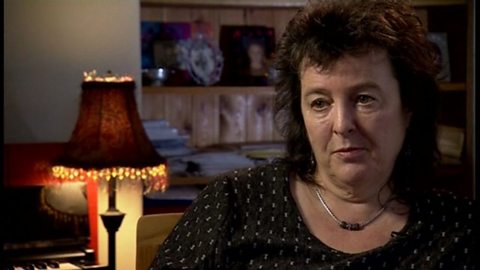
Meet the Author: Carol Ann Duffy. video
In a series of special Meet the Author interviews, Nick Higham meets the winners 2012's Costa Book Awards.
Front Row. audio
Mark Lawson meets the Poet Laureate Carol Ann Duffy, as she publishes The Bees, her new collection of poems.

Intermediate English: Poetry. collection
Students get a chance to question, interpret and evaluate poems by Carol Ann Duffy and Liz Lochhead.

More on Anthology Two: Relationships
Find out more by working through a topic
- count5 of 12

- count6 of 12

- count7 of 12

- count8 of 12