Key points
Overview
The poem recounts Larkin’s failed relationship with a woman he didn’t truly love, while idealising her more attractive friend. It reflects on emotional immaturity, regret, and the lasting impact of missed romantic opportunities.
Main themes
The poem explores love and regret, emotional immaturity, gender roles and inequality, fantasy versus reality, and the objectification and emotional detachment that can shape relationships.
Tone and voice
The tone is dry, ironic and resigned. Larkin writes in the first person, using understatement and black humour to reflect on serious emotional experiences with detachment and self-mockery.
Context
Larkin’s withdrawn childhood and lack of early contact with women shaped his pessimistic view of relationships. The title "Wild Oats" is an ironic reference to casual sex, highlighting the societal double standards of the time. The women in the poem were real: Jane Exall ("rose") and Ruth Bowman ("friend in specs").
Form and structure
The poem is written in free verse with no regular rhyme or metre. It has three stanzas of eight lines each, and the conversational tone is created by enjambment and caesura. The structure is cyclical, beginning and ending with the "rose", and the final rhyme ("snaps" / "perhaps") adds a sense of closure.
Poetic devices to spot
- Irony – the title mocks youthful freedom and sexual experience.
- Metaphor – "unlucky charms" for the photos he keeps.
- Enjambment – creates a flowing, casual tone.
- Caesura – dashes and colons add emphasis and pause.
- List – events are listed like facts, showing emotional detachment.
- Objectification – women described by appearance, not personality.
- Shift in tense – moves from past to present, showing lasting impact.
- Cyclical structure – starts and ends with the same woman, showing obsession.
Wild Oats
by Philip Larkin
A link to this poem is available in the CCEA Poetry Anthology which can be downloaded from the CCEA website.
The BBC is not responsible for the contents of any other sites listed.
Summary
A poem recounting the poet’s encounter with two girls: one he was attracted to but felt unable to approach, and one with whom he entered into a relationship despite not having feelings for her. Published in 1962.
Title: Wild Oats was a common Polite or neutral words or expressions used to refer to things which people may find upsetting or embarrassing to talk about. for sex; the events of the poem reveal the poet uses this title ironically, as a way of mocking himself, since he did not “sow his wild oats” in his youth.
Themes: Youth/immaturity, love, lust, regret, gender inequality.
Tone: Matter-of-fact, understated, conversational, wry, resigned.
Speaker: First person; the speaker is assumed to be the poet himself, as the experience described is autobiographical.
Applicable context
Larkin was withdrawn as a child, self-conscious of his stammer, and was homeschooled in early life. He did eventually attend school, but his self-esteem was affected further by early academic failure before he found success in his writing. All of this dented his confidence and went on to contribute to the poetic persona he developed of being pessimistic, ill-at-ease and using irony, black humour and understatement to frame emotional experiences.
His early life and schooling meant he had very little contact with women outside his family before adulthood, which may further explain his lack of confidence and difficulty expressing his intentions and feelings to the characters in this poem.
The poem’s title reflects the hypocritical social values of the early and mid-twentieth century – that young men should 'sow their wild oats' and be sexually active as widely as they wished before settling down in marriage. Young women should avoid such promiscuity and keep themselves 'pure' and chaste without exception.
The young women described in this poem were a real pair of friends: Jane Exall, the “rose”, and Ruth Siverns (née Bowman), who met Larkin when she was 16 and to whom she was engaged but never married.
Only a little context is needed for each poem; where used, it should be applied to the point you're making.
Form and structure
The poem is written in free verse, with no real set rhyme scheme or The rhythm of a line of poetry based on how many syllables it has and where they are stressed or emphasised – likes beats in music.. This creates an informal, conversational tone, allowing him to discuss emotionally significant matters like unrequited love or a broken engagement in an offhand manner, as though they were everyday occurrences and wholly ordinary experiences. There is one small exception to this general lack of pattern – the final A grouped set of lines within a poem. rhymes the word “snaps” with “perhaps” on an alternating line at the end of the poem. This gives the whole thing a neat finality that suggests the poet will carry on with his ill-advised habit of keeping pictures of the “rose” with him at all times.
There is frequent use of A poetic device where a sentence continues beyond the end of the line or verse. in the poem, further contributing to the casual, chatty effect and giving the impression of understatement. This suggests that the subject of the poem – his long-suffering and unloved fiancée, their failed relationship, and even perhaps all other matters of the heart – mean little to him.
Wild Oats is divided into three stanzas, each with eight lines (known as an octet). The stanzas form a timeline of events, from 20 years ago in the first stanza to the ongoing ‘present’ in the last, which the poet describes using a shift in tense from past to present. The poem begins and ends with mention of the “bosomy” “English rose”, giving it a somewhat cyclical structure and implying she is always on his mind, even ‘now’.
Language and poetic methods
- A break in poetic rhythm in the middle of the line, a momentary pause.: The poem begins in a chatty, anecdotal manner – “About twenty years ago / Two girls came in where I worked”. There is then a caesural pause for emphasis, in the form of a dash, serving as a way of highlighting what will come next. The pause this caesura creates gives a fleeting sense of intrigue before he reveals more about these girls, offering a hint of their dramatic importance to him in the years that followed.
Larkin uses caesura again in the first stanza with a colon preceding “But it was the friend I took out” – this gives a similar caesural pause for emphasis before revealing important information. But instead of the excitement implied by the dash at the start, he uses a colon, perhaps suggesting that it was inevitable things would turn out in this way for him, as he could never approach the “rose”.
Two girls came in where I worked—
A bosomy English rose
And her friend in specs I could talk to.
- Stereotyping and objectification: The women in the poem are objectified stereotypes, reduced to their appearances – Jane Exall is idealised as “a bosomy English rose” and “beautiful”; Ruth Bowman is “her friend in specs” and “the friend”, hugely dismissive terms for a person he courted and considered marrying. The women have little to no agency in the poem – Larkin attributes no real action to them, making them utterly passive. Everything happens from his perspective: “I could talk to”; “I took out”; even the engagement ring is seemingly not given back by Ruth but something he “got back in the end”. He idealises Jane but doesn’t even capitalise his nomenclature (or nickname) for her, showing no respect for her as a person.
He cannot relate to women as fellow humans with feelings and lives of their own, partly explaining his behaviour and detached tone in the poem. In particular, the way he speaks of Ruth shows a lack of affection or even interest – she is a lesser being, only described in relative terms to the “rose”, which shows where Larkin’s true interest lay.
Gave a ten-guinea ring
I got back in the end,
Metaphors: Just like “wild oats”, Larkin’s metaphorical reference to “the whole shooting-match” is a contemporary euphemism for sexual urges, which he notes are the feelings Jane’s appearance “sparked” in him. His description of the two photographs of the “rose” that he carries with him is another metaphor, “unlucky charms”, with a wry, slightly rueful tone. This understates the apparent fact that these photos and the ‘missed opportunity’ they represent to him has had a negative effect on his romantic life. An effect that he is aware of but does nothing to change since he keeps them “in my wallet” on an ongoing basis.
List: Stanza two details the courtship of Ruth Bowman, the “friend in specs” who he feels is more approachable because she is less attractive than the “rose”. Larkin makes a list of the features factually, allowing no mention of the feelings of either of them, and creates an effect of someone going through the motions – there is no warmth, affection, or even much detail beyond the facts. It is as though their relationship is a scoresheet on which he records the things he does but not the feelings he has (or, as the case may be, does not have).
The list is detached and transactional, underpinning his lack of attraction to or feeling for Ruth. Note that while he keeps it factual, he is vague and inexact – they met “numerous” times; they had “about five” rehearsals for the wedding – showing that he didn’t really care enough to keep track. This is in stark contrast to how he mentions that he “met beautiful twice”.Imagery of courtship: The list mentioned previously contains references we might expect in a traditional courtship of the time – letters, a ring, weekends spent together – but each is described in a way that sours and cheapens the idea of the relationship overall. “Over four hundred letters” sounds factual and transactional, as though he is keeping score of all the work he put in; a “ten-guinea ring” is inexpensive, showing this token of his supposed devotion to her was in fact cheap and commonplace, a symbol representing the relationship as something in which he was not deeply invested. “Met/ At numerous cathedral cities/ Unknown to the clergy” is another euphemism suggesting sex – he implies they went on weekends away together in a way that the religious might frown upon, and yet shows no excitement about this, only cool detachment.
This is not a list of every method or notable use of language and structure in Wild Oats.
Look at the poem again. Can you find any of the following?
The repetition of similar consonant sounds in nearby words.
The line “Well, useful to get that learnt” has a passive tone of wry resignation that is punctuated by the repeated ‘t’ sounds at the ends of the three consecutive words at the end. This consonance makes the harshness of the ‘t’s stand out, giving a crisp, slightly bitter and maybe even slightly sarcastic tone that casts a sense of regret over the whole episode.
Shift in tense
Halfway through the final stanza sees a shift in tense from Larkin describing the past to explaining the present: “In my wallet are still two snaps / Of bosomy rose”. The poem starts in the past but ends in the present, mirroring the ongoing regret that he still lives with.
Extra information to a sentence or a paragraph but the passage should still make sense without it. This can be done using brackets, dashes or commas.
Larkin writes of the two occasions on which he “met beautiful” that: “She was trying / Both times (so I thought) not to laugh”. His use of brackets to add the detail “so I thought” is indicative of both his lack of confidence with women and also of his self-consciousness in her presence because of his feelings for her. He is intimidated by her, and we can’t know whether she was legitimately unwelcoming to him or whether he was simply paranoid about how she viewed him. His memory of this detail, coupled by the fact he adds “so I thought” in parentheses as a notable aside, both suggests that her sneering may have been a product of his imagination. It implies just how strong an impression she made on him.
If you have found these methods, consider what you know about the poem and the poet already.
What effects do these methods create? Why has he used them?
What other poems could I compare with Wild Oats?
I Am Very Bothered – another poet who recounts a difficult experience from his youth regarding a girl to whom he was attracted, and how his behaviour was affected by a lack of emotional maturity.
I Am Very Bothered – a contrasting poem in which the speaker refuses to idealise his lover’s beauty but details how he loves her for who she really is.
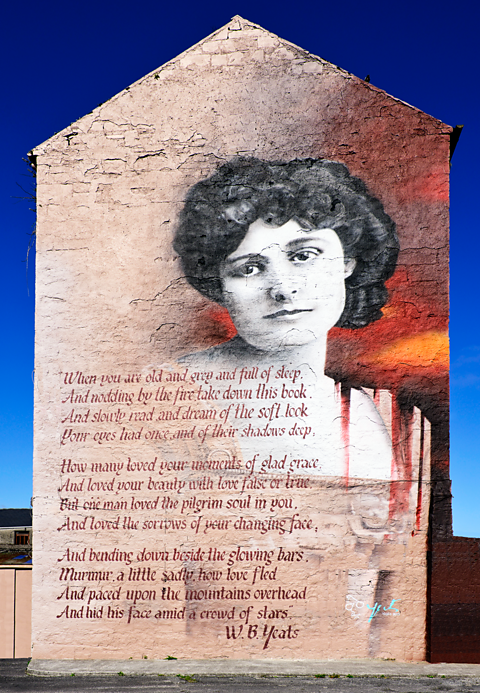
When You Are Old – a poem which also deals with past regrets caused by unrequited love.
Practice questions
Use these questions to hone your knowledge of Wild Oats, and to practise using your notes and analysis in organised paragraphs that focus on how particular themes or ideas are shown in the poem. There is an example answer in the following section to demonstrate how you can do this.
- What does Wild Oats show us about Larkin’s attitude to love and relationships?
- How does Larkin present his own actions in Wild Oats?
- What poetic methods does Larkin use to show his feelings about the two different female characters in Wild Oats?
- How does Larkin create a tone of regret in Wild Oats?
Example answer
Below is a demonstration of how to use the material in this section to answer an example essay question. The answer below is not a full essay, but only an extract of a longer answer, showing some of the points that could be made.
Q: What does Wild Oats show us about Larkin’s attitude to love and relationships?
A: Larkin was known for his pessimistic and cynical A poetic persona is the voice, character, or identity that a poet uses in their work. It’s how the poet presents themselves in their writing. It’s not necessarily who the poet is in real life, but how they come across in the poetry itself. Some poets use the same persona across their work, others change depending on the theme or tone., and his attitude to love and relationships in Wild Oats is fairly typical of this. The free verse poem considers his seven-year courtship ending in a failed marriage, which stemmed from the fact he was infatuated with the attractive friend of his fiancée. The two women in question were real figures in Larkin’s life, but in the poem Larkin objectifies and dehumanises them – Jane Exall, to whom he was attracted, is idealised as “a bosomy English rose” and “beautiful”; Ruth Bowman is “her friend in specs” and “the friend”. The fact Larkin uses these hugely dismissive terms for a person he courted and considered marrying gives an indication of his passive and uncaring approach to love and relationships. He cannot relate to women as fellow humans with feelings and lives of their own, partly explaining his behaviour and detached tone in the poem. In particular, the way he speaks of Ruth shows a lack of affection or even interest – she is a lesser being, only described in relative terms to the “rose”, which shows where Larkin’s true interest lay. It illustrates a cynical attitude to love and relationships, given that he courted Ruth for years while having no true feelings for her.
Stanza two details his courtship of Ruth, the “friend in specs” who he feels is approachable because she is less attractive than the “rose”. Larkin makes a factual list of the features and events of the courtship, creating an effect of someone going through the motions – there is no warmth, affection, or even much detail beyond the facts. It is as though their relationship is a scoresheet on which he records the things he does but not the feelings he has (or, as the case may be, does not have). The list is detached and transactional, underpinning his lack of attraction to or feeling for Ruth. Although he lists off items, he is vague and inexact – they met “numerous” times; they had “about five” rehearsals for the wedding – showing that he didn’t really care enough to keep track. This is in stark contrast to how he mentions that he “met beautiful twice” – these passing meetings were more significant to him than his seven-year relationship, indicating his attitude to love is unrealistic and immature. He does not know Jane and yet he obsesses over her, to the detriment of his real relationship.
This essay could go on to make the following points, backed up by evidence from the poem and detailed analysis of that evidence:
Larkin uses imagery of courtship, but the details show it to be cheap, transactional and flat, betraying the fact that he does not care about Ruth and that his attitude to relationships is uncaring and neglectful.
Larkin’s use of euphemisms in the title and elsewhere suggest he has an immature attitude to love and relationships and does not accept people for who they really are, or have a realistic approach to love.
Larkin’s use of free verse and enjambment creates a casual, conversational tone that suggests love is not something he feels excited about. The shift in tense from past to present and the cyclical structure whereby the poem starts and ends with the “rose” shows she is always on his mind. This implies he obsesses over an idealised woman but cannot approach a real human relationship.
Test your knowledge of Wild Oats
More Philip Larkin
Philip Larkin: England’s most miserable genius? interactive
Philip Larkin remains one of Britain’s most controversial – and loved – poets. His colleague James Booth looks back.
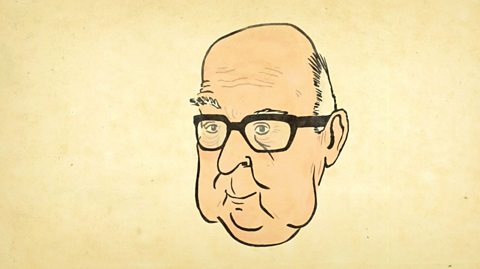
The New Elizabethans. audio
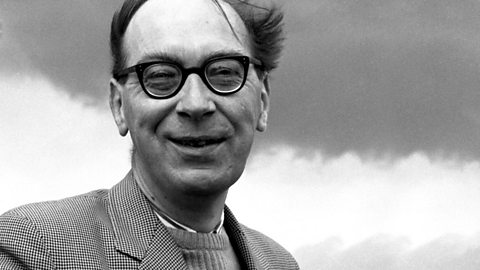
Philip Larkin, one of the great English poets, was also famous for his day job as librarian at the University of Hull.
The Archive Hour. audio
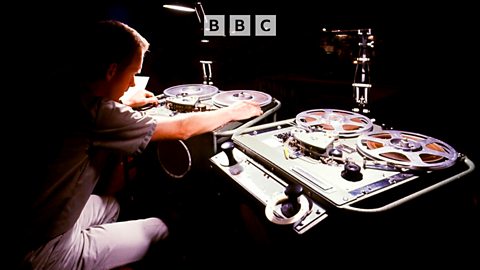
Paul Farley tells the extraordinary story of two tapes by poet Philip Larkin which remained hidden in a garage for 25 years.
More on Anthology Two: Relationships
Find out more by working through a topic
- count7 of 12

- count8 of 12

- count9 of 12

- count10 of 12