Key points
Overview
Symptoms of Love is a short poem by Robert Graves that describes love as something painful and uncontrollable. The speaker talks about how love affects the body and mind, making people feel weak, obsessed, and even ill.
Main Themes
The poem explores the darker side of love. Love is shown as suffering, not joy – it causes emotional and physical pain. The speaker feels trapped and powerless. There’s a sense of obsession and longing.
Tone and voice
The tone is downbeat and pessimistic, presenting love as draining and uncomfortable. The speaker’s voice feels tired and resigned, reinforcing the idea that love brings strain rather than joy.
Context
Robert Graves was a 20th-century poet who had intense relationships and served in World War One. His experiences with love and trauma influenced his writing. He often wrote about love as something powerful and destructive.
Form and structure
The poem is written in free verse, meaning it doesn’t follow a regular rhyme or rhythm. The short lines reflect the idea of being emotionally drained. The final stanza shifts tone slightly, ending with a question that makes the reader think.
Poetic devices to spot
- Metaphor – love is called a “migraine” and a “bright stain”, showing it’s painful and leaves a mark.
- Imagery – descriptions like “burning,” “shaking,” and “haunted” help us imagine how love feels.
- Enjambment – lines run into the next without full stops, showing how love flows and can’t be controlled.
- Rhetorical question – the poem ends with a question, making the reader reflect on love’s value.
- Asyndeton – lists without “and” make the suffering seem fast and overwhelming.
- Tone – the tone is cynical and downbeat, showing love as a negative experience.
Symptoms of Love
by Robert Graves
The text of this poem is available in the CCEA Poetry Anthology, which can be downloaded from the CCEA website.
The BBC is not responsible for the contents of any other sites listed.
Summary
A brief but pithy examination of the pain and suffering love can cause for a person who feels it. Published in 1964, three years after Graves became a Professor of Poetry at Oxford University.

- Title: “Symptoms” has medical or clinical connotations, as though love itself is a A metaphor is a word or a phrase used for dramatic effect, to describe something as if it were something else. for some kind of chronic illness.
- Themes: Love, heartache, longing, suffering.
- Tone: Cynical, downcast, pessimistic, disillusioned.
- Speaker: The poet uses second person in the final A grouped set of lines within a poem., directly addressing the reader.
Applicable context
- Robert Graves was the son of a poet and lyricist, inheriting a love of literature and mythology that saw his written work span poetry, short stories, autobiography, historical novels and popular translations of Latin and Greek classics. This breadth of interest and versatility may help to explain the lack of direct first person perspective in what could otherwise be a very personal poem.
- Graves had many tumultuous relationships in his life. He was bisexual at a time when homosexuality was still illegal in England; he was married but involved in many other (sometimes convoluted) relationships, most notably with the poet Laura Riding (who may well have helped inspire this poem, and for whom he ultimately left his wife). His experiences of love could have informed his understanding of it as being something turbulent and painful, as seen in this poem.
- Graves almost died of pneumonia and measles as a child, and was later so badly wounded while fighting in World War One that he was again expected to die from the trauma. He was familiar with physical pain, medical procedures and the long-lasting effects of scars and illnesses – his likening of love to a pathological condition is informed by his own extensive experiences with sickness and medicine.
Only a little context is needed for each poem; where used, it should be applied to the point you're making.
Form and structure
- Graves uses free verse in Symptoms of Love, not following a regular rhyme scheme orThe rhythm of a line of poetry based on how many syllables it has and where they are stressed or emphasised – likes beats in music..
- He may have felt that this lack of constraint would give him the freedom to fully express his ideas, or that, by refusing to follow a neat structural form, the poem would express how unruly and discomfiting love could be.
- The poem is divided into five three-line A grouped set of lines within a poem., or A tercet is a group of three lines in a poem. It is a type of stanza..
- Each one is brief and pared-down, perhaps evoking the “leanness” that Graves identifies as one of love’s “symptoms”, or maybe to evoke the sense that the speaker is in too much pain to elaborate beyond these short observations.
- The overall effect is spare and sparse, giving the impression that, far from creating a sense of joy blooming forth and enhancing the speaker’s life, love has instead seemingly stripped them of all but the basic bones of existence.
Language and poetic methods
Metaphor: The first line baldly states that “Love is universal migraine”, using a A metaphor is a word or a phrase used for dramatic effect, to describe something as if it were something else. to compare the experience of being in love to the experience of experiencing excruciating and debilitating pain. The adjective “universal” seems to suggest that it is all-encompassing and cannot be escaped.
A further metaphor describes it as a “bright stain”, using A phrase combining two or more contradictory terms - eg. 'deafening silence'. to evoke a sense of disorientation, given that we usually think of stains as being darker. The fact it affects “the vision” could mean the sufferer’s sense of sight, but ‘vision’ can also be a term used to depict one’s outlook and aspirations for the future; the poet seems to be saying that love not only makes it so we cannot see, but also that it affects our prospects and potential.
“Blotting out reason” further depicts love as something that upsets our ability to think; the extended metaphor clearly evokes love as something that negatively impacts our faculties, supporting the title’s insinuation that love is like a disease.Sensory imagery: Graves appeals to several of the reader’s senses to give a fuller picture of the ways in which love can affect people. “Listening for a knock” incorporates Related to hearing or sound.imagery, our sense of hearing; “a touch of her fingers” is Means related to touch or how something feels. imagery; the “darkened room” and “searching look” are visual imagery, references to sight. Sensory imagery concerning love is usually sensual and enriching, but here it is sparse and on edge, evoking a sense of someone who has become almost paranoid in their desperation to connect with their beloved.
Asyndeton: The use of Check your connection, refresh the page and try again., in which conjunctions like ‘and’ are left out between words and phrases they might typically connect, occurs many times in the poem. It is noticeable in the second A grouped set of lines within a poem., for example, when Graves writes “leanness, jealousy, / Laggard dawns;” – the effect is one of listing. The lack of a final ‘and’ helps to give the impression that the list could go on and on indefinitely, and that there is no end to the suffering that one in love experiences.
Symptoms of true love
Are leanness, jealousy,
Laggard dawns;
Check your connection, refresh the page and try again.: The poem contains A poetic device where a sentence continues beyond the end of the line or verse.across the lines “a touch of her fingers / In a darkened room”, perhaps as a way of evoking a sense of reaching out, or to show that this item, the touch of his lover’s hand, is too important to be constrained into a single line. Likewise, the enjambment in the final stanza – “Can you endure such grief / At any hand but hers?” – is focused on the lover’s hand, although this time the hand is metaphorically mentioned as a symbol of the whole person. This enjambment is used as the poet is asking a significant question; the fact this question runs over into the next line shows its importance, as well as serving to emphasise the word “grief” at the end of the penultimate line, reminding us of the pain of love.
Rhetorical question: The poem ends with a A question asked just for effect with no answer expected.: “Can you endure such grief / At any hand but hers?”. Some believe this is Graves’ attempt to alleviate the tension built up in the previous stanzas and that he is suggesting that love is, despite all the pain it causes, worthwhile in the end; however, the fact he chooses to frame this as a question and not a statement is significant.
It implies uncertainty, and perhaps even a wry sense of fatalism, suggesting that one in love will “endure such grief”. Not because love itself is worth the pain, but because the chosen person that they love exerts more power over them than anything or anyone else. It could be that the love of this person does indeed offset the pain and make love worthwhile, but the question leaves the reader unsure – is the poet choosing suffering because it will make him happy in the end? Or is it a loaded question asked by one who is cynically resigned to his fate?
This is not a list of every method or notable use of language and structure in Symptoms of Love.
Look at the poem again. Can you find any of the following?
A break in poetic rhythm in the middle of the line, a momentary pause.
Caesura is largely used to contribute to the listing effect Graves employs in this poem as he documents all the terrible aspects of being in love. Most notable is the dash following “omens and nightmares”, which he uses to enforce a short pause before beginning to describe these terrible experiences, giving the reader a second to gather themselves for the details.
Verbs that give commands, instructions, or requests directly to the reader or a specific character
The final stanza begins with a tonal shift as the poet exclaims “Take courage, lover!”. This imperative, commanding the reader as he directly addresses them, seems to have more energy and passion than the previous stanzas because of its exclamation mark and direct address. The poet could be using the last stanza to cheer us up and remind us that love is worth it in the end. Alternatively, however, we could read this exclamatory statement as irony or even sarcasm. The poet’s negative views of love from the preceding stanzas haven’t changed, and he is aware from his own life that people do not choose to suffer sickness and cannot simply choose to make themselves well again.
He has described love as illness and calls the reader “lover”, implying they are ill too; his cheery-sounding imperative may well be a cynical instruction to ‘be a brave soldier’ (Graves served and was injured in World War One) and continue to endure the pain, because a person who is in love will have no other choice but to suffer.
If you have found these methods, consider what you know about the poem and the poet already.
What effects do these methods create? Why has he used them?
What other poems could I compare with Symptoms of Love?
- How Do I Love Thee? (Sonnet 43) – a contrasting poem in which the speaker elaborates on the ways in which the love she feels has enriched and broadened her life.
- Wild Oats – a disillusioned account of love through the lens of a failed relationship, doomed by the fact the poet was obsessed with his fiancée’s friend.
- I Am Very Bothered – a reflection on past actions in which the poet purposely hurt someone, indirectly because of his feelings for her.
Practice questions
Use these questions to hone your knowledge of Symptoms of Love, and to practise using your notes and analysis in organised paragraphs that focus on how particular themes or ideas are shown in the poem. There is an example answer in the following section to demonstrate how you can do this.
- How does Graves illustrate the sense that love involves suffering in Symptoms of Love?
- What does Symptoms of Love show us about Graves’ attitude to love and relationships?
- What poetic methods does Graves use to show how love can affect people in Symptoms of Love?
- How does Graves create a tone of cynicism in Symptoms of Love?
Example answer
Below is a demonstration of how to use the material in this section to answer an example essay question. The answer below is not a full essay, but only an extract of a longer answer, showing some of the points that could be made.
Q: How does Graves illustrate the sense that love involves suffering in Symptoms of Love?
A: Graves’ poem Symptoms of Love is written in free verse, enabling him to list the aspects of love that he feels cause terrible pain to the one in love without being restricted by a regular rhyme scheme or poetic metre. The title begins this analogy of love as pain and suffering, using the metaphorical term “symptoms” which implies that love is a kind of clinical illness that can afflict us. He employs another metaphor in the first line: “Love is universal migraine”; this bald statement immediately implies that love is an excruciatingly painful headache. A further metaphor describes it as a “bright stain on the vision”, using oxymoron to evoke a sense of disorientation, given that we usually think of stains as being darker. “Vision” can mean sight, but can also be a term used to depict one’s aspirations for the future; the poet seems to be saying that love not only makes it so we cannot see, but also that it affects our prospects and potential. “Blotting out reason” further depicts love as upsetting our ability to think; the whole extended metaphor clearly suggests love negatively impacts our faculties, supporting the idea that love involves suffering.
The poet uses asyndeton in Symptoms of Love to exacerbate the listing effect of these symptoms; when he writes “leanness, jealousy, / Laggard dawns;”, there is no ‘and’ to suggest the final item of the list will follow; instead it seems the list of negative effects will go on indefinitely, showing no end to the suffering love will cause. The language in this triplet also evokes a sense of suffering. “Leanness” implies the one in love is not eating well and has become thin; “jealousy” is a negative emotion; the reference to “laggard dawns” has multiple effects. The guttural-sounding adjective “laggard” suggests slowness, as though the rising of the sun each day is dragged out; we can imagine the poet unable to sleep, enduring a long night in the dark and feeling how sluggishly the light comes back. Laggard itself may also evoke the word “haggard” (an adjective for looking tired and unwell), suggesting the poet is not only thin but also looks unhealthy and traumatised from their suffering, while the hard ‘g’ and ‘d’ sounds give a dragging, listless effect, all contributing to the idea that love involves suffering – no food, no sleep, no relief and no end in sight.
This essay could go on to make the following points, backed up by evidence from the poem and detailed analysis of that evidence:
- Graves uses sensory imagery to suggest how the suffering love causes can affect us in many ways.
- Graves uses caesura before elaborating on the “omens and nightmares” he attributes to love, creating a pause as though he is gathering himself for more terrible details.
- Graves ends with a rhetorical question, which could leave the reader in a state of uncertainty, implying no one can know when the suffering love causes will end.
Test your knowledge of Symptoms of Love
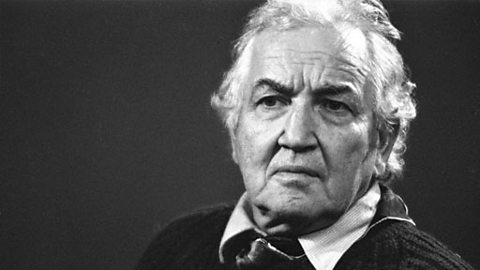
More Robert Graves
In Our Time - Robert Graves. audio
Melvyn Bragg and guests discuss the author of I, Claudius, who was also one of the finest poets of the twentieth century.

Meridian - Robert Graves Special
The life and work of English poet and novelist Robert Graves.

Intimations - Robert Graves. video
Graves reveals his influences and shares his views on religion, marriage and homosexuality. Archive programmes reflect the broadcast standards and attitudes of their time.
More on Anthology Two: Relationships
Find out more by working through a topic
- count12 of 12

- count1 of 12

- count2 of 12

- count3 of 12