Temperatures forecast to reach 20C in warmest day of the year so far

- Published
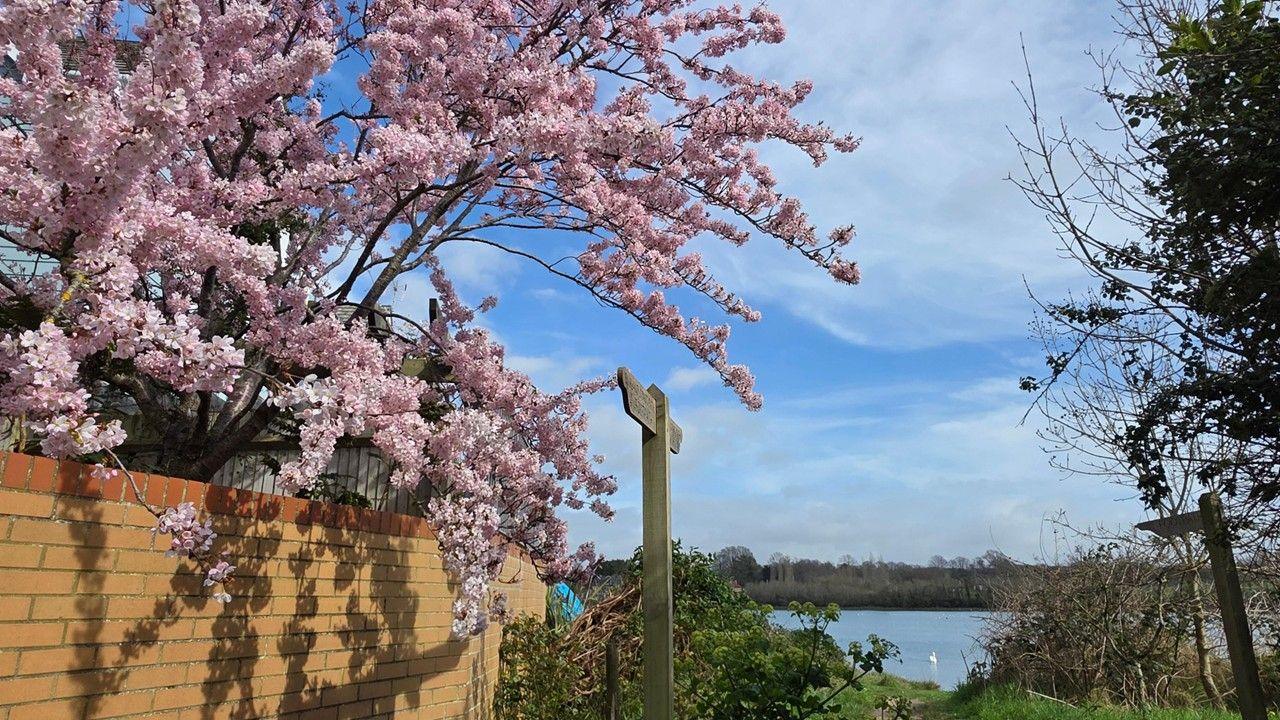
Temperatures in parts of the UK are set to rise above 20C on Wednesday, making it the warmest weather of the year so far.
Scotland saw its warmest day of the year so far on Tuesday with 16.1C recorded in Lossiemouth on the Moray coast.
The warm weather coincides with the spring equilux where day and night are the same length, marking the end of more darkness than light.
The weather will also be mostly dry with some sunshine for most areas.
Spring-like warmth
Warmer air from the Mediterranean will bring temperatures around seven or eight degrees above average on Wednesday.
Widely across England and Wales temperatures will get into the mid to high teens.
For Wales we're very likely to see the warmest day of the year so far with the temperature exceeding the 17.8C recorded at Porthmadog on 5 March.
There's a possibility somewhere in west or north-west Wales could see a temperature exceeding 20C for the first time this year.
That would surpass the UK's current highest temperature of the year so far of 19.2C - set in London earlier in March.
Southern and eastern coastal locations in England will be a few degrees lower as the air will be blowing over a relatively cooler sea surface.
Despite some warmth by day, be prepared for some fairly chilly and foggy nights later this week.

Temperatures could be more than 10 degrees above average in a few spots
The warmer weather comes in the same week as the start of astronomical spring - or the spring equinox - on Friday 20 March.
We've seen a rapid increase in daylight hours in recent weeks and from Wednesday our days will begin to get longer than our nights.
Temperatures will start to come down by a few degrees on Thursday and the rest of the week but still remain slightly above average for the time of year.
Foehn effect boosts temperatures
The warmest areas on Wednesday are to the west and north-west of Wales with temperatures boosted by the Foehn effect.
This effect is caused by air travelling over a mountain range - in this case Eyri and Bannau Brycheiniog- formerly known as Snowdonia and the Brecon Beacons.
Moisture in the air on the windward side of a mountain is forced to rise where it will cool and condenses, taking the moisture out of it.
The drier air then travels down the leeward side of the mountain where it warms.
And because it's drier and its thermal properties have changed, the temperature gets higher than it originally started as.
For example, with a south-easterly wind on Wednesday, the temperature in south-east Wales will be around 15C but to the west and north-west coasts, on the other side of the Welsh mountains, temperatures rose to 20C.
What and when is the spring equinox?
- Published1 day ago
How strong will the sunshine be?
This time of year - close to the spring equinox - the Sun moves higher in the sky. You might notice the Sun feeling stronger. With largely clear skies forecast, UV levels will rise to medium across England, Wales and eastern Scotland on Wednesday. Cloudier conditions will keep UV levels low elsewhere.
It is easy to get caught out in the spring months because, although temperatures aren't as high as later in the summer, ultraviolet (UV) levels in late March are actually just as strong as they are in September.
Whilst exposure to small amounts of UV radiation is essential to produce vitamin D, the World Health Organization warns "overexposure may result in acute and chronic health effects on the skin, eye and immune system".
Advice from the NHS, external is to "strike a balance between protecting yourself from the Sun and getting enough vitamin D from sunlight". This includes spending time in the shade between 11am and 3pm, and covering up with suitable clothing and sunglasses.
Keep an eye on the UV forecast on the BBC Weather app or website.

Sun protection is recommended by the World Health Organization once UV levels reach the medium category
Little rain in forecast
With high pressure extending across the UK, it is likely to stay dry for most of us for the rest of the week.
Some northern areas of the UK could see some cloud lingering with other areas also seeing some early morning mist and fog.
But for most - and especially across England and Wales - there is lots of sunshine in the forecast.
The drier weather is likely to last into the weekend and while the mornings could start a little cloudy and murky, there should still be a lot of sunshine developing.
You can stay across your local forecast here
- Published1 day ago
- Published4 days ago