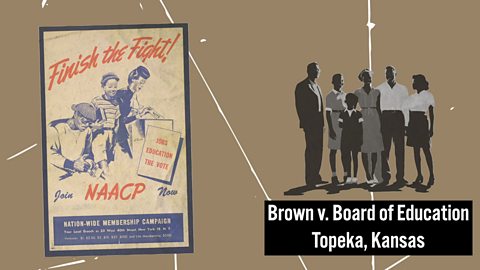
Through the 1950s and into the 60s, the civil rights movement in the USA became a powerful force for change.
It used non-violent protest to bring questions of racial justice into the national political debate.
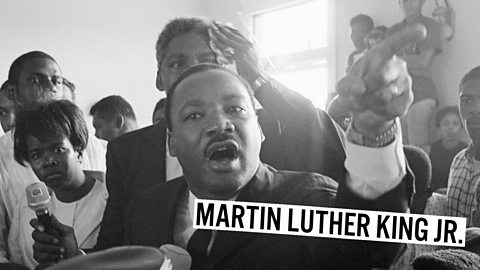
The movement was led by charismatic figures from church movements, such as Martin Luther King.
The protests were successful in overturning laws which enforced segregation in the Southern state – known as the Jim Crow laws.
But by 1965, half of all Black Americans lived in cities in the North and West of the U.S.
They were not subject to segregation by law. But poverty and institutional racism kept them trapped in inner city housing areas – the ‘ghettos’.
People were packed into cheap, sub-standard housing, living with overcrowding, bad schools, low wages, and unemployment,
Crime rates in the ghetto were high, and police brutality was common.
In the Los Angeles district of Watts in 1965, the population was 98% black, and the police force was 100% white.
When a white police officer pulled over a black youth for drunk driving one hot August night, tensions exploded and a scuffle escalated into a riot that lasted for 6 days and left 34 people dead.
When Martin Luther King went to Watts to try and spread a message of non-violence, he was heckled. Many black people in the North felt that their problems needed different solutions.
In the following years, further serious riots broke out in other cities – confirming the feeling in the North that a new approach was needed.
Different leaders gained influence…
Student leader Stokely Carmichael spoke of ‘Black Power’ -
“I’m not going to beg for anything I deserve. I’m going to take it… The only way we gonna stop them white men from whipping us is to take over.”
The Black Panther Party became popular in the late 1960s.
They set up their own social welfare programs in the ghettos, and believed violent resistance was justified in response to police brutality.
By the time Martin Luther King was assassinated in 1968, it seemed to many that the non-violent civil rights movement had died with him. The years of rioting had created a strong backlash in white society, against any further reforms. The civil rights movement no longer had one clear direction
Description
The 1950s and 1960s saw a growth in civil rights activism to secure rights for black Americans and fight prejudice and inequality. Important figures such as Martin Luther King Jnr, won popular support for the black American cause. By the end of the 1960s, though, impatience for change led to a more radical form of civil rights protest. Find out more in this video.
Now playing video 6 of 8