When Herbert Hoover won the Presidency in 1928, he was in a confident mood.
“Our people have more to eat, better things to wear, and better homes. Wages have increased, the cost of living has decreased. The job of every man and woman has been made more secure!”
His party, the Republicans, believed in a ‘laissez-faire’ policy – that governments should be as little involved as possible in how the country was run, and that business should be left unregulated…
And it had worked! Since World War I, the economy had been booming…
America’s new assembly lines meant that goods could be made more quickly, and more cheaply, than ever before. But by 1929, problems were starting to appear…
The rise in factories’ ability to make goods cheaply and quickly wasn’t matched by the public’s ability to keep buying.
Warehouses started filling with unsold goods. Falling sales meant falling profits. There was only one way that most companies could deal with this – by sacking workers.
Many of those finding themselves suddenly unemployed were in debt. In the boom years, people had been borrowing to buy new consumer goods, such as vacuum cleaners, radio sets, and cars.
And stock market trading had become a craze.
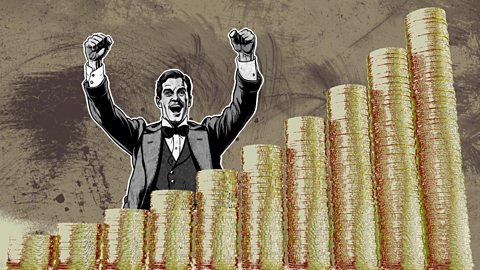
Buying and selling shares – often using borrowed money - became a ‘get rich quick’ scheme, which seemed too good to miss out on.
The entire economy was building up debt that couldn’t be paid off. In October 1929, some more experienced investors started selling off shares.
The drop in prices created a general panic, with everyone trying to sell at once. As the stock market crashed, the effects spread…
As banks ran out of money and collapsed, the financial system almost ground to a halt.
The impacts were felt everywhere – businesses went bankrupt, and people lost their homes.
Unemployment had been 1.5 million in 1929. By December 1932, 12 million people were out of work – and desperate
In what had been the richest nation on Earth, farmers couldn’t afford to harvest their crops, and it became a common sight to see people scavenging rotting food from rubbish dumps.
Description
The Wall Street stock market crash of 1929 led to a long-running economic depression in America. This video explores some of the major issues that led to the economic collapse.
Now playing video 3 of 8