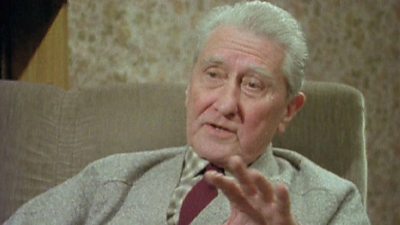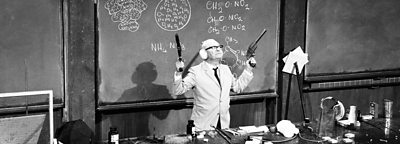
Image: Colonel D.B. Shaw from the University of Nottingham gives a lecture about explosives called 'Snap, Crackle and Bang' for Horizon in 1969.
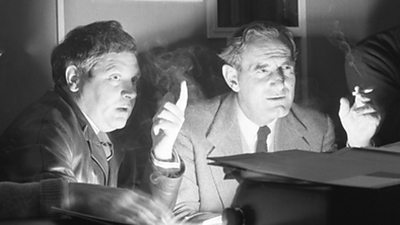
Horizon started in 1964 and over the last 60 years has formed the backbone of BBC science programming ever since. Producer Philip Daly wrote in the Radio Times that it aimed to "provide a platform from which some of the world's greatest scientists and philosophers can communicate their curiosity, observations, and reflections, and infuse into our common knowledge their changing views of the universe".
The first programme was dedicated to engineer and architect Buckminster Fuller. The second examined the use of pesticides in intensive farming and their long term effects on ecosystems, revealing an interest in environmental issues that has continued to this day.
Horizon has produced many controversial and influential programmes. In 1972 the programme Whales, Dolphins and Men led pet food manufacturers to stop using whale meat in their products and greatly increased public pressure to outlaw commercial whaling. A 1975 examination of the increased use of induced births led to an official investigation into the practice. In 1983 Horizon made the first television documentary about AIDS. In 1993 a film linking falling male fertility rates and oestrogen levels in pollutants, Assault on the Male, was shown at the White House.
Horizon was initially broadcast once a month on BBC Two, but within a year it became a weekly programme. Today, Horizon continues to cater for an audience who wants to know how scientific developments affect their everyday lives.
Find out more about Horizon
Horizon at 60
A celebration of the long-running science programme by Dr Tim Boon and Dr Jean-Baptiste Gouyon from The Science Museum.
The other side of Horizon
The science programmes that came before
Horizon 60 interviews
A sequence of interviews with the makers of Horizon over its 60 years.May anniversaries
Bread
1 May 1986