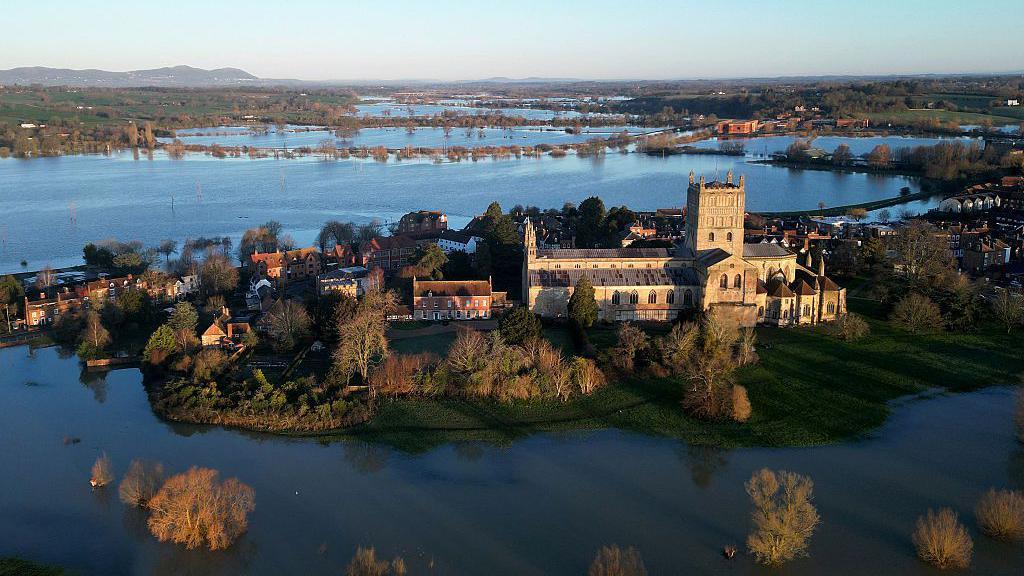
Temperatures exceed 19C on warmest day of year so far for parts of the UK

- Published
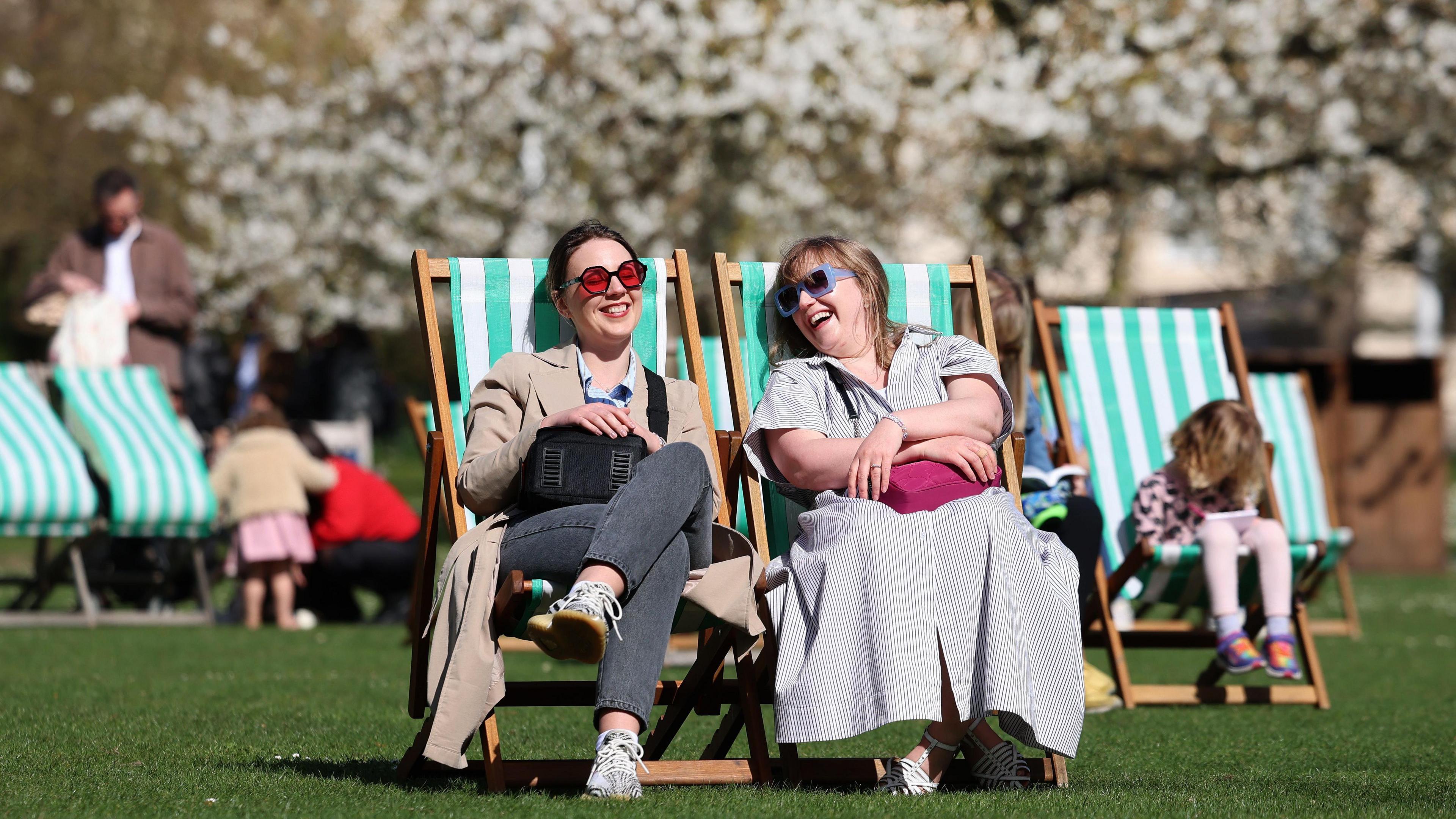
Thursday was the warmest day of 2026 so far with a temperature of 19.2C recorded by the Met Office at Northolt near Heathrow in west London.
This beats the 18.7C (65.7F) maximum reached in the last week of February at Kew Gardens in London.
Scotland also saw its warmest day, recording 15.9C in Charterhall in the Scottish Borders.
It has not been warm everywhere though with a weather front bringing cloud and rain to parts of Scotland and Northern Ireland.
Thursday's temperature at Banagher, Caugh Hill in Northern Ireland reached a mere 5.3C.
If you are lucky to have basked in the sun Friday will bring a dramatic change in the temperatures.

What a difference a day makes. The warmth will peak on Thursday
The weather front responsible for rain in Scotland and Northern Ireland on Thursday will be further south on Friday. There will be little rain in England and Wales but there will also be a lot of cloud.
As a result, temperatures in England and Wales will be much lower. Maximums will be nearer 8-11C, and perhaps 14C in the far south-east of England, depending on sunshine.
Scotland and Northern Ireland, by contrast, will have a much better day on Friday with lots of sunshine. Temperatures won't change much though because the air will be colder following a touch of frost overnight.
Temperatures will be higher across the UK this weekend as most places enjoy a dry weekend, at least until late on Sunday.
Tree pollen levels on the rise

Trees are bursting into colour in the recent warmer weather
The recent warm and sunny weather has suddenly brought a number of pollen producing trees into flower causing itchy eyes and a runny nose for many hayfever sufferers.
Prof Jonathan West, a plant pathologist and aerobiologist from Rothamsted Research institute, told the BBC the types of pollen in the air at the moment are from various trees – mainly Alder, Hazel and Cypress and also Yew and Elm.
"Recently, we have had a lot of pollen in the air because we had a long period of relatively cool, wet weather, which slowed down the development of flowers on those early flowering tree. This has been followed by some nice sunny and warm weather, suddenly advancing the flowering of certain trees so they released large amounts of pollen."
Rising temperatures caused by climate change mean that the pollen season is extending. The latest 'State of The Climate Report, external' published by the Met Office in 2025 revealed the flowering of hazel was almost 10 days earlier now than in the past.
The pollen forecast will be available on the BBC Weather app from Thursday 19 March.
Fiery sunsets and 'blood rain' as Saharan dust sweeps UK
- Published2 days ago
Experts predicted a severe pollen season in 2025. Here's more about pollen
- Published28 February 2025
Will it be warm again next week?
Northern and western parts of the UK will be in the firing line for more active weather fronts bringing spells of rain.
Southern and eastern areas look less wet due to a European high pressure area having more influence.
Between bands of rain there will be quieter weather which brings the risk of one or two chilly or foggy nights.
For much of the time winds will blow from the south or south-west. The warmest weather will be in south-east England, typically around 15C.
Early spring can be a very fickle time of year with wild swings of weather and temperatures. Recently studies have shown climate change is having a big influence on our weather during spring.
For the latest forecast where you are check online or the BBC Weather app. Keep an eye on the monthly outlook here.
- Published6 days ago

- Published27 February