Origins
When broadcasting to the West of England was established with BBC Wales (5WA) in Cardiff in 1923, the Western region was combined with Wales, but after campaigning by local councils and MPs, the West was granted its own service - the West of England Home Service - in 1937.
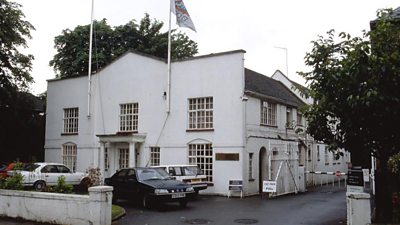
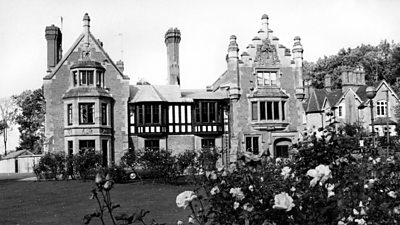
Bristol's Lord Mayor officially opened BBC Bristol's four studios at 23 Whiteladies Road on 18 September 1934. Each studio was designed for a different acoustic purpose: orchestral, drama, sound effects and "talking".
World War II
Bristol's role was transformed during World War II when the Corporation moved its major departments out of London - the BBC Symphony Orchestra, school and children's programmes, religion and variety teams - some 700 people - all headed West.
By 1940, six studios had been established at Broadcasting House on Whiteladies Road as the BBC eventually acquired the surrounding houses. The BBC also used other locations across the city for programme-making: Redland Park Hall, All Saints Hall, College Road, the Chapter House, Clifton Parish Hall and Co-operative Hall.
With the fall of France, Bristol came within bombing range of the Luftwaffe and so the BBC headed further west into Wales and underground to the Clifton Rocks Railway in Bristol. A transmitter, studio and control room - and an "ozoneator" to combat the smell of the river - were all concealed in the railway tunnel.
London was able to quickly switch to broadcasting in Bristol - sometimes mid-news bulletin - when the capital was under attack. It's thought that the German Air Force used BBC transmitters to guide bombers to their targets, so engineers switched transmitters to put them off course.
Television moves in, and the Natural History Unit is founded
After the war, the BBC in Bristol developed some pioneering radio programmes, like Any Questions, which was first broadcast on the West of England Home Service in 1948.
In 1945, Desmond Hawkins joined the BBC and began producing a long-running series, The Naturalist. He went on to found the Natural History Unit (NHU) and discovered broadcasting legend Johnny Morris. The NHU's highly-acclaimed Life on Earth series was aired on BBC Two in 1979. It took producer David Attenborough and his team three years to film and edit what was the unit's most ambitious project since its inception.
Regional news programme Points West began as a five-minute television news show in September 1957. The show was extended to 10 minutes and then to 20 in 1964. Other regional programmes were produced in Bristol too: like the popular Days Out with Glyn Richards and RPM with Andy Batten-Foster.
Fast forward to 1970 and the establishment of BBC Radio Bristol. The station's original line-up included broadcasting greats Kate Adie and Michael Buerk. In 1977 the General Programmes Unit (GPU) was set up in Bristol, which made primetime shows such as Antiques Roadshow and editions of Whicker's World.
Network Production Centre
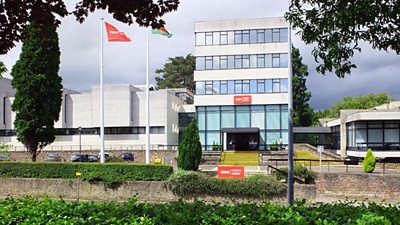
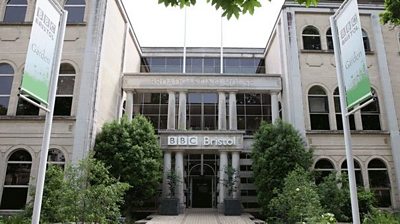
In 1984, as the BBC celebrated 50 years in Bristol, a new building was planned adjacent to the site where those four studios first opened in 1934. The Network Production Centre, built on the corner of Whiteladies Road and Belgrave Road, is now the gateway to all the BBC units based in Bristol.
Following the closure of BBC Pebble Mill, Bristol became the home of many long-running programmes including Countryfile and Gardener's World and Natural History Unit series such as Blue Planet II and the popular live Watches series (Spring/Autumn/Winterwatch). BBC Studios and the Natural History Unit moved to a new site at Bridgewater House in Bristol in 2022.
Buildings
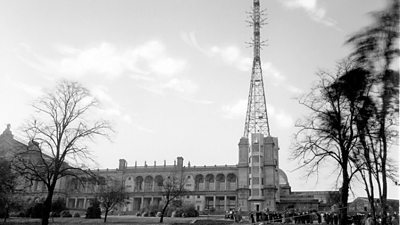
Alexandra Palace
The birthplace of television

Broadcasting House
The first purpose-built broadcast centre in the UK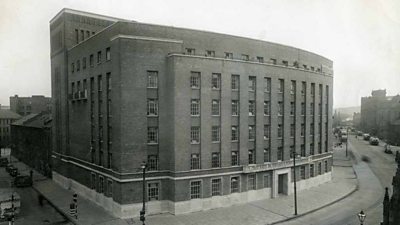
Broadcasting House, Belfast
BBC Northern Ireland's headquarters since 1941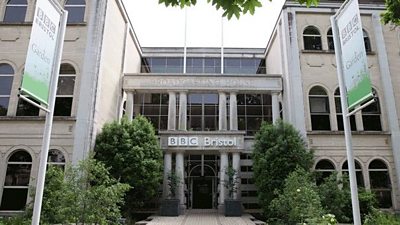
Broadcasting House, Bristol
Former home of the Natural History Unit