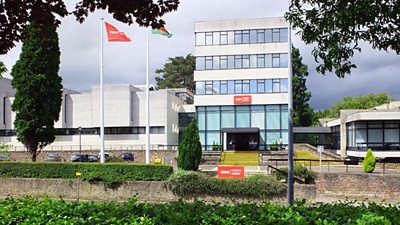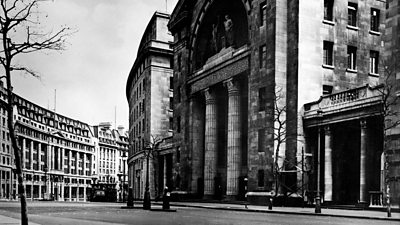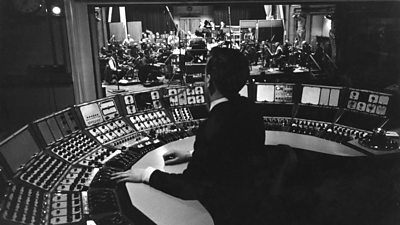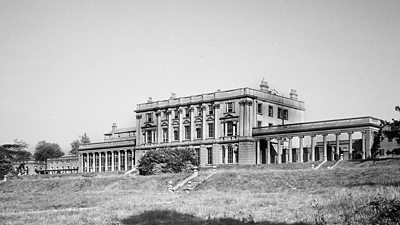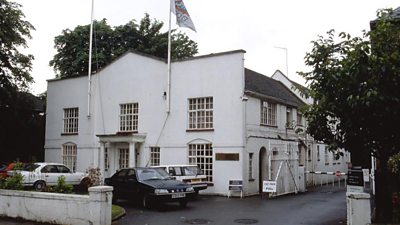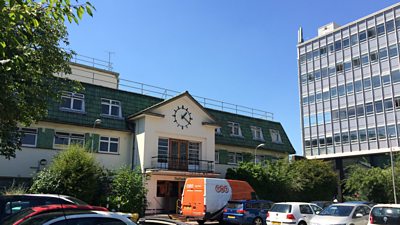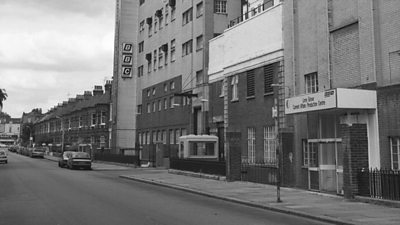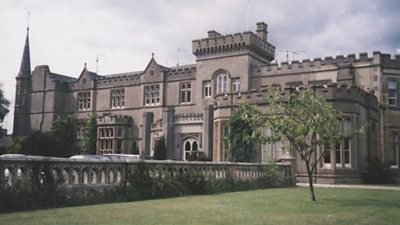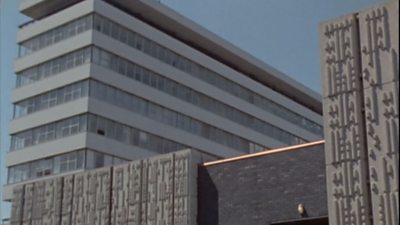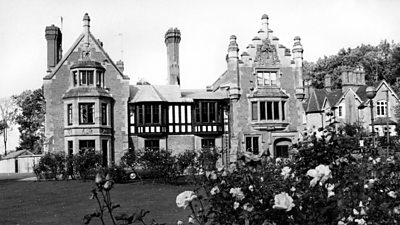
Wood Norton Hall in Worcestershire dates back to medieval times. Its past owners included Edward Holland (the local liberal MP), the Duc D'Aumale (of the Bourbon-Orleans family, fugitives of the French Revolution), and at one time the King of England.
In 1939, with war just months away, the BBC bought the site so that it could relocate its operations away from London and the other urban centres in the event of hostilities. A number of temporary buildings were quickly erected around the historic house to provide an emergency broadcasting centre.
A dozen studios were built, and by 1940 Wood Norton was one of the largest broadcasting centres in Europe with an average output of 1,300 programmes a week. For a while it was also a monitoring station. Linguists, many of them foreign nationals, were hired to listen in to broadcasts from Europe.
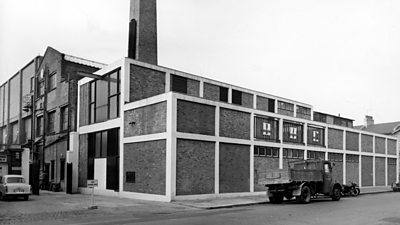
When the war was over, Wood Norton became the BBC's engineering training centre. Purpose-built facilities in the grounds are still used for technical training, through the house itself has since been sold.
Read more about the history of BBC engineering in Edward Pawley’s book, BBC Engineering 1922-1972.First published in 1972, BBC Publications ©1972. PDF version with thanks to Nick Cutmore and Philip Laven.
Buildings
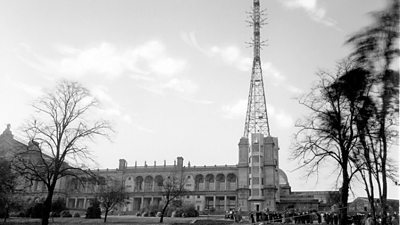
Alexandra Palace
The birthplace of television

Broadcasting House
The first purpose-built broadcast centre in the UK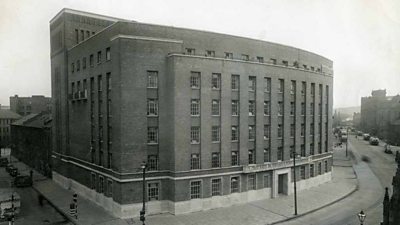
Broadcasting House, Belfast
BBC Northern Ireland's headquarters since 1941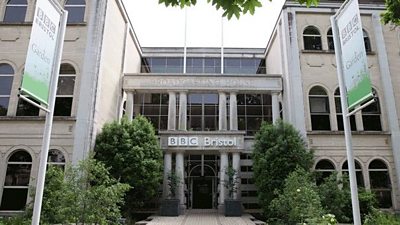
Broadcasting House, Bristol
Former home of the Natural History Unit