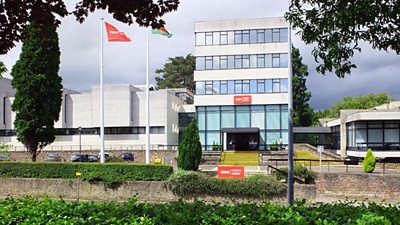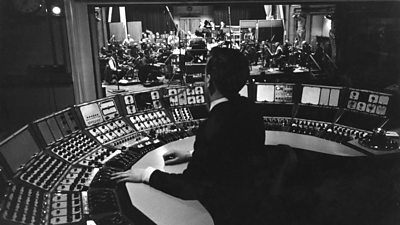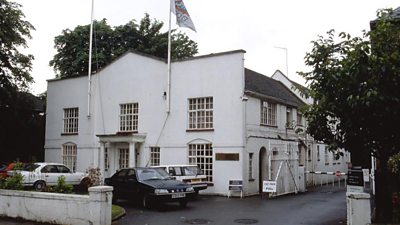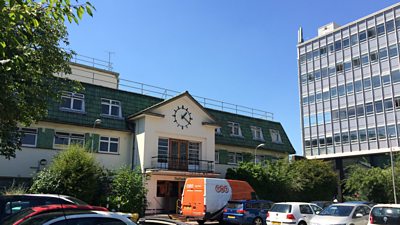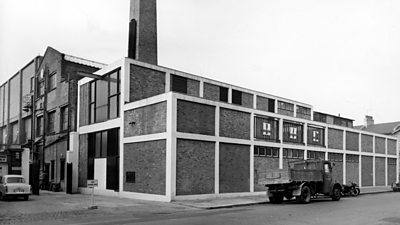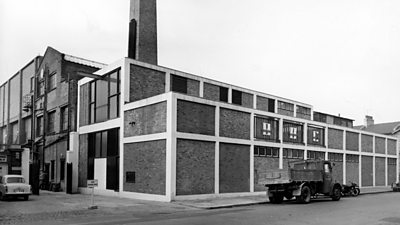
The Riverside Studios at Hammersmith, London started life as an iron foundry and had been converted into a film studio in 1933. The site, with its two large studio spaces was purchased by the BBC in 1954 from the Alliance Film Company, initially as a temporary measure while the equipment at the studios at Lime Grove was being upgraded.
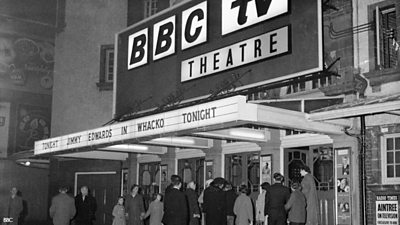
Amongst the first programmes made there was Hancock's Half Hour, as the show demanded a studio audience which Riverside could accommodate. A delay to the construction of Television Centre meant it remained remained a useful facility and it was officially opened by Queen Elizabeth, The Queen Mother in 1957.
During the 1950s and 60s it was the recording location for some famous programmes, including the science-fiction classic Quatermass and the Pit, early episodes of Doctor Who (including First Doctor's regeneration from William Hartnell to Patrick Troughton), and children's favourite Play School. The rooftop also provided a handy vantage point over the Thames for covering the Oxford-Cambridge Boat Race.
The whole complex was in regular use until the early 1970s when additional studios were completed at Television Centre. The BBC moved out in 1975, and a charitable trust formed by Hammersmith and Fulham Council took over. The site is currently undergoing redevelopment.
Further reading
- The BBC Riverside Television Studios: Some Aspects of Technical Planning and Equipment1954 monograph by BBC Research and Development
- Doctor Who: The Regeneration GameBBC Genome Blog by Andrew Martin
- The Riverside StoryHistory of the site from the new Riverside Studios redevelopment website
Buildings
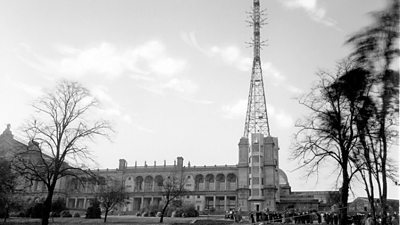
Alexandra Palace
The birthplace of television

Broadcasting House
The first purpose-built broadcast centre in the UK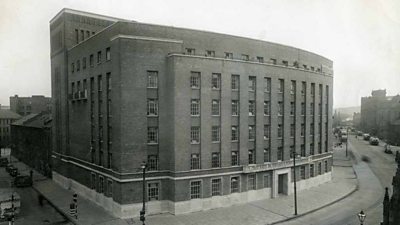
Broadcasting House, Belfast
BBC Northern Ireland's headquarters since 1941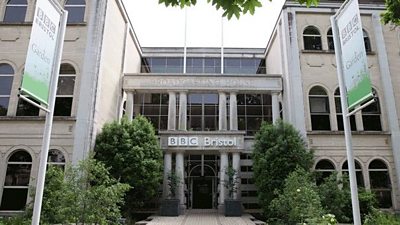
Broadcasting House, Bristol
Former home of the Natural History Unit