Accident Reporting and Investigation
This Safety Guideline describes how we manage, report and investigate accidents.

An accident is any unplanned event or circumstance that results in injury or ill-health. For the purposes of this Guideline, we also take it to mean any ‘near miss’ or dangerous occurrence that could have caused significant injury or ill-health. For the purposes of reporting and investigation, we also consider here security and fire safety incidents.
Immediate Actions
Most accidents are minor and need little explanation on how they should be managed. However, the following steps should be taken for serious accidents - the need, scope and depth of these steps will depend on circumstances:
Make safe
- Assess the situation – take a moment to take things in
- Emergency plans - if appropriate, get them started (e.g. premises evacuation)
- Make safe - before committing others to help, consider need to prevent further injury (e.g. power down ‘live’ equipment). Do them if you can, summon help if you can't.
First Aid / Medical Attention
- Summon First Aid – local arrangements apply, so make sure you know what these are (see First Aid in BBC Premises in Related Topics). Do not delay. Stay with the casualty until help arrives
- Within BBC premises - for Tier 1 sites (where there are security officers on site), contact the BBC Security Control Room 020 7765 1666 / 0161 836 1666. They can summon a First Aider and call the emergency services. Going through them, rather than dialling ‘999’ direct, enables them to co-ordinate support services such as Facilities Management, Security support, etc. For Tier 2 sites, please check on your safety notice board for your named first aider.
- On location / other premises (UK) - follow any locally agreed procedures, or if necessary, dial ‘999’ direct and be ready to describe the nature of the accident, the response required and your exact location
- On location (overseas) - follow locally agreed procedures / risk assessment. If remote from emergency services, instigate medevac procedures (see our ‘Medical Emergency Evacuation' in Related Topics)
- Privacy / security – take steps to protect personal privacy and to avoid others witnessing traumatic scenes. Unless there is clearly no risk of causing further injury, do not move injured persons.
Preserve the scene / witnesses
Once the area is safe and first aid is being given:
- Preserve the scene - stop anyone disturbing the area, place cordons if necessary
- Examine the location - note the condition, position and settings of any equipment or materials involved; take lots of photos
- Witnesses - note those who witnessed the accident, collecting contact details.
Communication
We need to inform others so they can co-ordinate a supportive response.
For a serious accident (including any ‘specified injury’ or ‘dangerous occurrence’ under RIDDOR), contact:
- Line Manager – the person in control of the activity should lead in the communication process
- BBC Safety – they can advise on actions, support any investigation and will carry out any necessary reporting to the HSE
- BBC Press Office – where the accident could attract media attention (e.g. it involved a celebrity)
- BBC Workplace – where BBC premises were damaged or left in a dangerous condition
- BBC Insurance – alert them to any likely claims against the BBC scheme.
For a death of any person on BBC business – in addition to that for ‘serious accident’, contact:
- The Police (UK) – if they are not already aware. This must be done by a Senior Manager
- BBC Human Resources (HR) – where this involves a member of staff, freelancers or contractors working to the BBC, HR will co-ordinate the contacting of the next-of-kin (NoK) – do not do this yourself, even if the NoK is known to you. HR maintains a list of HR Advisers who can be contacted 24/7.
- If overseas and the person who has died is a British citizen, contact the local British Embassy / Consular Office (they will advise on the process for repatriation). If the person is not a British citizen, contact the relevant Local Authorities (i.e. Police and/or local Embassy of the deceased individual).
Consider the need for psychological support for injured parties and witnesses (see also our TRiM and Mental Health guidelines in Related Topics).
Third parties (i.e. contractors, service partners, independent production companies) who have accidents when fulfilling work on BBC projects/contracts, are required to carry out their own internal communication and reporting procedures – however, contract terms may necessitate them reporting certain types of accidents to their BBC Contract Mangers.
Accident Reporting
Once the immediate actions are completed, we need to have a record of what happened and why. This is to ensure that not only are we in a position to learn from the experience, but also to provide a record against which any claims by, or against, the BBC can be settled or contested in a timely manner.
What needs reporting
The following categories of work-related accidents need reporting. Sensible judgment is required in interpreting these categories – but if in doubt, either report it or speak with your Safety Adviser.
- Injury accident – excepting where the injury is so ‘minor‘ that it neither requires first aid attention (now, or at a later date), nor does it affect the person’s ability to continue with their work (e.g. small scratch / bruise)
- Near miss / dangerous occurrence – any event or situation which, although it didn’t result in causing any of the other categories listed here, clearly could have done (e.g. scaffold tower topple in high winds with no-one nearby)
- Ill-health (physical and psychological) – excepting where the ill-health does not requires medical attention, nor does it require time off work, and nor is it work-related (e.g. cold, flu)
- Damage to property / environment – excepting where it does not warrant repair / replacement costs (e.g. damage to camera tripod legs when dropped)
- Security incident – excepting where it is so ‘minor’ in nature that it does not present a cause for concern, either at the time or for the future if ignored (e.g. one-off obscenity shouted our way by a member of the public)
- Fire incident – all unplanned fire-related incidents at BBC premises or on location should be reported.
How to report
- All of the accidents listed above must be reported using the BBC’s online reporting process. Our Video Guide explains the process
- Injury accidents - reporting should be carried out by the injured party (IP), but if this isn’t possible, either because they are receiving treatment or they do not have a BBC log-in (e.g. freelancer, member of the public), then the accident report must be completed by the responsible manager (or someone they nominate)
- Near miss / property damage - reporting should be carried out by a witness, or if there were none, by the responsible manager (or someone they nominate)
- BBC Accident form (Word) – this can be used to collect information (e.g. when away from the BBC network), but the information must still be reported using the online process. This form asks for the information needed to complete the online process. Also available in Welsh
- Data protection – when describing ‘what happened’, please note that this information is included in the automatic notification email. To protect the identities of those involved, refer to the injured person as simply the “IP” and to any others by their job role e.g. “the cameraman then called…”
- Disclosure – in any civil proceedings against the BBC, accident and investigation records are included in the documents to be disclosed, so it is important that the information provided is clear, accurate and free from unsubstantiated opinions.
Once the online accident report is submitted, the following happens:
- An accident record is created with a unique and sequential reference number (i.e. IN00001/1)
- An email is automatically sent to a nominated manager / co-ordinator within the business, to BBC Safety, BBC Insurance and BBC Workplace
- The nominated manager either reviews the online record themselves or allocates it to another to review - it can be edited until ‘signed off’
- Only those who have been allocated the record can edit and sign-off an accident report.
- If the IP is not a manager and they need to edit the record, they can be given access by their manager or Safety Adviser through the 'Allocate' feature
- As part of the sign-off process, the manager need check that it is a true and accurate record and that all possible learning points have been identified. They need also decide if a more detailed accident investigation is required (see below) – the reporting process suggests a level of investigation during the sign-off process.
When / timescales
- An accident should be reported into the online process within 72hours of it occurring – as the record can be edited subsequently, you do not have to wait until you have all of the information before reporting it. Prompt reporting enables BBC Safety to support you in the investigation and learnings.
- The accident report should be reviewed and signed-off within 5 days of it being reported
- If a more detailed investigation is required, open the investigation tab and refer to this in the “What happened” section
- Accident records are kept for at least 6 years from the date of the accident or from the date of diagnosis / reporting of cases of ill-health.
Accident Investigation
Accidents happen. All have causes, some immediate and obvious (I fell down the steps), some underlying and less obvious (I was dazzled by spotlights as I left the stage, the step edges weren't clearly visible). All accidents should have some degree of investigation to them, answering questions not only about what went wrong, but also why. Some will require little more than a line or two of explanation within the 'what happened?' section, but the more complex / serious ones are likely to require a formal report following a location visit, collection of witness statements and perhaps calling on expert opinion.
Responsibilities
- Accident investigation is a line management responsibility, though they may delegate the task to others. The Investigator should be the central point of contact
- Trade Union Safety Representatives have the right to carry out their own investigations into workplace accidents – line managers must support them in this role
- BBC Workplace will typically lead on investigations where premises issues are the principal cause
- BBC Safety will support the investigation process, including leading in any reporting to and communication with enforcement authorities
- BBC Safety will collate and review the findings from accident investigation and feed these into our safety guidelines and processes.
The Process
No two accident investigations are alike, but the following simple steps may help you plan it. Don’t delay in getting going – information becomes harder to find, people move on and their memory of events can fade.
- Gather information – the first step is to collect relevant documents, including risk assessments, witness statements, photographs, film footage, recordings, test certificates, training records, etc. - basically anything that lets you know what the situation was in the moments before the accident occurred (see Accident Investigation Tips in Useful Documents). Once you’ve got a good idea of what you think happened, speak to those who were there, listening carefully to their account of what happened but also able to question them where you have gaps in your knowledge. You can conduct this as a group discussion, but if you have any concerns about witness statements, you should question them individually
- Analyse – at some point, you’ll need to stop gathering information and think about causes. To get this right, you need to be objective and unbiased. Causes can be split down into immediate ones (what actually caused the harm / damage); underlying causes (unsafe acts or conditions that led up to the accident); and root causes (which may at first appear remote from the accident but contributed to it, for example, lack of suitable training, work pressures, etc.)
- Identify risk control measures – these should flow from your analysis, and should address not just immediate causes, but underlying and root ones too. Any recommendations for improvement should be practical and achievable; woolly statements like ‘take more care in future’ are unhelpful. To be effective, recommendations need to be allocated to a particular manager or department. Once complete, the investigation report should be attached to the incident record.
- Action plan and implementation – recommendations which aren't quick fixes should find their way into departmental safety action plans, with realistic timescales given. This should ensure report findings are both communicated and their implementation is tracked.
Division Specific Issues
- Incorporating Radio OB MS M026-09 Safety Incident Reporting.
How to create an Incident on Safety Hub
Useful documents
BBC Accident and Incident Form (Blank)[BBC network only] BBC Accident Investigation support form for team leaders[BBC network only] Accident Investigation Tips[BBC network only]
Recommended links
- BBC Safety - Find my Safety Adviser[BBC network only]
- BBC Corporate Security & Investigations[BBC network only]
- HR - Getting HR Support[BBC network only]
- HR - BBC Accident Benefit Scheme[BBC network only]
- Supplementary Accident Benefit Scheme[BBC network only]
- BBC Workplace - How to contact the Service Centre[BBC network only]
- BBC Insurance – Motor vehicle accident advice[BBC network only]
Managing Incidents / Accidents topics

Accident Reporting and Investigation
This Safety Guideline describes how we manage, report and investigate accidents.
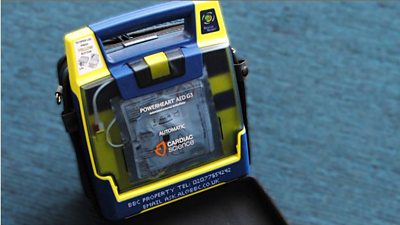
Automatic External Defibrillators
Information on using an Automatic External Defibrillator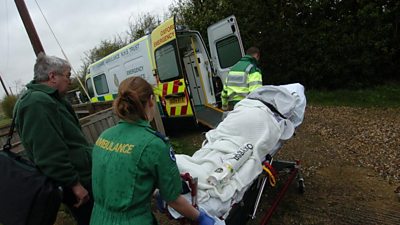
First Aid and Welfare on Location
A guide to provision of first aid and welfare facilities when working on location, away from base.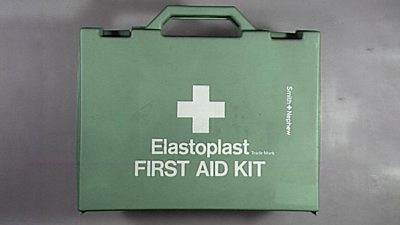
First Aid in BBC Premises
This page supplements the guidance to first aid on productions. It provides arrangements for contacting ambulances and the National Central Control Room (NCCR).