Self-Op Shooting
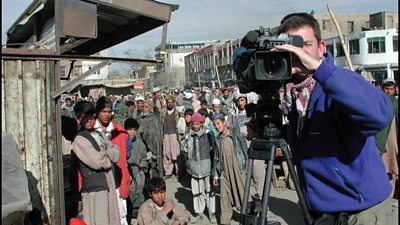
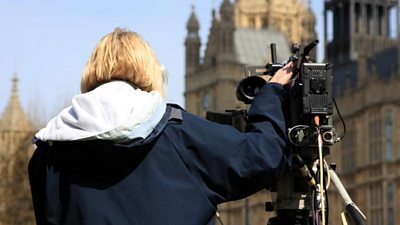
Self Operating (self-op) may involve a person working on their own (lone-op) or in a small team.
Updated: 22 March 2024
Info: Please note
Please note
This guidance is not appropriate for assignments in Hostile Environments.
Who watches your back when you are on your own....?
- If working on their own, then guidance on lone working should be followed in addition to that for self-operated filming. The self-op shoot can be planned or unplanned and this guidance should support you for both eventualities.
- Always complete a risk assessment for lone working and self op shoots, taking this guidance into account.
Is self-op or lone-op appropriate?
- The decision whether to shoot traditionally or self-op should be largely influenced by editorial/creative factors.
- The decision to employ lone-op however, involves additional risks.
Lone-op will not normally be appropriate in the following circumstances:
- Night filming
- Remote locations and those without mobile reception (see Incident Lessons under Useful Documents, r/h margin)
- High crime areas
- Where there is high risk of public disorder
- Covert filming (depending on risk, support should be close by).
Lone-op may also not be appropriate in the following circumstances:
- Sensitive stories
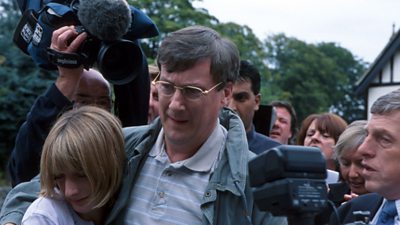
- Door-stepping
- Filming in private homes
- Investigative work
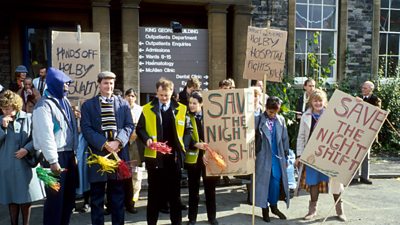
- Public demonstrations
- Situations requiring long drives during or at the end of the working day
- Handheld coverage of actuality events where you will be unable to remain fully aware of your surroundings (e.g. because of a need to use both headphones; need to use optical viewfinder).
What Can Go Wrong?
- Inexperienced staff are more vulnerable.
- Potential for excessively long working hours.
- Driving combined with long working hours.
- Vulnerable to crime and violence (depending on story/location/time).
- Not enough people to carry heavy or bulky kit.
- Camera operator being unaware of anything not in shot.
- Becoming emotionally involved in distressing stories or situations.
Legal/BBC Requirements
General Requirements
- The BBC permits the use of generic risk assessments avoiding the requirement to do a specific risk assessment for routine and familiar activities.
- It is the commissioners’ responsibility to make sure that whoever they commission is competent to undertake the assignment. Using this guidance they should discuss with the production team how risks will be managed.
- It is the production team’s responsibility to ensure there are suitable safety arrangements in place. This should involve:
- checking that there are sufficient resources (including time and personnel) to enable the control measures described to be put in place
- discussing concerns raised and taking appropriate action to alleviate the risks
- It is every individual’s responsibility to ensure they are competent to undertake the work and to raise any concerns they have about the safety arrangements proposed, how well these are implemented, and how they will work in practice.
Control Measures
Do
- Self-deployment - Health and safety responsibilities remain the same on all deployments. A responsible manager (or in news the newsdesk) should always know where you are and what you are doing. Therefore a self-deployment should not be treated differently to any other deployment. You should ALWAYS let your responsible manager know your location and what you are doing as soon as possible. This will allow your self-deployment to be recorded and a risk assessment to be completed.
- Locations - Different locations have different hazards. Research the location before you set off if possible. If necessary do a recce. Decide what equipment and resources are needed, decide if shoot needs more than one person (see above).
- Training - Ensure training and experience is relevant to the production/shoot. Check/record details.
- Working Hours - Schedule enough time for the job to avoid excessively long working days and to allow time for rest and meal breaks. A break of at least 11 hours should be scheduled between the end of one working day and the beginning of the next.
- Driving - Plan the journey. Park close to location preferably somewhere secure and well lit. Use a car suitable for the load and location preferably with a low lip to the boot.
- Driving Hours - Avoid driving after working for 12 hours or more or after 11 hours if your driving time exceeds 4 hours on that day. Take a 15 minute break after 2 hours. If journey time is more than 2 hours share the driving. Consider need for overnights especially if working lone-op. Be mindful of the need to manage working time (11hr break see above), driving to/from locations that aren’t your normal place of work may be considered as working time for that purpose.
- Public Transport - Consider whether taking public transport with kit is appropriate in terms of carrying the weight, and risk of theft or damage. If on public transport make sure you can get back from the shoot in the event of a late finish.
- Communication – Ensure you have appropriate means of communication and raising the alarm, e.g. mobile phone, alert device, tracking device. Tell people where you are going, what you are doing and who you are seeing and arrange a call-in procedure for arrival and completion of the shoot. Make sure contacts will work in case of emergencies and ”out-of-hours”.
- Security - Consider security when planning the location – public places, such as cafes, may be safer than private homes. Consider the nature of the story, crime rate in area, time of filming, likelihood of public being present/absent, possible sources of trouble or disorder.
- Equipment - Reduce weight. Take only the equipment you need. For lone-op use a specialist multipurpose rucksack, pack equipment in wheeled cases or use trolleys.
- Lighting - Use natural or available light, if you can’t then use battery rather than mains lighting, consider LED lighting. Use a UV filtering gel on any HMI lights. If outside then mains equipment must be suitable for external use.
- Distressing Subject Material - Ensure you have someone to talk to either during or after the shoot if you are covering distressing stories and agree arrangements for someone from production team to ‘keep an eye on you’. Ensure arrangements include access to ‘professional’ back-up e.g. counselling services or speaking with a mental health first aider/trauma support person.
- Contingency planning – As part of the risk assessment, consider what could go wrong (what if) and ensure back up plans are in place with clear lines of communication. Ensure all key contact details are known and shared.
- Facebook Live - the way we gather footage is changing. BBC Radio and TV reporters often find themselves deployed to record for social media and undertake Facebook Live when out and about, as well as doing their day job. If you’re not used to recording this kind of images then our top tips should help you plan what you’re going to do safely (see Useful Documents).
Don't:
- Have a long drive home after long working hours.
- Track backwards when working alone.
- Film whilst walking across roads, cycle paths or busy footpaths unless accompanied and an on the spot assessment deems it safe.
- Use the optical viewfinder anywhere you can collide with people or moving objects.
- Put yourself in danger if someone tries to take your kit – put your safety first.
- Have valuables on display about your person or in your car.
Division Specific Issues
- No division specific issues.
FAQs/Did You Know?
- This guidance has been developed jointly with Directors UK and with independent production safety advisers and has been agreed with The Production Safety Group.
Useful documents
Recording on your digital device and using Facebook LiveUpdated September 2017 Slip when lone working - Incident Lessons[Gateway]
Recommended links
Personal security topics
Security (Personal)
Measures you can take to help protect yourself
Security (on Location)
Advice for maintaining security on productions
Covert Filming
A guide to a genre of programmes which involve investigative journalism, surreptitious and covert filming or recording, creating potential personal security risks.
Courts of Law
A guide to working in, outside or, around courts following a news story.