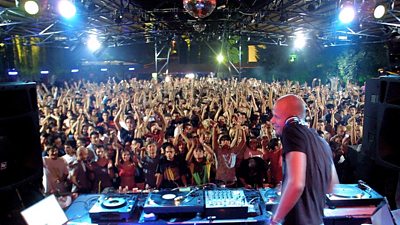
Strobe Lighting
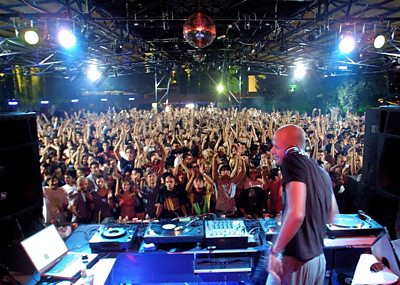
Safety Guideline to strobe lighting used as a visual effect for entertainment performances.
Updated: 23 February 2026
What Can Go Wrong?
- When using stroboscopic lighting effects, a key concern must be safety.
- A proportion of people with photo-sensitive epilepsy may be affected by strobe lighting, and the effect may also produce undesirable sensations amongst the general population if used without due regard.
- Certain people with epilepsy and photosensitivity may suffer a seizure if exposed to flashing or strobe lighting
- Disturbed vision leading to trips or falls.
Legal/BBC Requirements
- There are no specific legal requirements to draw to your attention; you must still apply the control measures that are relevant to your activity.
Control Measures
General Controls
- Where it is not practical to avoid using strobe lighting, minimise the risk of inducing photosensitive epileptic seizures by:
- Only competent persons should be allowed to set up and operate stroboscopic lights.
- Keep the flash rate at/or below 4 flashes per second
- All staff, crew and freelancers must be warned prior to the use of stroboscopic lights that they are to be included in the programme/event.
- Staff, crew or freelancers who are concerned about being present during the use of these effects must be allowed to absent themselves from the area whilst they are in use.
- Where necessary audiences and viewers must be informed, in advance, when there is a risk of flickering light or high contrast image changes precipitating a seizure, see the guidance in Editorial Policy.
- The floor manager, senior producer or warm up artist must remind the audience before the start of the show.
- Warnings should be posted at the Studio entrance doors “WARNING: Strobe lights are used during this performance”
- Where more than one strobe light is used, the flashes must be synchronised.
- Use bespoke controllers
- Keep light intensity as low as practical.
- Maximise distance between lighting source and those present – mount the strobe lights as high above head height as possible.
- Where possible, the lights should be bounced off walls and ceilings or diffused by other means so that glare is reduced.
- They should not be used in corridors or on stairs.
- Continuous operation of strobe lighting for long periods should be avoided.
- Stepping onto or off of platforms or walking up or down steps and stairs should be kept to an absolute minimum whilst the strobing effect is taking place.
Division Specific Issues
- No division specific issues.
FAQs/Did You Know?
- A strobe is a device giving a fast series of very short intense light flashes. These pulses can be achieved by either mechanical or electrical means. The light pulses can have the effect of making action appear intermittent, or of freezing movement altogether, by varying the frequency (speed) of the flashes.
- Strobe lighting used in the entertainment industry is usually produced either electrically by using a special strobe lamps (normally Xenon filled flash tube), or mechanically using metal shutters in front of a lamp (normally used on moving lights).
- Many people think that everybody with epilepsy is photosensitive but in fact, only 5 in 100 people with epilepsy actually are photosensitive as well. Photosensitive epilepsy usually begins before the age of 20 years, although it is most common between the ages of 7 and 19 years and tends to affect girls more than boys.
Recommended links
- Harding Test The original online Harding Testing service for the broadcast industry
- Techref.infoOnline resource for technicians and operators within the theatre, TV, and entertainment industries.
Skin and eyesight risk topics
CBRN and Industrial Spills
A guide to chemical, biological and radiation related hazards.
Display Screen Equipment (DSE)
A safety guide to various types of workstation and how to address any health issues.
Laser Light Effects
Guidance to using laser on productions
Non-Ionising Radiation
An overview of the risks from exposures to non-ionising radiation, including UV, microwaves and electro-magnetic fields (EMF).