Fires - Buildings, Bush and Wild fires
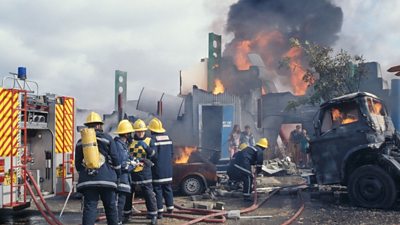
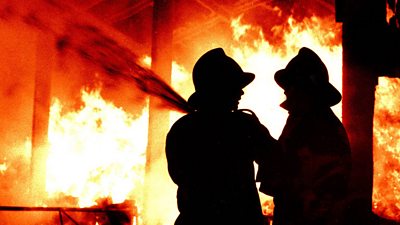
A guide to deployments of journalists and crew to large building fires and bushfires.
Updated: 20 March 2024
Journalists and/or crew being deployed to such incidents will be required to take instructions from the emergency services in attendance i.e. the police, fire brigade, ambulance service, and they should be the first point of contact for safety arrangements at the scene.
What Can Go Wrong?
- Burns
- Injuries from being struck by falling debris and falling objects
- Unsafe structures
- Smoke and dust inhalation
- Exposure to chemicals
- Emergency Vehicle movements
- Crush from large or sudden crowd movements
- Asbestos
- Noise and explosion
Legal/BBC Requirements
- Secure the fire risk assessment for the building where possible.
Control Measures
General Controls
- Approach with caution if first on the scene and park safely at incident site. Position vehicle so it can be moved at short notice and does not obstruct emergency vehicles.
- Contact the Incident Control if available to get information on hazards at site.
- Select position upwind of fire / smoke.
- Position yourself to allow easy evacuation if needed. Agree an evacuation strategy with your team and have primary and secondary assembly points identified.
- Keep up to date with developing incident and be ready to evacuate if conditions change.
- Avoid self-deploying to these sort of events without proper permission from base.
- Ensure good communications back with base.
- Cordons set up by emergency services must be respected.
- Wear natural fibres for fire resistance. Cotton (including denim) and wool are best. Avoid gortex jackets and fleeces.
- Avoid breathing in smoke and dust.
- Use an FFP3 rated dust mask (available from Safety Equipment Stores) to get out of any area which becomes engulfed by smoke (this is not to enable longer stays in a smoky area – only to escape).
- If an incident develops, follow instructions from emergency services but also pay attention to crowd movement and any developing situation that may not be known to them.
- Position away from loud noises and consider use of hearing protection.
- Covering these types of events can be quite traumatic. If you’re troubled by anything that you experienced or saw then you can contact the EAP Programme
Building Fires
- Avoid standing directly below fire / incident or immediately down wind. Particularly in a tall building fire where windows and other debris can fall around the site.
- If there is a concern over asbestos - shower and change clothes without shaking them out.
- All contaminated clothing should be bagged (and sealed) and either disposed of as asbestos waste or sent to specialist laundry.
- If it is a commercial or industrial site be conscious there may be chemicals and other toxic substances in the fire. Cyanide has been a problem in previous tower block fires.
Bush and Wild fires
- Bush and Wild fires are often made up of multiples fires and can be very unpredictable.
- You must make contact with emergency services and follow their instructions. Do not get close to the fire if it is unsafe.
- Wind directions can change quickly so make sure you keep up to date with weather forecasts.
- Ensure you have good comms in place and somebody knows where you are at all times
What to do if you get caught in a Bush or Wild fire while in the car:
- If you can, U-turn to safety and leave the area
- Do not get out and run - stay in the vehicle
- Park in a large clear area, away from trees and long grass
- Turn on headlights and hazards lights
- Close windows and vents. Get below window level
- Cover exposed skin with a dry woollen blanket
- Wear dry, natural fibre clothing
- When the fire has passed, get out of the car
What to do if you get caught in a Bush or Wild fire while outdoors:
- See refuge behind a rocky outcrop or high wall, in cave, gully or large animal burrow, in a large clear area away from trees and grass or in large dam or lake
- Avoid slopes and hill tops - avoid being above a fire
- Do not seek refuge in above ground tanks or above ground pools
- Cover exposed skin with dry natural fibre clothing.
Division Specific Issues
- No division specific issues.
FAQs/Did You Know?
- Special hazards include explosives, pyrotechnics, fire effects and practical flame and must be overseen by competent persons or preferred contractors.
Useful Documents
Useful Links
Dangerous deployment topics
Disaster Coverage
A guide to covering disasters.
Disaster Coverage - Health Aspects
A guide to health risks when visiting areas subject to natural or man-made disasters.
Earthquakes
A guide to working in areas affected by earthquakes.
Fires - Buildings and Bushfires
A guide to deployments of journalists and crew to large building fires and bushfires.