Interactive Filming and Visualisation
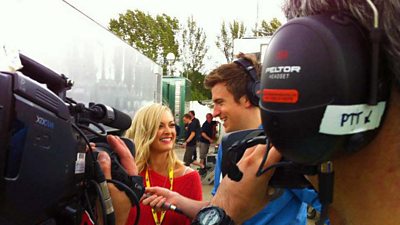
A Safety Guideline to the main risks associated with simple filming shoots, typically associated with capturing content for web streaming or ‘red button’ purposes.
Updated: 2 December 2024
The guidance is principally aimed at those who work in Radio who need to carry out such 'interactive filming' or 'visualisation'.
What Can Go Wrong?
- Use of staff inexperienced in assessing and managing the risks created during normal filming activities.
- Electric shock, burns, injury & fire resulting from poorly maintained or incorrectly operated equipment.
- Slip, trip, fall incidents from kit left lying about and poor cable management.
- Musculoskeletal (upper body) injury, from poor manual handling technique whilst moving or transporting equipment/kit about.
Legal/BBC Requirements
- When hiring lights, it is mandatory to use a pre vetted contractor in the UK. See BBC Pre Vetted List.
- Only staff or contractors who have watched the Electrical Safety Academy Film and attended the BBC Academy Location Lighting 1 day course, may use power up to 2kW (this would normally be a three lamp lighting kit or similar).
- Lighting above 2kW but less than 6kW should be organised by a trained and experienced lighting cameraperson.
- Over 6kW, a contractor from the BBC’s vetted list must be used for wet or dry hire.
- A designated ‘Senior Responsible Person’ must be appointed to take responsibility for any mains powered equipment and must ensure that the equipment is not left unattended when powered-up.
Control Measures
Competent staff / contractors
- If you are using a third party Independent company to undertake this filming, then ensure they have been Health and Safety vetted prior to using them. A questionnaire for H&S Vetting of Independents is available. Contact BBC Safety Advice Line for advice.
- The Indie must be able to demonstrate that the staff employed to carry out the filming activities are competent to do so.
- The Independent must have provided the BBC Production team with a risk assessment covering the activities they have been contracted to undertake.
Emergencies
- Ensure equipment is EET (formerly PAT) tested and maintained in line with manufacturers recommendations to avoid emergencies like electric shock, burns, injury and fire, resulting from poorly maintained equipment.
- BBC Production to ensure staff, contributors and guests are made aware of the building’s emergency exits and fire evacuation procedures and assembly points.
- If possible, find out in advance, if any of your staff, guests or contributors may require any assistance evacuating the premises, in an emergency.
- If assistance is required, then you will need to discuss and agree with the individual, what help is needed and document a personal emergency evacuation plan (PEEP) for them.
Slip, trip, falls
- Undertake regular safety inspections and monitoring to remove hazards such as kit left lying about and to check cable management.
- BBC Production to make sure that all emergency exits and fire lanes are not blocked /obstructed in any way, by cables or equipment.
- All equipment cases will be stored carefully away from the work area. BBC Productions will ensure that staff/ contractors keep the work area clear and tidy.
- All cables will be routed around the work area to prevent trip hazards.
- Where cables are required to cross the work area, they must be tapped down, matted or flown.
- Low level lighting, high contrast lighting and or glare can cause staff, contributors or guests to bump into or trip over equipment in the working area.
- Everyone present must be advised of potential trip hazards before work commences.
- Lighting tripods must be located in areas where legs will not protrude into walkways. If necessary, a white tape area must be marked out around the tripod, to warm approaching people of the trip hazard.
- Always ensure that a single tripod leg faces forward (not a pair) so that should the tripod be knocked over, it will fall to the side; not directly forwards.
- Ensure staff employ appropriate manual handling technique whilst moving or transporting equipment/kit about to avoid Musculoskeletal (upper body) injury. Read topic on Manual Handling.
Communication of roles & responsibilities
- Lack of communication between parties involved, can lead to misunderstandings, resulting in injury.
- The BBC Producer will ensure all parties are informed of the role they are expected to perform.
- The BBC Producer will liaise between contractors, performers and BBC Teams, to ensure clear lines of communication.
- If work is expected to be carried out over many hours, the crews will be allowed to take sufficient rest break. Read the topic Tiredness & Fatigue Recommended and the BBC Scheduling Guidelines.
Division Specific Issues
- No division specific issues.
FAQs/Did You Know?
- BS7909 - Code of practice for temporary electrical systems for entertainment and related purposes, sets the standards to be met when using temporary mains power, which the BBC has agreed to follow and adhere to.
Useful documents
Independent Productions - Safety Vetting Form (BBC) BBC Low Energy Lighting Guide for Productions
Recommended links
- Lighting Hire Pre-vetted List[BBC network only]
- Leave, Absence and Flexible Working Corporate Policy[BBC network only]
Personal security topics
Security (Personal)
Measures you can take to help protect yourself
Security (on Location)
Advice for maintaining security on productions
Covert Filming
A guide to a genre of programmes which involve investigative journalism, surreptitious and covert filming or recording, creating potential personal security risks.
Courts of Law
A guide to working in, outside or, around courts following a news story.