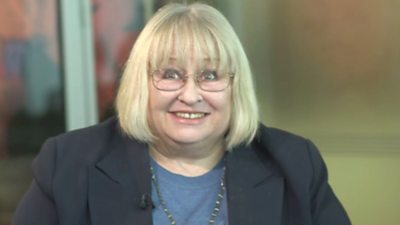
David Dugan joined Horizon in 1976 as a researcher, having only contributed science articles to the national press before. He heard about his appointment to the programme by what today would be considered antiquated means – telegram! David didn’t own a telephone, not so uncommon in 1976, and there were no emails or internet.
Once in London David started working with some of Horizon’s most established film makers, and soon learnt how important storytelling was to a successful Horizon, not just immersing people in facts and figures.
David was always keen to dispel myths, and in one such programme, The Mould, The Myth, and The Microbe, he was keen to establish the truth behind the origins of the penicillin discovery, at a time when there was much debate about the decreasing effectiveness of antibiotics.
For David, Horizon is a way of thinking about the world, which still remains with him today. The title of the strand is significant too, says David, literally providing an open, uncluttered view of things to come. As a viewer, you might not fully understand all the jargon of a highly specialised subject, but you would come away with a sense of going on a journey through the subject itself, and onto a higher level of comprehension.
Interviews

Peter Goodchild
After having trained in studio direction Peter Goodchild (the longest surviving editor of the programme) was asked by Aubrey Singer, then Head of BBC Science and Features, to make a choice. Did he want to be an educationalist or an entertainer for the rest of his BBC career?

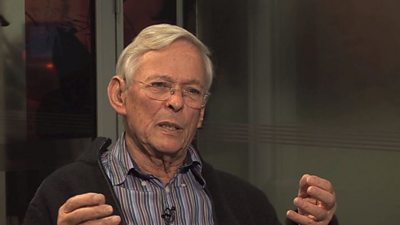
Alec Nisbett
Alec Nisbett, has been described by fellow programme makers as ‘the quintessential Horizon producer’, never shying away from putting hard science on TV.
Deborah Cadbury
The first programme Deborah worked on for the BBC was on a series which was something of a training ground for many a Horizon producer, Tomorrow's World (BBC: 1965-2003). She won many awards for her work on Horizon including Emmys and BAFTAS.
Simon Campbell-Jones
Simon’s first film for Horizon was broadcast in January 1969, and was called The Miraculous Wonder: the Human Eye. Narrated by Christopher Chataway, the programme asked if human eyes “were windows to your soul, the receiver of irrelevant information, respectable substitutes for sex, something like footballs? Or a piece of the brain looking out at the world?”