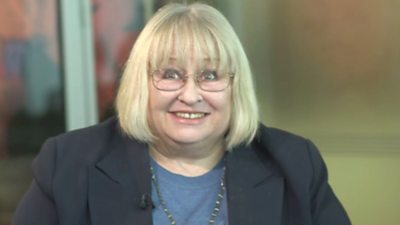
After having trained in studio direction Peter Goodchild (the longest surviving editor of the programme) was asked by Aubrey Singer, then Head of BBC Science and Features, to make a choice. Did he want to be an educationalist or an entertainer for the rest of his BBC career? He chose the entertainer route, but successfully combined both genres making some of the most successful and accessible Horizon films.
His credits include Smoker's Gamble, (1967), examining the the increasing scientific evidence at the time of the link between lung cancer and smoking, and After Apollo, 1969, which examined to what extent putting a man on the moon was directed towards scientific investigation and exploration, and how much is was an extension of the arms race.
Peter Goodchild joined Horizon in the very early days, and explains its origins as a magazine programme with a similar format as the long running arts programme Monitor (1958-1965). The idea for the series started as a brief developed by the then Head of BBC Science and Features, Aubrey Singer in 1963.
Today Horizon is a sixty minute documentary series, devoted to one subject per programme. It was this format that began to be established from 1966 onwards. Unlike today the channel environment was very different. There were just three television channels in the UK, and only the BBC was making science television.
Programme makers could afford therefore to experiment and play with formats - they set the agenda. The commercial opposition did provide inspiration and food for thought though, and Horizon producers had a keen eye on what "the other side" (ITV) were doing.
Interviews

Peter Goodchild
After having trained in studio direction Peter Goodchild (the longest surviving editor of the programme) was asked by Aubrey Singer, then Head of BBC Science and Features, to make a choice. Did he want to be an educationalist or an entertainer for the rest of his BBC career?

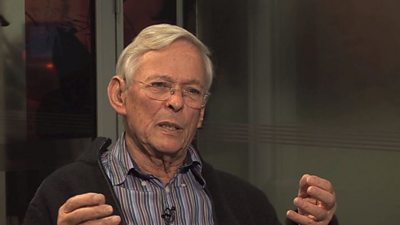
Alec Nisbett
Alec Nisbett, has been described by fellow programme makers as ‘the quintessential Horizon producer’, never shying away from putting hard science on TV.
Deborah Cadbury
The first programme Deborah worked on for the BBC was on a series which was something of a training ground for many a Horizon producer, Tomorrow's World (BBC: 1965-2003). She won many awards for her work on Horizon including Emmys and BAFTAS.
Simon Campbell-Jones
Simon’s first film for Horizon was broadcast in January 1969, and was called The Miraculous Wonder: the Human Eye. Narrated by Christopher Chataway, the programme asked if human eyes “were windows to your soul, the receiver of irrelevant information, respectable substitutes for sex, something like footballs? Or a piece of the brain looking out at the world?”